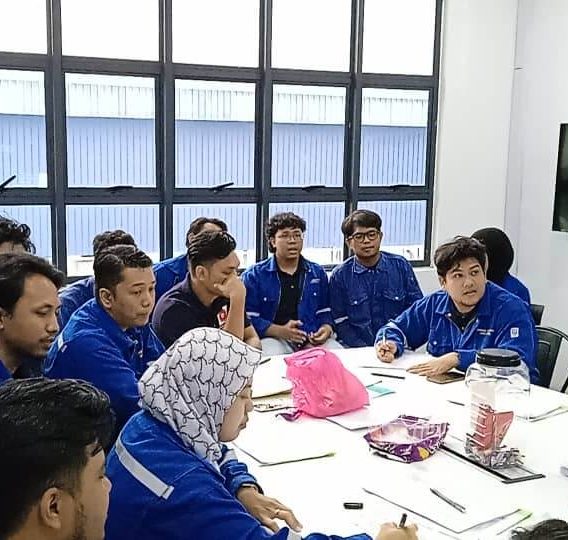
GMP Awareness Training covers all aspects of production, including materials, premises, equipment, training, and the personal hygiene of staff.
Good Manufacturing Practices (GMP) and Hazard Analysis and Critical Control Points (HACCP) are two programmatic frameworks for ensuring the quality and health of food, plastics and pharmaceuticals.
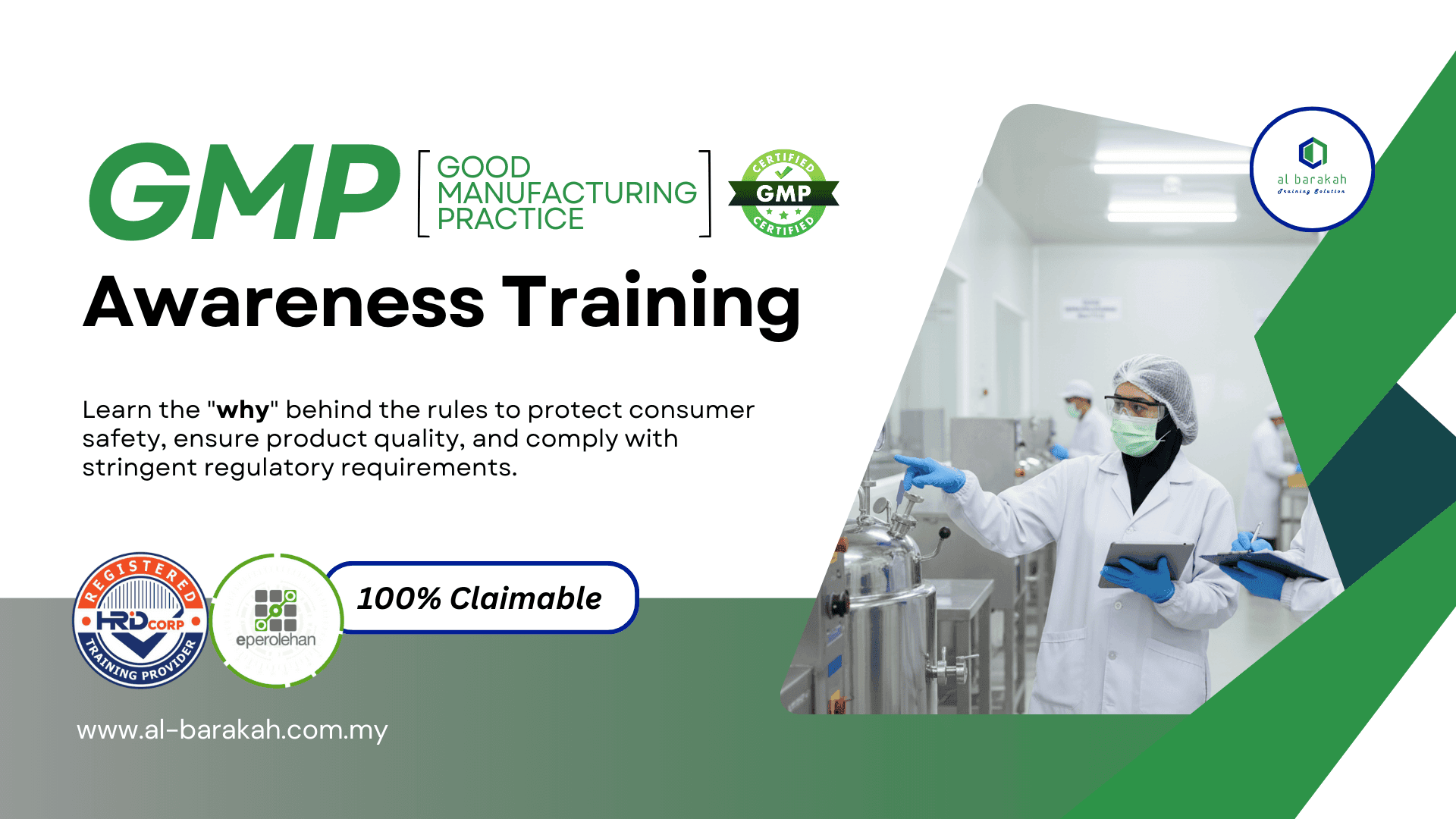
GMP is one of the “first steps” in ensuring and ensuring food safety as a set of principles that must be followed to ensure that products meet regulatory requirements for safety and quality.
It can be one of the components of a HACCP standard/system, a systematic approach to the manufacture/processing of food/products designed to prevent hazards from occurring.
This GMP Awareness Training is the essential first step in building a robust food safety culture. For team members who will be involved in the practical application of these principles, our GMP Implementation Course provides the hands-on skills needed to develop documents and procedures.
Latest MS1514:2022 (2nd Revision)
GMP compliance is critical in manufacturing. Providing quality-assured products ensures the health and safety of the public.
Robust processes and user-friendly systems for enforcing and monitoring standards can enhance your company’s GMP compliance.
In Malaysia, MS 1514:2022 (second revision) GMP is the requirement standards defined by Ministry of Health Section of Food Safety & Quality Division.
GMP certification is aims to upgrade the level of standards of food and non–food manufacturer in producing safer food, cosmetics, and health supplement as well as traditional medicine.
Good Manufacturing Practice (GMP) ensures that products are produced and controlled consistently according to quality standards. GMP minimizes the risks involved in any food or non–food production that cannot be eliminated through testing the final product.
The Importance of GMP Awareness Training
Providing GMP Awareness Training to employees is the best way to ensure compliance with GMP standards. It help employees to better understand GMP and continuously improve operations or systems to ensure standards are GMP compliant.
All employees should be trained on record keeping, hygiene, proper equipment handling and labeling, and SOPs to minimize errors and maintain compliance.
GMP Awareness Course ensures the workers to practice according to GMP standards so that the quantity of the product is controlled and manufactured to meet quality standards.
GMP includes many factors such as hygiene, environmental conditions, etc. This process can identify undetectable errors or anomalies earlier if the final product is tested or already on the market.
By ensuring your products pass GMP standards, you get a high-quality end product that is safe to use or consume, increasing customer satisfaction and increasing revenue.

While this course stands alone, participants seeking a holistic foundation often combine it with our Comprehensive Food Safety Training for Food Service. For those specifically needing to understand the critical control point system that works alongside GMP, the HACCP Awareness Training is the perfect companion course.
Building Your Professional Food Safety Pathway
GMP Awareness is a core pillar of modern food safety systems. To become a true expert, consider these logical next steps:
-
Deepen Your GMP & HACCP Integration: Progress to our combined GMP-HACCP Awareness Course to see how these systems work in tandem.
-
Move to Implementation: Ready to build your system? The GMP Implementation Course and HACCP Implementation Course provide the practical toolkit.
-
Understand Certification Standards: Learn how GMP feeds into broader standards with ISO 22000 Awareness Training or the globally recognized FSSC 22000 Awareness Training.
-
Master Audit Skills: Ensure compliance through effective auditing with our ISO 9001 Internal Audit Training (principles apply to food safety audits).
-
Address Specific Risks: Specialize in managing Food Allergen risks within your GMP framework.
-
Navigate Legal Requirements: Ensure your GMP program meets all local legal obligations by understanding Malaysia’s Food Acts & Regulations.