
Overview

ISO 22000 awareness training course provides a comprehensive understanding of the ISO 22000 Food Safety Management System standard and its significance in the food industry.

Participants will explore key concepts, requirements, and implementation guidelines of ISO 22000, focusing on enhancing food safety management practices within their organizations. The course emphasizes the importance of PRPs in maintaining a hygienic environment and mitigating food safety risks.
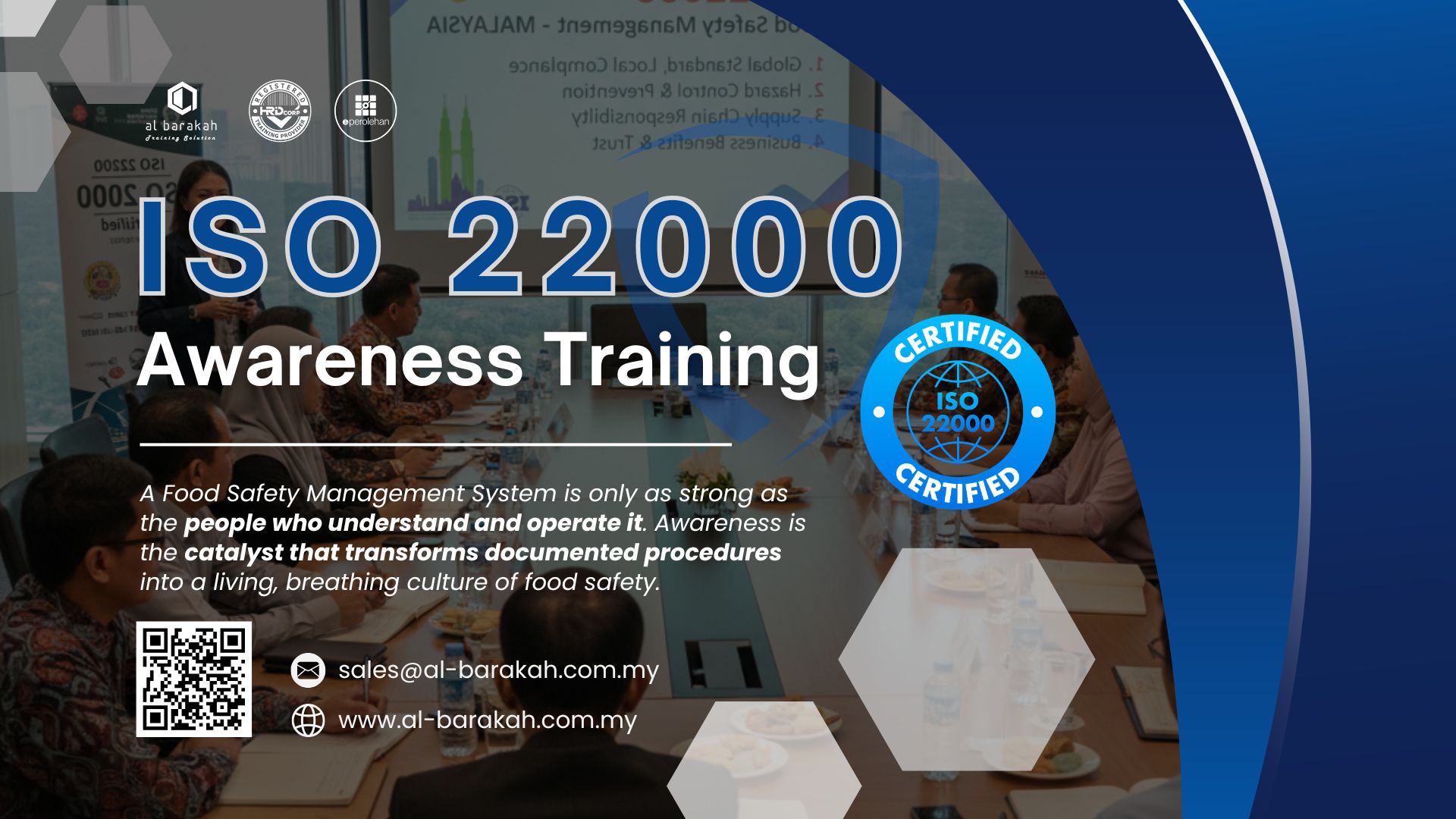
 

ISO 22000 Awareness Training (1)

Master the Global Standard for Food Safety Management

In an interconnected global food chain, confidence is the most valuable currency. ISO 22000 is the internationally recognized standard for Food Safety Management Systems (FSMS) that provides that confidence. It is the benchmark that allows food businesses to demonstrate their ability to consistently control food safety hazards, ensuring that food is safe for consumption.

But ISO 22000 is more than just a certificate on the wall. It’s a holistic framework that integrates key principles of HACCP (Hazard Analysis and Critical Control Points) with robust Prerequisite Programs (PRPs) and core quality management principles. Built on the high-level structure (HLS), it aligns with other ISO standards, making it easier to integrate into existing management systems.

This ISO 22000 Awareness Training is your essential introduction to this powerful standard. We demystify its requirements, from understanding the context of your organization to driving continuous improvement. This course is the critical first step for any organization on the path to certification, providing the foundational knowledge to build, implement, and maintain a world-class FSMS that protects your customers and your brand.

The Critical Importance of ISO 22000 Awareness

A Food Safety Management System is only as strong as the people who understand and operate it. Awareness is the catalyst that transforms documented procedures into a living, breathing culture of food safety. This training is vital because it:

  • Builds a Common Language: Ensures everyone, from top management to line staff, understands the principles and requirements of ISO 22000, fostering alignment and accountability.

  • Enables Certification Success: Serves as the essential foundation for your organization’s journey towards achieving and maintaining ISO 22000 certification.

  • Mitigates Business Risk: Empowers your team to proactively identify and control food safety hazards, reducing the risk of recalls, legal liabilities, and brand damage.

  • Enhances Customer & Stakeholder Trust: Demonstrates your commitment to international best practices, opening doors to new business, especially with global partners and exporters.

  • Drives Continuous Improvement: Introduces the Plan-Do-Check-Act (PDCA) cycle, creating a mindset of ongoing enhancement in your food safety processes.

Course Objective: Building Your FSMS Foundation

The primary objective of this 1-day course is to provide participants with a comprehensive understanding of the purpose, structure, and core requirements of the ISO 22000:2018 standard. Participants will leave equipped to contribute effectively to their organization’s FSMS and understand their role within it.

Key Topics Covered

Our curriculum is designed to provide a clear and logical journey through the standard:

  • Overview of ISO Standards for FSMS: The role of ISO and the value of a standardized approach.

  • Introduction to ISO 22000: Its benefits, intended outcomes, and key concepts.

  • The High-Level Structure (HLS): Understanding the common framework for all ISO management system standards.

  • Core Requirements of ISO 22000:2018: A deep dive into the key clauses:

    • Clause 4: Context of the Organization (Understanding your internal and external issues, needs of interested parties)

    • Clause 5: Leadership (Top management’s crucial role and commitment)

    • Clause 6: Planning (Addressing risks and opportunities, setting FSMS objectives)

    • Clause 7: Support (Resources, competence, awareness, communication, documentation)

    • Clause 8: Operation (PRPs, traceability, emergency preparedness, HACCP plan)

    • Clause 9: Performance Evaluation (Monitoring, measurement, internal audit, management review)

    • Clause 10: Improvement (Nonconformity, corrective action, continual improvement)

  • The Dual PDCA Cycles: Understanding how the PDCA model applies to the overall FSMS and its operations.

Practical Benefits for Your Team & Daily Operations

This course translates international standards into actionable understanding. Your employees will gain the ability to:

  • Interpret ISO 22000 Requirements in the context of their specific job functions.

  • Contribute to Risk-Based Thinking by identifying issues that could affect food safety.

  • Participate Effectively in Internal Audits and other performance evaluation activities.

  • Understand the Importance of PRPs and HACCP and their role in maintaining them.

  • Support the Documentation Process and maintain accurate records as required by the standard.

Training Methodology: Engaging and Effective Learning

We believe in interactive, participant-centered learning to ensure knowledge retention and practical application. Our methodology includes:

  • Expert-Led Instruction from experienced FSMS professionals.

  • Interactive Learning Activities to reinforce key concepts.

  • Real-World Case Studies from the food industry.

  • Collaborative Group Activities & Discussions to solve common challenges.

  • Individual Exercises & Assessments to gauge understanding and effectiveness.
Take the First Step Towards FSMS Excellence

Empower your team with the knowledge to build a safer, more resilient, and globally competitive food business. We offer flexible Public and In-House training options delivered in English or Bahasa Malaysia.

Ready to build a culture of food safety?

Click Here to Inquire Now or email us at sa***@************om.my to enroll in our next public session or to schedule a customized in-house training for your team.

Level

Beginner

Duration

1 Day

Languange

B. Malaysia and English

Training Mode

Public & In-House

Training Module Content

  • Overview of ISO standards for FSMS
  • Introduction to ISO 22000 standard and its benefits
  • Background and its intended results
  • Key concepts and structure of ISO 22000 standard
  • Terms and definitions used
  • Core requirements of ISO 22000: Two PDCA cycles
  • Understanding clause requirement of ISO 22000:2018
    • Clause 4: Context of Organization
    • Clause 5: Leadership
    • Clause 6: Planning
    • Clause 7: Support
    • Clause 8: Operation
    • Clause 9: Performance Evaluation
    • Clause 10: Improvement
  • Documentation requirements for ISO 22000

Learning outcome

Upon successful completion, participants will be able to:

  • Understand the concepts, structure, and key components of the ISO 22000 standard.

  • Recognize the significance of each requirement and its application within their organization.

  • Identify and assess food safety risks and hazards in their operations.

  • Familiarize themselves with ISO 22000 standards and their role in enhancing food safety practices.

Want to train your entire team?

Get a customized in-house training quote today! Contact us or click below.

Who is this training for?

This course is ideal for individuals and teams involved in the food safety system, including:

  • Food Safety Team Leaders and Members

  • Quality Assurance & Quality Control (QA/QC) Personnel

  • Production / Plant Operations Managers, Supervisors, and Staff

  • Compliance and Regulatory Affairs Staff

  • Line Leaders and Section Heads

  • Anyone seeking a thorough understanding of FSMS in the food industry.

This training is critical for all organizations in the food chain, including:

  • Food and Beverage Manufacturing and Processing

  • Agriculture and Primary Production

  • Animal Feed Production

  • Food Service and Catering (Restaurants, Hotels)

  • Retail and Distribution

  • Packaging Material Manufacturing for Food

Participants requirements:

Recognized training provider

Trusted By

Since 2009, we have work with more than 3,000 brands including…

Halal awareness training a training course based on the MPPHM 2022

Clients' Review

TRAINER PROFILE

Learn From Industry Experts, Not Just Theorists

Every trainer in our network is meticulously vetted against a stringent set of criteria, ensuring you learn from professionals who have not only taught the standards but have implemented, audited, and lived them in the Malaysian food industry.

Our Core Selection Criteria for Food Safety Trainers:

Minimum 10-15 Years of Hands-On Industry Experience: Each trainer is a seasoned professional with a substantial career in food manufacturing, quality assurance, or technical management within Malaysia. They bring stories from the factory floor, not just the textbook.

Dual Credentials – Certified Practitioner & Certified Trainer: They hold active professional certifications (e.g., Certified HACCP Auditor,  FSSC Professional) and are skilled in adult training methodologies (e.g., Certified Train-The-Trainer). They know the subject and how to teach it effectively.

Audit & Certification Body Experience: Many of our lead trainers have direct experience working with or as auditors for SIRIM, the Ministry of Health (MOH), and other certification bodies. They provide insider perspectives on what auditors truly look for.

Specialization in Key Areas: Our network includes dedicated specialists, ensuring the trainer perfectly matches the course:

  • GMP/HACCP Specialists: Often former QA/Production Managers from major local food plants.

  • FSSC 22000/ISO 22000 Experts: Typically Lead Auditors with extensive experience in global supply chain audits.

  • Allergen Management Specialists: Professionals with backgrounds in product development, labelling compliance, and plant sanitation protocols.

Proven Training Track Record: We evaluate trainer performance through rigorous participant feedback and post-training assessments, ensuring consistent delivery of practical, high-impact sessions.

What This Means for Your Team:

  • Practical, Not Just Theoretical: You’ll receive actionable knowledge grounded in the realities of Malaysian food production, packaging, and legislation.

  • Answers to Your Specific Challenges: Our trainers can relate to your operational hurdles because they’ve solved similar problems firsthand.

  • Networking & Ongoing Support: Trainers often provide valuable context and can become a point of professional reference.

Our Commitment: When you enroll in an Al Barakah Training Solution course, you are guaranteed a trainer who is a practitioner-first, equipped to bridge the gap between international standards and your daily operational success.

TRAINING POLICY

Disclaimer

Course dates displayed in the ABTS-TMS™ are provisional, pending final confirmation based on trainer availability. Final dates will be confirmed once coordination with the trainer is complete. You are also welcome to contact our team directly, and we will gladly assist in aligning with the trainer’s schedule.

Cancellation & Rescheduling Policy

We reserve the right to cancel or reschedule any course due to unforeseen circumstances; in such an event, participants will receive a full refund. Please note that the training venue may be subject to change based on final enrollment and classroom availability. All courses require a minimum of five (5) confirmed participants to proceed as scheduled.

Frequently Ask Question (FAQ's)