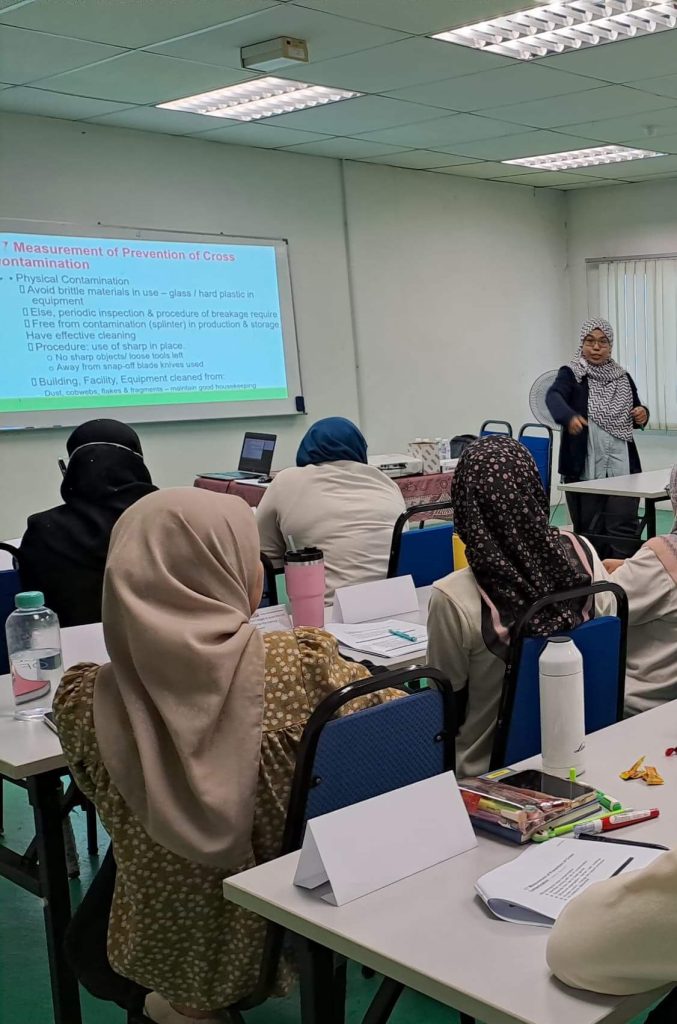
Overview

FSSC 22000 Version 6 Awareness Training Course | 1-Day Expert-Led Workshop

FSSC 22000 is the globally recognized Food Safety System Certification, and its recent update to Version 6 introduces critical enhancements for modern food safety challenges. This training provides a comprehensive foundation in the FSSC 22000 scheme, demystifying its structure which integrates ISO 22000 for Food Safety Management, ISO/TS 22002-4 for specific Prerequisite Programs (PRPs), and FSSC’s own Specific Additional Requirements.

We will explore the evolution from version 5.1 to 6, focusing on the strengthened focus on food safety culture, quality control, and allergen management, ensuring your organization’s practices meet the highest international benchmarks.
FSSC 22000 Awareness Training (1)

Why FSSC 22000 training important

In today’s stringent global supply chain, compliance is not optional. This training is crucial for:

  • Ensuring Regulatory & Customer Compliance: Meet mandatory requirements from global retailers and regulators.

  • Mitigating Food Safety Risks: Proactively identify and control hazards before they become incidents, leveraging principles that are also foundational to HACCP methodology.

  • Reducing Audit Non-Conformities: Understand exactly what auditors look for, minimizing costly findings.

  • Building a Robust Food Safety Culture: Align your entire team with the latest best practices and terminology of V.6.

FSSC 22000 course objective

The primary objective of this 1-day intensive awareness training is to equip participants with a practical and thorough understanding of the FSSC 22000 Version 6 standard. By the end of the course, attendees will be able to interpret its requirements, understand their role within the system, and begin contributing effectively to their organization’s FSMS implementation or maintenance.

FSSC 22000 Key Course Topics

  • Introduction to Food Safety Management Systems (FSMS) & the FSSC 22000 Scheme

  • Detailed Analysis of FSSC 22000 V.6 Structure: ISO 22000, PRPs (ISO/TS 22002-4), and Specific Additional Requirements

  • New in Version 6: Key changes and enhancements from V.5.1

  • Defining and Implementing Effective Prerequisite Programs (PRPs), which form the foundational conditions for food safety, closely aligning with Good Manufacturing Practices (GMP) principles.

  • Understanding the FSSC 22000 Certification & Audit Process

  • Documentation Framework for Certification

Practical Benefits of FSSC Training for Employees

Participants will gain immediately applicable skills:

  • Conduct effective internal checks using the correct V.6 criteria.

  • Document procedures correctly to meet audit trails.

  • Communicate food safety issues using standardized terminology.

  • Contribute directly to PRP maintenance and risk assessment discussions, including critical areas like food allergen management.

  • Enhance personal competency and value within the food safety team.

Training Methodology

This is not a passive lecture. Our expert-led session employs:

  • Interactive Presentations & Real-World Case Studies

  • Group Discussions & Scenario-Based Workshops

  • Q&A Sessions tailored to your organization’s context

  • Practical Exercises on interpreting standard clauses

Building a Complete Food Safety System

Build a Robust Food Safety Culture: FSSC 22000 is one pillar of comprehensive food safety. We recommend pairing this knowledge with:

Ready to Empower Your Food Safety Team?

Click Here to Inquire Now or email us at sa***@************om.my to enroll in our next public session or schedule customized in-house training for your team.
Level

Beginner - Intermediate

Duration

1 Day

Languange

B. Malaysia and English

Training Mode

Public & In-House

Training Module Content

  • Intro & Overview to Food Safety Management Systems (FSMS)
  • Introduction to FSSC 22K certification scheme
  • Importance of FSSC 22K across the supply chain
  • Structure of FSSC 22K V.6 standard
  • Core requirements of ISO 22K and additional requirements of FSSC 22K
  • Scope and applicability of FSSC 22K in different sectors of the food industry
  • Definition and importance of PRPs in food safety management
  • Categories of PRPs specified by FSSC 22K Version 6
  • Implementation guidelines and best practices for PRPs
  • Components of Specific Additional Requirements for Version 6
  • Comparison of Version 6 and 5.1
  • Understanding the FSSC 22000 certification process
  • Documentation requirements and preparation for certification audits

Learning outcome

By the end of this training, your team will:

  • Understand the “Why”: Grasp the importance and global value of the FSSC 22000 scheme.

  • Decode the Requirements: Navigate the key elements of the standard, including ISO 22000 and Pre-Requisite Programs (PRPs).

  • Identify Their Role: See how their specific job function is critical to the success of the entire Food Safety System.

  • Build a Common Language: Foster company-wide alignment and communication on food safety goals.

  • Lay the Groundwork for Certification: Prepare your organization for a smoother, more successful audit process.

Want to train your entire team?

Get a customized in-house training quote today! Contact us or click below.

Who is this training for?

This course is specifically designed for all personnel who play a part in your food production and safety ecosystem, including:

  • Production & Operations Staff: Those directly involved in handling, processing, and manufacturing food products.

  • Quality Assurance & Control (QA/QC) Teams: New hires or team members who need a foundational understanding of the FSSC 22000 framework.

  • Supply Chain & Procurement Officers: Staff responsible for sourcing raw materials and managing supplier quality.

  • Warehouse & Logistics Personnel: Teams involved in storage and distribution, where critical control points exist.

  • Department Supervisors & Team Leaders: Frontline managers who must enforce and communicate food safety practices daily.

  • Anyone new to a certified organization or needing a refresher on the core principles of FSSC 22000

Target Industry

Essential for all sectors ensuring compliance not just with FSSC but also with Malaysia’s core Food Acts and Regulations of the food and beverage industry, including: Processing & Manufacturing, Packaging, Storage & Distribution, Catering, and Animal Food Production. 

Participants requirements:

Pen & Notes.

Recognized training provider

Trusted By

Since 2009, we have work with more than 3,000 brands including…

Halal awareness training a training course based on the MPPHM 2022

Clients' Review

“This training provided the perfect foundation for our FSSC 22000 certification journey. The instructor expertly demystified the standard’s requirements and clauses, connecting them directly to our daily production floor realities. Our team now has a clear, unified understanding of the ‘why’ behind the procedures, which is crucial for successful implementation. A highly professional and insightful session.”

Encik Rizal Abdullah | QA Manager

“As a seasoned manufacturer, we needed a training that went beyond theory. Al Barakah delivered exactly that. Their FSSC 22000 Awareness session brilliantly linked food safety prerequisites to the higher-level management system requirements. The practical focus on documentation, internal audit trails, and continual improvement frameworks has given us a clear roadmap to elevate our existing systems. An excellent, value-adding investment.”

Ms. Teh Mei Lin | Head of Quality & Compliance

TRAINER PROFILE

Nurfatiha Zainal

Nurfatiha Zainal stands as a paragon of excellence in the field of Food Safety and Quality systems, carving a distinguished 12-year career as a consummate trainer, consultant, and auditor. Her professional journey is a testament to a deep-seated commitment to elevating industry standards across Malaysia’s diverse food landscape. More than just an instructor, Nurfatiha is a strategic partner in knowledge transfer, empowering organizations to achieve and sustain the highest benchmarks of compliance and operational excellence.

With a robust academic foundation in Food Biotechnology, she has meticulously built an impressive portfolio of professional accreditations. Her authority is certified by leading bodies, including her roles as a Chief ISO 9001 Auditor (SIRIM)KKM Certified Food Handler TrainerJAKIM Certified Halal Internal Auditor, and PSMB/HRDC Certified Trainer, among others.

Core Training and Consultancy Expertise:
Nurfatiha’s training prowess encompasses the entire spectrum of food governance, including:

  • Food Safety Management Systems: HACCP (MS 1480), ISO 22000:2018, and FSSC 22000.

  • Quality Management Systems: ISO 9001:2015.

  • Halal Assurance Systems: End-to-end Malaysian Halal certification (JAKIM) consultancy and auditing.

  • Fundamental Practices: Good Manufacturing Practices (GMP/MS 1514), Good Hygiene Practices (GHP), MeSTi, and BeSS.

  • Specialized Areas: Food Allergen Management and Food Premise Inspection.

Her practical experience in senior roles at leading companies like Leong Hup Agrobusiness Sdn Bhd and Lay Hong Berhad provides her with an invaluable real-world perspective. This allows her to transcend theoretical concepts, delivering training that is not only comprehensive but also profoundly practical and immediately applicable.

TRAINING POLICY

Disclaimer

Course dates displayed in the ABTS-TMS™ are provisional, pending final confirmation based on trainer availability. Final dates will be confirmed once coordination with the trainer is complete. You are also welcome to contact our team directly, and we will gladly assist in aligning with the trainer’s schedule.

Cancellation & Rescheduling Policy

We reserve the right to cancel or reschedule any course due to unforeseen circumstances; in such an event, participants will receive a full refund. Please note that the training venue may be subject to change based on final enrollment and classroom availability. All courses require a minimum of five (5) confirmed participants to proceed as scheduled.

Frequently Ask Question (FAQ's)