
The Key Shift
The transition from FSSC 22000 Version 5.1 to Version 6 represents a fundamental evolution in food safety management. While Version 5.1 established robust technical requirements, Version 6 introduces critical strategic and cultural elements that transform compliance from a checkbox exercise into a dynamic, organization-wide commitment.
The most significant changes—enhanced food safety culture, integrated quality management, and strengthened allergen controls—reflect global trends toward preventive, holistic food safety systems that protect brands and consumers in increasingly complex supply chains.
For Malaysian food businesses, this update is particularly crucial as international buyers and regulators increasingly demand demonstrable food safety maturity, not just certification. Understanding these changes now positions your organization to transition smoothly, avoid audit non-conformities, and leverage your FSSC 22000 certification as a competitive advantage in export markets.
Why This Update Demands Your Attention
The FSSC 22000 scheme, recognized by the Global Food Safety Initiative (GFSI), continuously evolves to address emerging global food safety challenges. The release of Version 6 in December 2023 marks one of its most substantial updates, moving beyond procedural requirements to emphasize organizational behavior and integrated risk management.
If your organization is currently certified to Version 5.1, you have until December 2025 to complete the transition audit. However, proactive understanding and early implementation of the new requirements are strongly recommended. This isn’t merely about updating documents—it’s about strengthening your foundational food safety processes to build more resilient, trustworthy operations.
It’s crucial to remember that FSSC 22000 is an integrated scheme. Its effectiveness is not standalone but is built upon a solid foundation of Prerequisite Programs (PRPs), which are essentially robust Good Manufacturing Practices (GMP). Furthermore, its core structure aligns with and expands upon the systematic hazard analysis approach familiar to those who have implemented a HACCP system.
This comprehensive guide provides a clear, actionable comparison of FSSC 22000 Version 5.1 versus Version 6, explaining not just what has changed, but why these changes matter for your business’s compliance, risk management, and market reputation.
Comparing FSSC 22000 V5.1 vs. V6

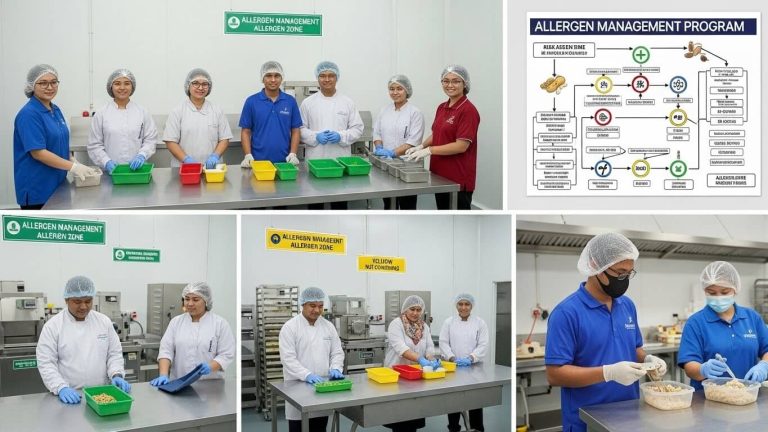
One of the most significant updates in Version 6 is the introduction of Annex Q, which significantly strengthens requirements for allergen management. This move from general guidelines to a dedicated, auditable framework means businesses must now establish a formal, documented Allergen Management Program (AMP) to identify, control, and communicate allergen risks effectively throughout the supply chain.
Detailed Comparison: FSSC 22000 V5.1 vs. V6
The following table provides a side-by-side technical comparison of the key requirement changes between the two versions.
| Requirement Area | FSSC 22000 Version 5.1 | FSSC 22000 Version 6 | Strategic Impact & Business Reason |
|---|---|---|---|
| 1. Food Safety Culture | Implicit expectation within the management system. | Explicit, detailed requirements (Clause 2.1.12). Must be planned, implemented, measured, and reviewed. | Moves culture from an abstract concept to a measurable system. Mitigates human-error risks by embedding safety in daily decisions. |
| 2. Quality Management | Food safety focused. Quality was separate. | Integration of quality aspects into the FSMS where they impact food safety (e.g., shelf life, product consistency). | Recognizes that quality failures can lead to safety issues (e.g., incorrect labeling). Encourages a unified system approach. |
| 3. Allergen Management | Covered under prerequisite programs (PRPs). | Significantly strengthened. Dedicated annex (Annex Q) with specific controls for receipt, storage, processing, and sanitation. | Direct response to allergens being a top global cause of recalls. Provides a clear, auditable framework for control. |
| 4. Storage & Transport | General requirements for warehouse conditions. | Expanded scope to include specific controls for external service providers (logistics partners). | Addresses supply chain vulnerabilities. Ensures safety is maintained from your door to the customer’s. |
| 5. Equipment Management | Focus on maintenance and calibration. | New emphasis on hygienic design of equipment (preventing contamination at source) and management of obsolete spare parts. | Preventive approach to reduce microbiological and physical hazard risks. Ensures long-term maintainability. |
| 6. Fraud Prevention | Vulnerability assessment required. | Enhanced requirements for mitigation plan implementation and effectiveness review. | Strengthens resilience against economically motivated adulteration in complex global supply chains. |
| 7. Environmental Monitoring | Required for relevant processing environments. | More prescriptive. Requires a risk-based program with defined locations, frequencies, pathogens, and corrective actions. | Science-based validation of sanitation program effectiveness, crucial for ready-to-eat and high-care areas. |
Deep Dive: The Three Most Critical Changes for Your Business
1. Food Safety Culture: From Implicit to Measurable
What Changed: Version 6 introduces a standalone set of requirements (Clause 2.1.12) for food safety culture. Your organization must now:
Develop a formal plan to achieve and maintain a positive food safety culture.
Implement activities like training, communication, and leadership engagement.
Measure effectiveness using indicators such as audit results, non-conformance trends, employee feedback, and observed behaviors.
Review the data and use it to drive continual improvement of the culture itself.
Why It Matters for Malaysian Businesses: A strong, measurable food safety culture is your best defense against complacency and human error. For businesses targeting export markets or dealing with multinational clients, demonstrating a mature culture is increasingly a prerequisite. It builds trust and shows that safety is a core value, not just a certificate on the wall.
First Action Step: Conduct an anonymous employee survey to establish a baseline perception of food safety culture. Identify gaps in communication, resources, or leadership visibility.
2. Integrated Quality Management: Bridging the Silos
What Changed: While FSSC remains a food safety standard, Version 6 requires you to identify and control quality aspects that could impact food safety. Examples include:
Labeling accuracy (allergens, ingredients).
Net content control (regulatory compliance).
Shelf-life determination and management.
Control of non-conforming product with safety implications.
Why It Matters for Malaysian Businesses: This integration eliminates costly departmental silos. A single, unified management system is more efficient and reduces the risk of gaps between “quality” and “safety” teams. It also aligns with other standards (like Halal, where process integrity is crucial) and prepares you for more integrated audits, saving time and resources.
First Action Step: Map all quality control points in your process. For each, conduct a risk assessment to determine if a failure could lead to a food safety hazard.
3. Enhanced Allergen Management: A Framework for Control
What Changed: The new Annex Q provides a detailed framework, requiring:
A dedicated allergen management plan.
Specific controls for receipt, storage, and processing to prevent cross-contact.
Validated cleaning and sanitation procedures for equipment switching between allergenic and non-allergenic products.
Clear labeling and packaging controls.
Why It Matters for Malaysian Businesses: Allergen recalls are devastating for brand reputation. This structured framework helps you systematically eliminate risk. For manufacturers producing for diverse markets or under different brand labels, this is essential. It also provides clear evidence of due diligence to auditors and customers.
First Action Step: Review your current allergen flowchart. Validate that your cleaning procedures between allergen runs are effective (e.g., via protein swab tests).
For Malaysian food businesses, achieving FSSC 22000 certification often goes hand-in-hand with meeting other critical market requirements, such as obtaining the Halal certificate. The journey towards comprehensive food safety compliance begins with basic personnel competency, which is legally mandated through the Food Handling Course, and expands into these advanced, systems-based certifications.
Transition Roadmap: Your Path from V5.1 to V6
A successful transition requires a structured project plan. Do not leave this until your 2025 surveillance audit.
| Phase | Key Activities | Recommended Timeline (Before Dec 2025 Deadline) |
|---|---|---|
| 1. Gap Analysis & Planning (Now) | • Train your team on V6 requirements (e.g., FSSC 22000 Awareness Training). • Conduct a detailed gap analysis against the new requirements. • Develop a project plan with resources and budget. | Q2-Q3 2024 |
| 2. System Development & Implementation | • Update your Food Safety Policy to include culture and quality. • Develop and implement the Food Safety Culture plan. • Revise PRPs and procedures for allergens, storage, and equipment. • Integrate quality-related safety controls. | Q4 2024 – Q2 2025 |
| 3. Internal Audit & Management Review | • Conduct internal audits against V6 requirements. • Execute the measurement activities for food safety culture. • Hold a formal management review to evaluate readiness. | Q3 2025 |
| 4. Certification Audit | • Schedule and undergo the transition audit with your certification body. | Q4 2025 |
💡Pro Tip: The foundation of this entire transition is team awareness. Ensure every level of your organization, from leadership to floor operators, understands the why behind the changes. Consider targeted in-house FSSC 22000 Version 6 training to align your entire team efficiently.
Conclusion: Beyond Compliance to Competitive Advantage
The update from FSSC 22000 Version 5.1 to Version 6 is a strategic opportunity. While driven by compliance, its true value lies in building a more robust, resilient, and trustworthy food safety management system.
Organizations that approach this transition proactively—viewing it as a chance to strengthen their culture, integrate their systems, and master allergen control—will not only pass their audits with confidence but will also gain a significant edge in the marketplace. They will be the suppliers of choice for safety-conscious global buyers and the employers of choice for talent seeking modern, responsible food businesses.
Your Next Step: Begin your transition journey with knowledge. Equip your food safety team and management with a deep understanding of these new requirements to ensure a smooth, effective implementation.