
In Malaysia’s complex food landscape, comprehensive Allergen Awareness Training is no longer a optional extra; it is a fundamental shield protecting your customers, your reputation, and your business’s very survival.
Imagine a bustling Friday night at your restaurant. An order comes in for your signature Mee Goreng, and the customer requests “no prawns” due to an allergy. Your kitchen is busy, but the team is careful to leave out the visible shrimp. What they might not realise is that the sambal paste used to flavour the wok contains belacan—fermented shrimp paste.
This single oversight, born from a lack of specific knowledge, can trigger a severe allergic reaction, a public health incident, and a crisis that threatens everything you’ve built.
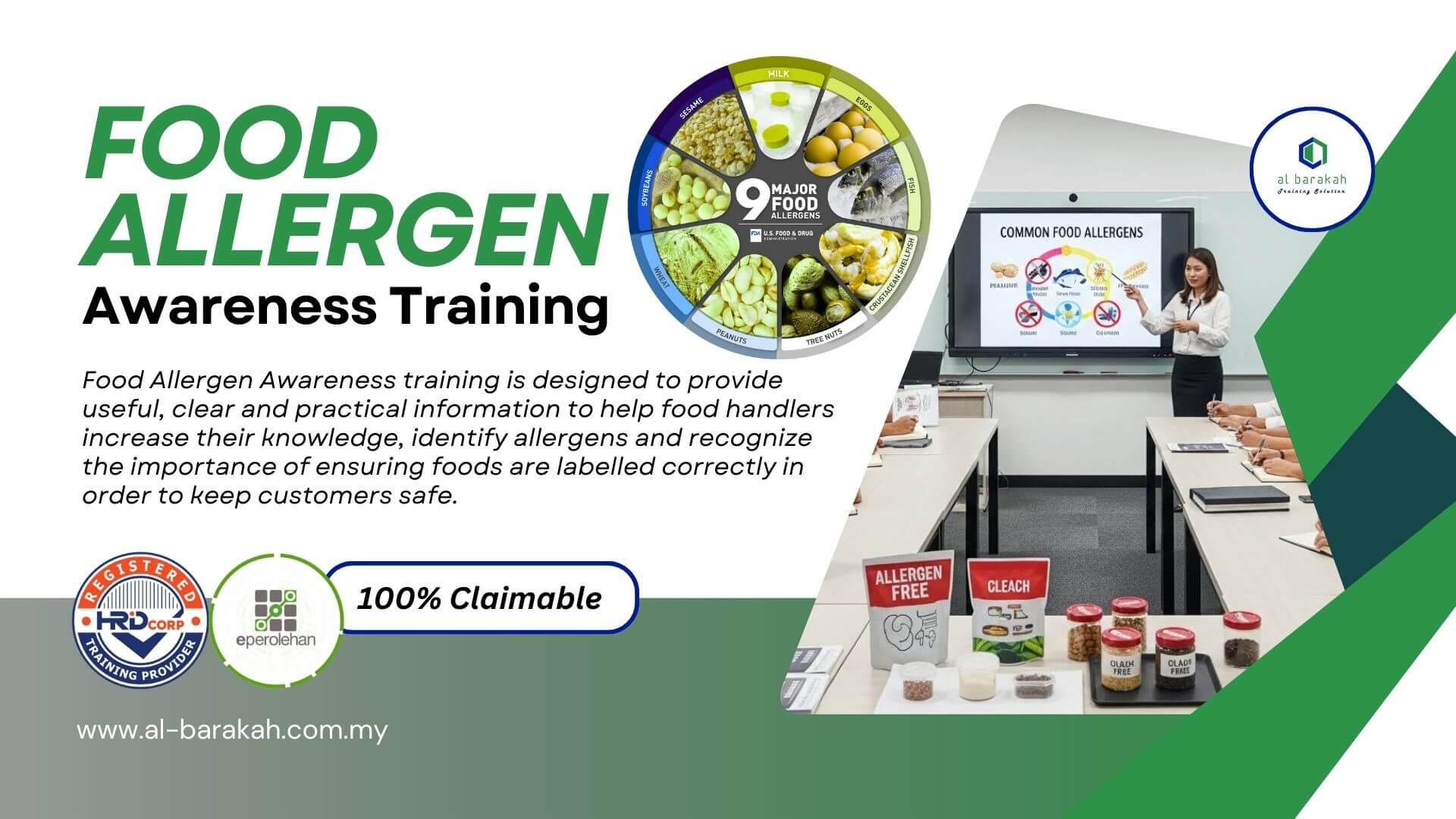
The Rising Tide of Allergen Awareness in Malaysia
The landscape of food safety is shifting rapidly. Today’s consumers are more informed and vigilant about food allergies than ever before. A simple online search allows them to research ingredients, and they are increasingly choosing to patronise establishments that can confidently demonstrate a commitment to safety and transparency.
Simultaneously, the regulatory environment is tightening. The Malaysian Food Regulations 1985 mandate clear allergen declaration on pre-packaged foods, and the principles of duty of care extend to all food service operators. Ignorance is not a defence in the eyes of the law or the court of public opinion.
As detailed in our Ultimate Guide to Food Allergens in Malaysia, the legal framework is clear, and the health risks are real. Proactive food businesses are no longer just asking if they need training—they are recognizing it as a critical investment in risk management and a powerful competitive advantage that builds unshakeable customer trust.
What is Covered in Allergen Awareness Training?
Many food handlers believe that avoiding the visible allergen—like leaving shrimp out of a stir-fry—is sufficient. This is the most dangerous misconception in kitchen safety. True Allergen Awareness Training provides a complete framework for risk management, transforming your team from being merely careful to being professionally competent and confident.
A comprehensive program, like the one we provide at Al-Barakah, goes far beyond a simple list of allergens. It delivers practical, Malaysia-specific knowledge that can be implemented immediately in your operation:

The 8 Major Allergens & The Malaysian Context
We move beyond theory to practice. Staff will not only learn to identify crustaceans, peanuts, and soy but, more importantly, they will master their hidden forms in local cuisine.
This includes understanding the pervasive use of belacan (shrimp paste) in sambals, the risk of kuah kacang (peanut sauce) cross-contact, and the presence of soy sauce (kicap) in countless marinades and gravies.
Understanding and Preventing Cross-Contamination
This is the core of practical kitchen safety. We provide a tactical toolkit for your team, covering:
Dedicated Equipment: Implementing colour-coded cutting boards, knives, and utensils for allergen-free preparation.
Workflow Management: Structuring kitchen workflows to prepare allergen-free meals first and using separate fryers for allergen-free items.
Hygiene Protocols: enforcing strict hand-washing and surface cleaning procedures after handling allergens.
Decoding Food Labels & Malaysian Law
Your team will learn to confidently read and interpret ingredient labels on pre-packaged goods, understanding mandatory allergen declarations and the meaning behind precautionary statements like “may contain traces of.” This ensures compliance with the Malaysian Food Regulations 1985.
Effective Customer Communication
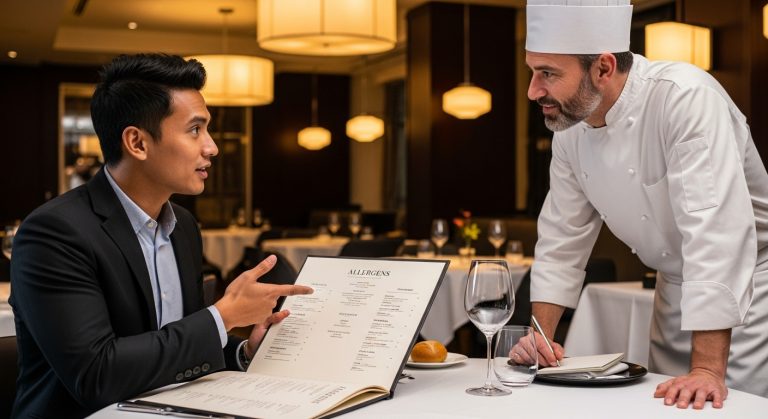
Fear of a customer’s allergy question can lead to guesswork or misinformation. We train your front-line staff—from servers to managers—on how to confidently and accurately answer queries, when to escalate to the kitchen, and the critical importance of never guessing. This builds immense customer trust.
Integrating Allergens into Your HACCP Plan
For owners and managers, we frame allergen control not as a separate task, but as an integral component of your existing HACCP-based food safety system. We show you how to identify Critical Control Points (CCPs) for allergens, from storage and preparation to cooking and serving, making your entire operation systematically safer.
This multifaceted approach ensures that knowledge is translated into daily practice, creating a culture of safety that protects everyone who walks through your door.
The Tangible Benefits: More Than Just Compliance
Investing in Allergen Awareness Training is not an expense; it’s one of the highest-return investments you can make in your business’s stability and future. The benefits extend far beyond simply checking a regulatory box.
Protect Customers and Save Lives: This is the most important benefit. Empowering your team with the correct knowledge is the single most effective way to prevent life-threatening anaphylactic reactions and ensure every customer has a safe dining experience.
Shield Your Business from Lawsuits and Fines: In the event of an allergic reaction, demonstrating that your staff has undergone certified training is your strongest legal defense. It shows due diligence and can significantly mitigate liability, protecting you from devastating lawsuits, regulatory fines, and forced closures.
Build an Unshakeable Reputation for Safety: In the age of social media, a single food safety incident can destroy a reputation built over years. Being known as an establishment that prioritizes allergen safety becomes a powerful marketing tool, building deep loyalty and trust that attracts customers and turns them into vocal advocates for your brand.
Empower and Upskill Your Team: Comprehensive training boosts staff confidence, reduces operational errors, and improves overall morale. When your team feels knowledgeable and empowered, it leads to better service, higher efficiency, and a more professional kitchen environment.
Who Needs This Training? (It’s More Than Just the Chef)
A chain is only as strong as its weakest link. Effective allergen management requires a team-wide commitment. This training is essential for every person who touches the food cycle in your business:
Kitchen Staff & Chefs: The first line of defence. They must understand cross-contamination risks and safe preparation protocols.
Servers, Waiters, and Front-of-House Staff: The communicators. They must accurately convey customer inquiries to the kitchen and confidently relay safety information.
Managers & Owners: The leaders. They are responsible for implementing protocols, fostering a safety culture, and bearing the ultimate legal responsibility.
Quality Assurance & Purchasing Staff: The specifiers. They must understand supplier verification and accurate ingredient sourcing.
An Investment in Your Business’s Future
In today’s competitive and litigious environment, hoping for the best is not a strategy. The risks associated with undeclared allergens are simply too great. Proactive Allergen Awareness Training is a fundamental cost of doing business—a critical component of your operational integrity that directly safeguards your customers, empowers your team, and secures your bottom line.