
If you operate a catering business in Malaysia, there comes a point when food safety is no longer simply about keeping the kitchen clean and serving good food.
It becomes about proving that your business has a systematic approach to food safety.
This becomes particularly important when you want to move beyond private customers and compete for larger contracts such as:
- Government catering contracts
- Institutional catering
- Corporate catering
- Schools and educational institutions
- Hospitals and healthcare facilities
- Events and conferences
- Large-scale functions
- Contract catering
- Food supply and procurement opportunities
One certification that catering businesses should understand is Trust MyCatering (TMC), a food safety certification programme offered by the Ministry of Health Malaysia (MOH/KKM).
Trust MyCatering Certification: Why Malaysian Catering Businesses Should Take TMC Seriously
According to the Ministry of Health, Trust MyCatering is a comprehensive food safety control mechanism for the catering industry. It is designed to recognise catering operators committed to producing safe food while improving food safety practices and consumer confidence.
For ambitious catering companies, TMC should therefore not be viewed simply as another certificate to put on the wall.
It can be a strategic business asset.
What Is Trust MyCatering (TMC)?
Trust MyCatering (TMC) is a certification programme by the Ministry of Health Malaysia for food catering operators.
The programme provides a structured mechanism for catering businesses to demonstrate their commitment to food safety and quality.
KKM states that the certification is intended to help catering operators improve existing or newly implemented food safety practices, increase public confidence in the food produced and reduce the risk of food poisoning incidents.
TMC is currently available for different catering scales, including:
| Category | Number of Employees | Typical Order Scale |
|---|---|---|
| Small | Less than 10 | Less than 100 pax |
| Medium | 11–20 | Less than 500 pax |
| Mass Catering | More than 20 | More than 500 pax |
These categories are specified by KKM under its Trust MyCatering programme.
This means TMC is not limited to huge catering companies.
Smaller and medium-sized caterers can also work towards formal recognition of their food safety systems.
Why Should a Catering Business Get TMC Certification?
Many business owners initially ask:
“Do I really need another certificate?”
That is the wrong question.
The better question is:
“What business opportunities could I lose if I don’t have the certification when a customer, institution or tender requires it?”
This is particularly important as catering businesses move into larger and more formal procurement environments.
Here are some of the strongest reasons to consider TMC.
1. TMC Can Strengthen Your Position for Government Tenders
This is one of the most commercially important reasons for catering companies to understand TMC.
Government procurement is becoming increasingly structured around documented food safety and quality requirements.
KKM’s current initiative specifically covers the implementation of KKM certification as a prerequisite for food supply procurement by participating government agencies and locations. The programme materials include a specific module on Trust MyCatering (TMC).
However, businesses should understand an important distinction:
TMC is not automatically mandatory for every government tender in Malaysia.
Tender requirements depend on the particular procuring agency, contract, location, scope of supply and tender documentation.
Therefore, catering companies intending to pursue government contracts should make it part of their procurement-readiness strategy to determine:
“Does the tender I want to compete for require or give preference to the relevant KKM certification?”
If the answer is yes, obtaining TMC before the tender opportunity appears can give your company a significant advantage.
Waiting until the tender is published may leave you with insufficient time to prepare.
2. TMC Demonstrates That Food Safety Is Managed Systematically
A professional catering operation cannot depend solely on the experience of its chef or kitchen supervisor.
Food safety needs systems.
It needs documented procedures.
It needs trained personnel.
It needs records.
It needs monitoring.
And it needs evidence that the controls are actually being implemented.
This is one of the fundamental values of TMC.
Rather than simply telling a customer:
“We maintain high hygiene standards.”
you can demonstrate that your organisation has worked towards a recognised KKM food safety framework.
That distinction becomes increasingly important when dealing with large organisations and institutional customers.
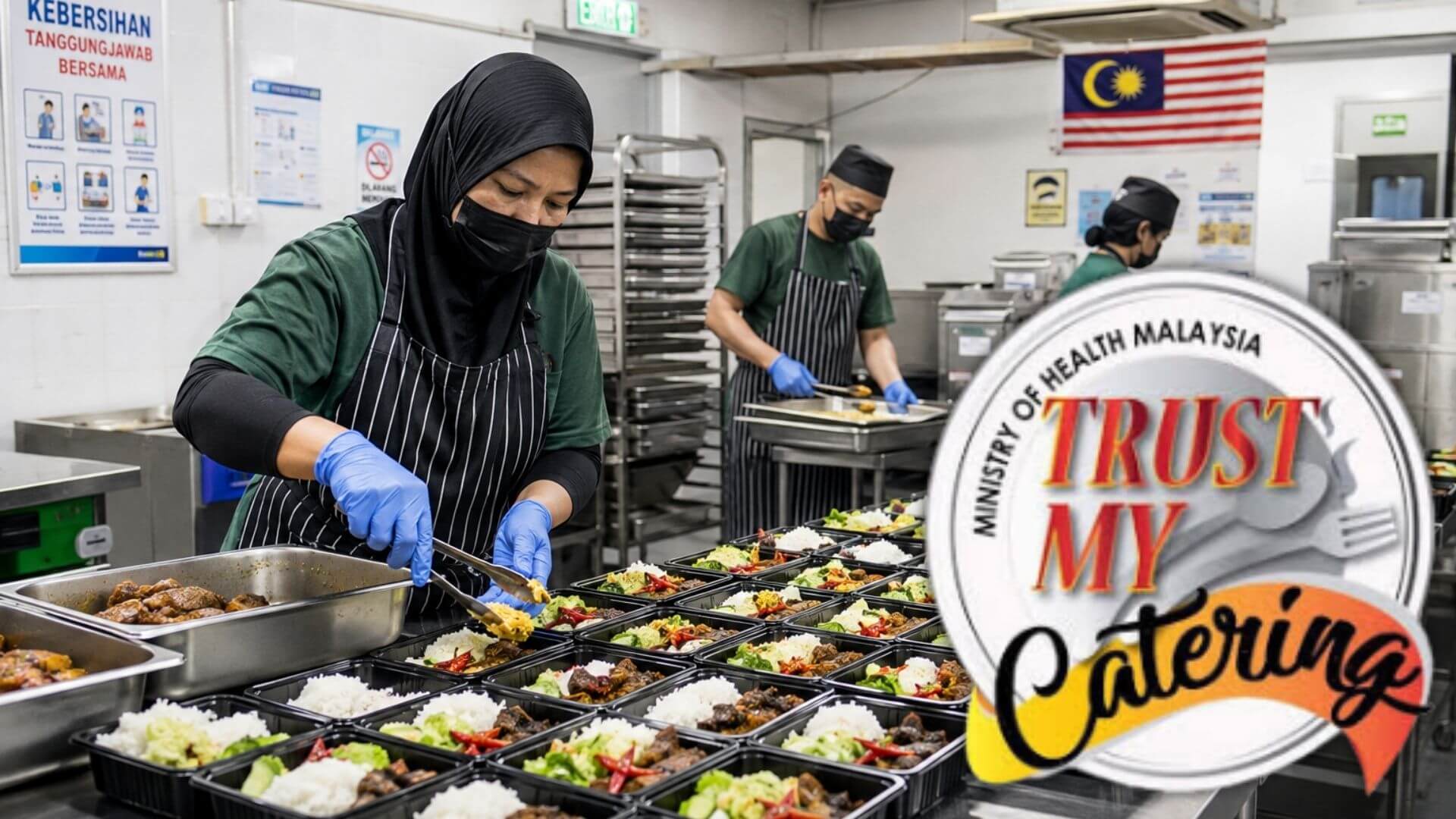
3. TMC Builds Customer Confidence
Imagine two catering companies competing for the same corporate contract.
Company A says:
“We have been catering for 10 years and our customers are happy.”
Company B can demonstrate a structured food safety system and holds recognised KKM certification.
Which company would you feel more comfortable entrusting with food for 500, 1,000 or even several thousand people?
For a catering business, trust is part of the product.
Customers may not be able to see what happens inside your kitchen.
They cannot personally inspect every ingredient.
They cannot monitor your food preparation.
They cannot observe how employees handle food.
Certification helps provide an additional layer of confidence.
4. TMC Can Improve Your Competitive Position
Many caterers compete primarily on:
- Price
- Menu
- Presentation
- Number of pax
- Experience
- Location
These are important.
But they can also become commodities.
A competitor can lower the price.
A competitor can copy your menu.
A competitor can offer more dishes.
Food safety certification creates another dimension of competition:
Credibility.
Instead of competing only on price, your company can increasingly compete on capability, compliance and reliability.
That is particularly valuable when moving into B2B and institutional markets.
5. TMC Helps Prepare Your Business for Larger Contracts
Small catering businesses often grow in stages.
You may start with:
10–50 pax events
Then progress to:
100–300 pax
Then:
500+ pax
Eventually, you may want contracts involving:
- Government departments
- Universities
- Schools
- Hospitals
- Corporations
- Factories
- Training centres
- Hotels
- Event organisers
- Large institutions
At every stage, the operational complexity increases.
The bigger the contract, the greater the consequences of food safety failures.
TMC can therefore form part of your business growth infrastructure rather than being treated as a compliance exercise.
6. TMC Can Strengthen Your Food Safety Culture
Certification is not simply about completing forms.
The real value comes from implementing food safety controls consistently.
This means developing habits around:
- Personal hygiene
- Food handling
- Cleaning and sanitation
- Temperature control
- Food storage
- Cross-contamination prevention
- Food preparation
- Monitoring
- Record keeping
- Corrective actions
- Customer feedback
When these practices become part of daily operations, your business becomes less dependent on individual employees “remembering what to do.”
The system becomes part of the organisation.
TMC Is Not the Same as MeSTI, GMP, HACCP or Halal
This is one of the most common areas of confusion.
Catering businesses sometimes ask:
“If I already have Halal, do I still need TMC?”
Or:
“I already have HACCP. Why would I need TMC?”
The answer is that these programmes address different objectives.
They can complement one another.
MeSTI
MeSTI (Makanan Selamat Tanggungjawab Industri) is a food safety assurance scheme administered by KKM and is particularly relevant to food manufacturing operations.
Our Complete Guide to MeSTI Certification in Malaysia explains the scheme, its application process and how it relates to GMP and HACCP.
GMP
Good Manufacturing Practice (GMP) focuses on the fundamental conditions and practices required to produce safe and consistently controlled food.
GMP covers areas such as hygiene, sanitation, premises, equipment, personnel and operational controls.
HACCP
HACCP (Hazard Analysis and Critical Control Point) is a systematic, risk-based food safety approach that identifies hazards and establishes controls at critical points in the food process.
Our HACCP Implementation Guide explains how HACCP works together with GMP as part of a broader food safety management system.
Halal Certification
Halal certification addresses compliance with Islamic requirements relating to ingredients, processing, handling, storage and other relevant aspects of the operation.
Our Complete Guide to Halal Certification in Malaysia provides a broader explanation of the Malaysian Halal certification process.
Trust MyCatering
TMC specifically addresses food safety within the catering environment.
Therefore, the certifications should not automatically be viewed as competing alternatives.
For a growing catering company, they can form part of a broader compliance and market-access strategy.
What Does the TMC Certification Process Involve?
The exact requirements depend on the applicable TMC category and current KKM requirements.
For small and medium catering operators, KKM provides specific:
- TMC application checklist
- TMC application form
- Food safety checklist
- Customer satisfaction record
The current KKM guidance for small and medium caterers was uploaded in 2026.
For mass catering operators, KKM provides a separate guideline and supporting documents, including a food safety checklist and a Food Safety Assurance Programme manual.
In practical terms, a company should be prepared to demonstrate that its catering operation has appropriate food safety controls and supporting documentation.
This is why preparation is important.
Do not wait for the assessment to discover that your records, procedures or practices are incomplete.
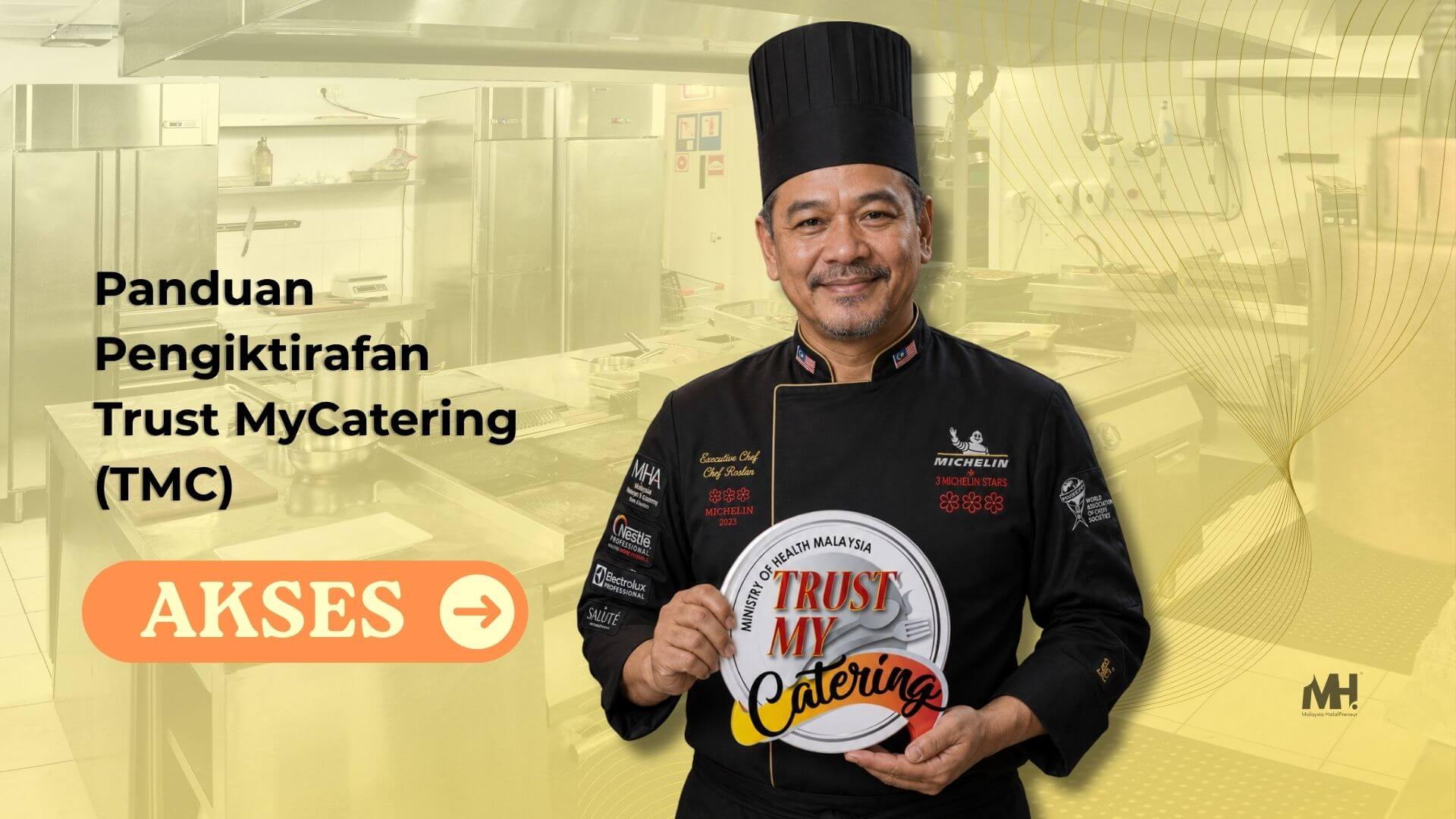
The TMC Checklist: What Should You Prepare?
One of the best ways to approach TMC is to stop thinking of certification as a single application form.
Instead, think of it as a readiness project.
Your business should examine areas such as:
Business and Premises Documentation
Make sure the required business, premises and licensing documentation is available and current.
Food Handler Requirements
Food handlers need to meet applicable training, health and hygiene requirements.
Food Safety Practices
Review how your team handles:
- Receiving
- Storage
- Preparation
- Cooking
- Cooling
- Transportation
- Serving
Cleaning and Sanitation
Your cleaning programme should be defined, implemented and supported by appropriate records.
Personal Hygiene
Employees must understand and consistently follow appropriate personal hygiene practices.
Temperature Control
Where applicable, establish suitable monitoring and recording practices for food temperatures.
Pest Control
Your operation should have appropriate measures to prevent and control pest activity.
Documentation and Records
A common weakness in food businesses is not necessarily the absence of good practices.
It is the absence of evidence that those practices are being implemented consistently.
That is why records matter.
How to Make TMC Easier: Start With a Gap Analysis
One of the most effective approaches is to conduct a TMC Gap Analysis before submitting your application.
Instead of discovering problems during the certification process, you identify them beforehand.
A gap analysis can examine:
Current Practice → TMC Requirement → Gap → Corrective Action → Evidence
For example:
| Area | Current Situation | Gap | Corrective Action |
|---|---|---|---|
| Cleaning | Cleaning is performed daily | No documented schedule | Develop cleaning schedule |
| Temperature | Staff check temperatures | Records inconsistent | Introduce monitoring record |
| Training | Staff attended training | Records not centralised | Establish training file |
| Food storage | Storage is organised | Monitoring not documented | Implement monitoring records |
| Customer feedback | Feedback collected informally | No structured record | Introduce customer satisfaction record |
This approach turns TMC from a confusing certification exercise into a manageable implementation project.
Don’t Wait Until You Find a Tender
This is perhaps the most important strategic advice we can give catering companies.
If your business wants to pursue government or institutional contracts, certification should be part of your business development plan—not something you start after finding the tender.
Consider this scenario.
A government agency publishes a catering tender.
You discover that the tender documentation requires a relevant KKM certification.
Your company has:
- No TMC
- No structured food safety documentation
- Incomplete records
- Untrained personnel
- No internal preparation
At that point, the tender may be commercially attractive—but your company may not be ready.
The smarter approach is:
Build certification readiness first.
Then when the right opportunity appears, your business is ready to compete.
Get the TMC Starter Module and Checklist
If you are considering Trust MyCatering certification, we have prepared a practical starter resource to help you understand the requirements and begin your preparation.
Trust MyCatering (TMC) Starter Module
The module provides a useful reference point for businesses that want to understand the TMC certification requirements and prepare their organisation.
Access the TMC Starter Module and Checklist here:
Trust MyCatering (TMC) Starter Module & Checklist
Rather than approaching certification blindly, use the checklist to identify what your company already has, what is missing and what needs to be improved.
Need Help Getting TMC Ready?
Reading a checklist is one thing.
Implementing it in a real catering operation is another.
This is where professional guidance can significantly reduce the learning curve.
Al Barakah Training Solution works with businesses on food safety, Halal, GMP, HACCP and related compliance requirements.
Our approach is not simply:
“Here is the checklist. Good luck.”
We help businesses understand:
What is required → What you already have → What is missing → What needs to be implemented → What evidence needs to be maintained.
This practical approach helps management and the operational team work towards certification systematically.
If your organisation is considering TMC certification, we can help you assess your current readiness and develop a practical implementation roadmap.
TMC Should Be Part of Your Business Growth Strategy
The most successful catering companies eventually realise that growth is not simply about getting more customers.
It is about becoming qualified to serve better customers.
A small private event may require little documentation.
A major corporate account may require more.
An institutional contract may require even more.
A government procurement opportunity can have very specific compliance requirements.
This creates an important business principle:
The bigger the opportunity, the more important your compliance infrastructure becomes.
Trust MyCatering can therefore be viewed as part of the infrastructure that helps a catering company move towards larger and more professional markets.
It is not simply another certificate.
It is a way of demonstrating that your organisation takes food safety seriously.
Frequently Asked Questions About Trust MyCatering
Is Trust MyCatering compulsory for every catering company?
No. TMC should not be described as a blanket requirement for every catering business.
However, specific customers, contracts, procurement exercises or government agencies may specify KKM certification requirements. Businesses targeting these markets should always check the actual tender or procurement requirements. KKM’s BEK programme specifically addresses KKM certification as a prerequisite for food supply procurement in participating government agencies and locations.
Who can apply for Trust MyCatering?
KKM states that the programme is open to food catering operators according to the applicable categories, including small, medium and mass catering.
Is TMC the same as Halal certification?
No.
TMC focuses on food safety and catering operations, while Halal certification addresses compliance with Islamic requirements.
A catering company may benefit from having both depending on its target market and customer requirements.
Is TMC the same as HACCP?
No.
HACCP is a systematic food safety hazard-control methodology. TMC is a KKM certification programme specifically designed for catering operators.
They serve different purposes and can complement one another.
Does having MeSTI mean I automatically have TMC?
No.
MeSTI and TMC are different KKM programmes with different scopes and applications.
The appropriate certification depends on your business activity and market requirements.
How long does it take to obtain TMC?
The timeframe depends on your current level of readiness, the applicable TMC category, documentation, implementation and the KKM assessment process.
Businesses that already have strong food safety systems and records will generally be in a better position than businesses starting from scratch.
Where can I get the TMC checklist?
KKM provides the official Trust MyCatering guidelines and relevant application and food safety checklists. The current KKM resources include separate guidance for small/medium catering and mass catering.
You can also access our practical Trust MyCatering Starter Module and Checklist here:
Get the TMC Starter Module & Checklist
Final Thoughts: Don’t Just Be a Caterer. Become Procurement-Ready.
The catering industry is becoming increasingly competitive.
Winning customers based purely on price is not a sustainable strategy.
The next level is becoming a catering company that customers can trust, verify and confidently appoint.
Trust MyCatering can be one part of that journey.
If your ambition is to move into:
Government contracts → Institutional catering → Corporate accounts → Larger events → Higher-value procurement opportunities
then food safety certification should be considered as part of your strategic business development plan.
Don’t wait for the tender to tell you what you need.
Prepare before the opportunity arrives.
Start by reviewing the TMC requirements, identify your gaps and build your food safety system systematically.
And if you need help turning the requirements into an implementation plan, Al Barakah Training Solution can guide your organisation through the TMC readiness journey.
Need Help Preparing for Trust MyCatering Certification?
Getting ready for Trust MyCatering (TMC) certification does not have to be complicated. The key is knowing what KKM requires, identifying the gaps in your current operation and putting the right systems and documentation in place before assessment.
Al Barakah Training Solution can help your catering business navigate the TMC preparation process with practical, hands-on guidance—from initial readiness assessment and gap analysis to documentation, implementation and certification preparation.
Whether you are a small caterer, corporate caterer, institutional food supplier or a company targeting government tenders, our team can help you build a more systematic and certification-ready food safety operation.
Ready to Make Your Catering Business TMC-Ready?
Talk to our consultant today and find out what your business needs to do to prepare for Trust MyCatering certification.
Don’t wait until a tender requires it. Build your certification readiness before the opportunity arrives.
Author’s Note
This article is intended as an educational guide for Malaysian catering businesses. Trust MyCatering requirements, forms and implementation procedures may be updated by the Ministry of Health Malaysia. Businesses should refer to the latest official KKM requirements and the specific conditions of any tender or procurement exercise before making compliance decisions.