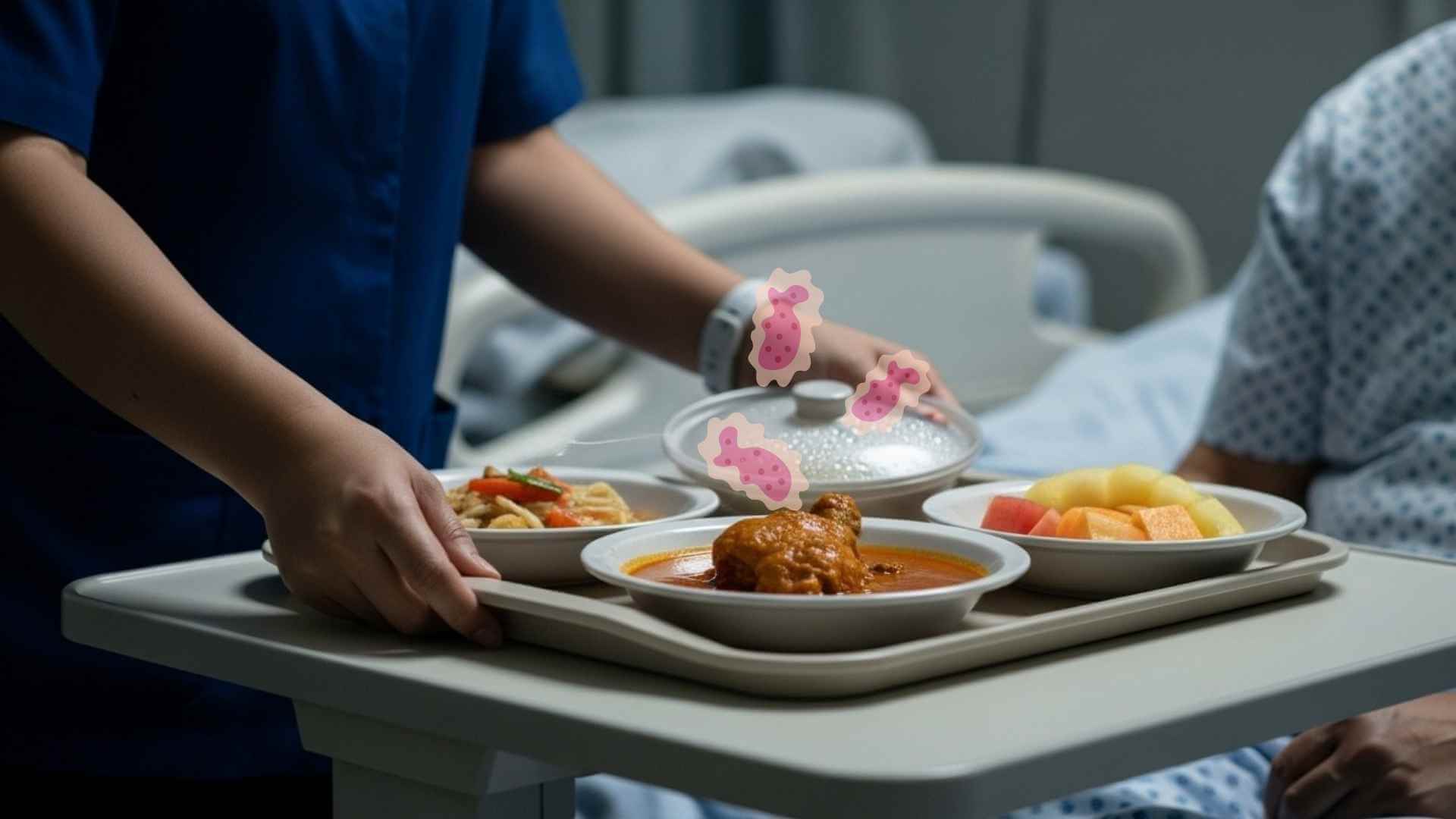
Imagine a foodborne illness outbreak traced back to a sandwich supplier for your hospital’s cafeteria. The patients affected are already immunocompromised. The reputational damage is severe, and the legal repercussions are a nightmare.
This is the weight of responsibility carried by hospital internal food safety committees. Your role in auditing food vendors is not just administrative—it’s a critical line of defense. This comprehensive guide is designed for dedicated committee members, facility managers, and administrators who may not have a formal food safety background but need to conduct thorough, compliant hospital vendor audits or inspection.
Why Hospital Vendor Audits Are Non-Negotiable
Hospitals represent a perfect storm of risk: vulnerable populations, complex supply chains, and high-stakes outcomes. An audit is your primary tool for risk mitigation.
Patient Vulnerability: Cancer patients, the elderly, and post-operative individuals have weakened immune systems. A pathogen like Listeria or Salmonella that might cause mild discomfort in a healthy person can be fatal here.
Legal & Regulatory Liability: Under Malaysia’s Food Act 1983 and regulations by the Ministry of Health (MOH), hospitals are responsible for ensuring all food served—whether made on-site or by a vendor—is safe. Ignorance is not a defense in court.
Reputational Catastrophe: News of a food poisoning incident in a hospital spreads quickly and erodes public trust, affecting patient admissions and stakeholder confidence.
Pre-Audit Preparation: Your Foundation for Success
Walking into an audit unprepared is a disservice to your hospital. Here’s your checklist:
Document Request: Ask the vendor in advance for:
Valid Business License & MOH Registration.
HALAL Certification (JAKIM or relevant authority) (Optional)
Food Handler Training Certificates for all kitchen staff.
Anti-Typhoid valid certificate for all kitchen staff.
A list of major ingredients and their suppliers (traceability).
Review Previous Findings: If this is a re-audit, study past non-conformities. Has corrective action been taken?
Assemble Your Toolkit: A digital camera/phone, a thermometer (probe and infrared), a flashlight, a notepad, and this guide.
Schedule the Visit: Ensure key personnel (vendor’s operations manager, head chef) will be present.

The On-Site Audit: A Step-by-Step Checklist
This is where theory meets practice. Follow this sequence.
1.Document Verification & Traceability
Do not proceed if critical documents are missing or expired. Verify the provided certificates against official databases if possible. Check if the ingredient list matches what is in the kitchen. Can they trace a batch of chicken back to the farm?
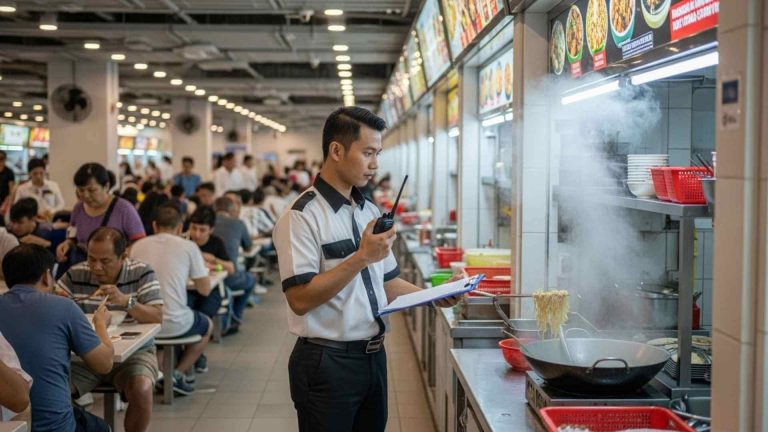
2.Kitchen & Facility Walkthrough (Good Hygiene Practices Focus)
Look beyond surface cleanliness. Use your senses.
Sight: Are walls, floors, and ceilings clean and in good repair? Is there evidence of pests (droppings, gnaw marks)? Is there clear separation between raw and ready-to-eat areas?
Touch: Are food contact surfaces smooth, non-absorbent, and clean? Are storage racks and shelves easy to clean?
Smell: Are there any foul, stagnant, or chemical odours?
Temperature: Use your probe thermometer. Are chillers at ≤5°C and freezers at ≤-18°C? Are hot holding units at ≥60°C? Check the logs.
3.Food Handler Interview & Practice Observation
Talk to the staff preparing the food, not just the manager.
Ask: “What is your procedure for washing hands?” Watch them demonstrate.
Ask: “How do you prevent raw chicken juices from contaminating salad?”
Observe: Are they wearing appropriate attire? Is there blatant cross-contamination? Do they use separate chopping boards?
4.Allergen Control & Cross-Contamination Checks
This is critical for patient meals.
Is there a documented allergen policy?
Are allergenic ingredients (nuts, dairy, shellfish) stored, prepared, and labelled separately?
Are cleaning procedures robust enough to remove allergen residues?
5.Common Critical Non-Compliances Found in Hospital Vendor Audits
Be especially vigilant for these frequent, high-risk failures:
Temperature Abuse: The “Danger Zone” (5°C – 60°C) ignored during thawing, cooling, or display.
Inadequate Pest Proofing: Gaps in doors, missing drain covers, poor waste management attracting pests.
Poor Personal Hygiene: Lack of proper handwashing facilities or incorrect practices.
Chemical Contamination Risk: Food-grade sanitizers stored next to food, unlabeled spray bottles.
Failed Traceability: Invoices missing, no system to recall a contaminated ingredient batch.
Post-Audit: Reporting, Scoring, and Follow-Up Actions
Debrief Immediately: Discuss major findings on-site with the vendor’s management.
Formalize the Report: Use a standardized template. Cite specific regulations (e.g., Food Hygiene Regulations 2009). Include photographic evidence.
Score and Categorize: Rate non-compliances as Critical, Major, or Minor. A single Critical finding (e.g., pest infestation) should trigger immediate suspension of supply until rectified.
Set Clear Corrective Actions (CAR): Each finding must have a corrective action, a responsible person, and a clear deadline (e.g., “Seal all gaps in the rear door with silicone sealant by [date]. Provide photo evidence.”).
Schedule the Follow-Up: A re-audit to verify CAR closure is mandatory for critical items.

The Competency Gap: How to Confidently Fulfill Your Role
A checklist is a tool, but competency is what wields it effectively. The difference between a box-ticking exercise and an audit that saves lives is the auditor’s deep understanding of why each point matters.
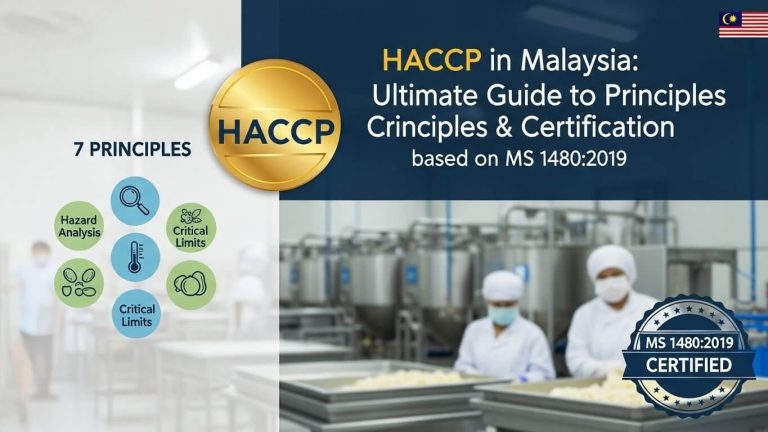
Many dedicated committee members are doctors, nurses, administrators, or facilities staff appointed to this crucial role without formal training in Hazard Analysis Critical Control Point (HACCP) principles, Good Hygiene Practices (GHP), or Allergen Management. This knowledge gap is your team’s biggest vulnerability.
You cannot reliably identify a microbiological risk, assess the severity of a cross-contamination pathway, or validate a cleaning protocol if you haven’t been trained to do so.
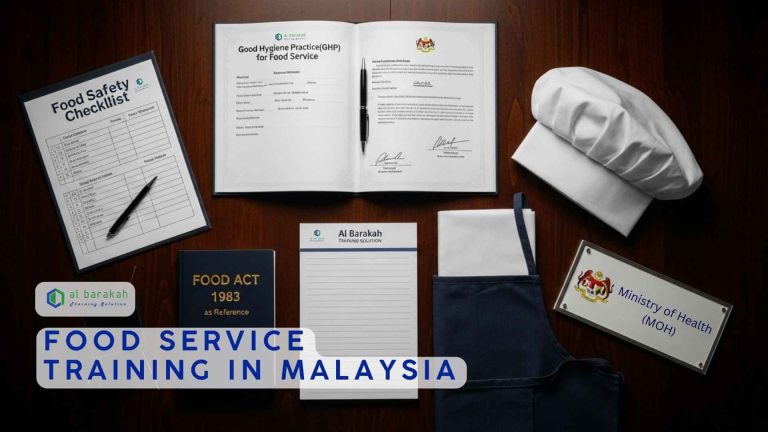
To build this foundational competency, your committee needs more than a vendor audit guide—they need structured education on the essential food service training in Malaysia. This core knowledge in food safety, Halal compliance, and HACCP principles is what empowers auditors to make critical judgments beyond a checklist.
A comprehensive overview of these mandatory and recommended courses can be found in our complete guide to essential food service training in Malaysia.
Conclusion & Your Next Step for Hospital-Wide Food Safety
Your committee’s work is a pillar of patient safety. By systematically preparing, executing, and following up on audits, you build a formidable food safety culture that extends beyond your hospital walls to your vendors.
To move from confidence in a checklist to competence in risk assessment, your committee needs the right foundation.
The Comprehensive Food Safety Training for Food Service program is designed specifically for internal auditors and non-food-science professionals like you. It transforms committee members into competent assessors, covering:
GHP & HACCP Fundamentals: The science behind your checklist.
Allergen Management & HALAL Compliance: Critical for Malaysian healthcare.
Auditing Techniques & Reporting: How to communicate findings effectively.
Malaysian Food Regulations: Your legal framework.
Equip your team with the certification and knowledge to perform audits that truly protect your patients, your staff, and your hospital’s reputation.