What are the 8 Most Common Food Allergens Found in Malaysia?
Navigating daily life with a food allergy requires constant vigilance, and in a country with a cuisine as vibrant and complex as Malaysia’s, knowing the most common culprits is your essential first line of defense. From the rich, shrimpy base of a beloved laksa to the ground peanuts coating a classic rojak, allergens can often be hidden in plain sight. For consumers and food industry professionals alike, understanding these risks is key to safety. In this guide, we break down the 8 most common food allergens as recognized by Malaysian regulations, detailing exactly why each one is prevalent and where you might unexpectedly encounter them in local dishes and ingredients.
The Official List: Malaysia’s 8 Major Allergens
In Malaysia, the food safety framework is guided by the Food Regulations 1985. This law mandates that pre-packaged food must clearly declare the presence of any of the following eight major allergens when used as an intentional ingredient. This list forms the foundation of allergen awareness in the country.
Here are the 8 common food allergens you need to know:
Crustaceans (e.g., shrimp, prawn, crab, lobster)
Eggs and egg products
Fish and fish products
Peanuts and peanut products
Soybeans and soybean products
Milk and milk products
Cereals containing gluten (e.g., wheat, barley, rye, oats)
Tree Nuts and their products (e.g., almonds, cashews, walnuts)
This regulated list provides a critical starting point for identifying potential risks, whether you’re reading a label at the supermarket or inquiring about a meal at a restaurant.
A Deep Dive into Each Common Allergen
Now, let’s explore each of these eight common food allergens in detail. Understanding their prevalence in Malaysian ingredients and culinary practices is key to managing your safety effectively.
1. Crustaceans (Shellfish)
Why It’s a Major Allergen: Shellfish allergy is one of the most prevalent and potentially severe allergies worldwide. In Malaysia, it’s particularly challenging due to the fundamental role of belacan (fermented shrimp paste) and dried shrimp in building the flavour base of countless local dishes.
Common Malaysian Culinary Examples: Sambal udang, laksa, curry mee, Hokkien mee, nasi lemak sambal, cencaluk.
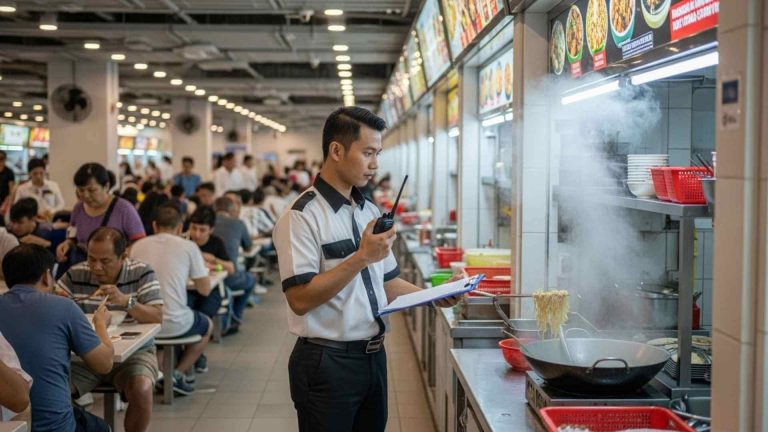
Hidden Sources & Cross-Contamination: The biggest risk is belacan. Even if a dish contains no visible pieces of prawn, its stock or sambal paste likely contains belacan. Cross-contamination is also high in hawker centres where the same wok, utensils, and frying oil are used for multiple dishes containing prawns, squid, and cockles.
2. Eggs
Why It’s a Major Allergen: Eggs are a universal binding, leavening, and thickening agent. They are inexpensive and widely used in both sweet and savoury applications, from traditional kuih to modern baked goods.
Common Malaysian Culinary Examples: Kek (cakes), kuih (especially kuih lapis, karipap, and onde-onde), some types of yellow noodles, roti canai dough, and mayonnaise-based sauces.
Hidden Sources & Cross-Contamination: Eggs can be used as a glaze on pastries or as a binder in fried meat and fish cakes. In bakeries, dustings of powdered flour and egg wash can create airborne particles, leading to cross-contact with other products.
3. Fish
Why It’s a Major Allergen: As a country surrounded by water, fish is a dietary staple and a primary protein source. It’s consumed fresh, dried (ikan bilis), and fermented into sauces and pastes.
Common Malaysian Culinary Examples: Ikan bakar, asam pedas, fish head curry, fish ball noodles, and dishes using ikan bilis (anchovies) as a base for stock, such as soups and certain sambals.
Hidden Sources & Cross-Contamination: Fermented fish products like budu (from the East Coast) and cincalok are often used as condiments or seasoning. Fish sauce is a common ingredient in stir-fries and dipping sauces. Shared frying oil for frying fish and other items is a significant cross-contamination risk.
4. Peanuts
Why It’s a Major Allergen: Peanuts are deeply embedded in Malaysian cuisine, often used as a garnish, in sauces, or ground into a flavourful paste. Peanut allergy is common and can cause severe reactions.
Common Malaysian Culinary Examples: Satay sauce (kuah kacang), gado-gado, rojak, certain types of kuih, and as a topping for pisang goreng.
Hidden Sources & Cross-Contamination: The most significant risk is cross-contamination at food stalls where peanuts are ground, prepared, and used liberally. A spoon used for satay sauce can easily contaminate other dishes. Always specify “tanpa kacang” (without peanuts).
5. Soybeans
Why It’s a Major Allergen: The soybean is incredibly versatile, consumed in whole form (tauhu, tempe) and as a liquid seasoning. It is one of the most difficult allergens to avoid due to the ubiquity of soy sauce.
Common Malaysian Culinary Examples: Tauhu, tempe, tau kwa, soy milk, taucu (fermented bean paste), and kicap (soy sauce).
Hidden Sources & Cross-Contamination: Kicap is used in almost every stir-fried noodle and rice dish, in marinades for meats, and as a table condiment. It is a hidden component in many dark-coloured gravies and sauces. Many vegetarian “meat” products are also made from soy.
6. Milk
Why It’s a Major Allergen: While traditional Malay cuisine uses little dairy, it is prevalent in Mamak (Indian-Muslim) fare and Western-style foods. Milk and butter (in the form of ghee) are common cooking fats.
Common Malaysian Culinary Examples: Teh tarik, roti canai and naan (often cooked with ghee), dalca (a lentil curry often containing yogurt), modern cakes, pastries, and ice cream.
Hidden Sources & Cross-Contamination: Ghee (clarified butter) is the primary hidden source. It is used to cook various types of roti and to add flavour to rice dishes like biryani. Buttered toast (“roti bakar”) and some biscuits also contain dairy.
7. Gluten (Wheat)
Why It’s a Major Allergen: Wheat is a primary ingredient in noodles and breads, which are dietary staples for many Malaysians. Gluten is the protein in wheat that causes the allergic or autoimmune response.
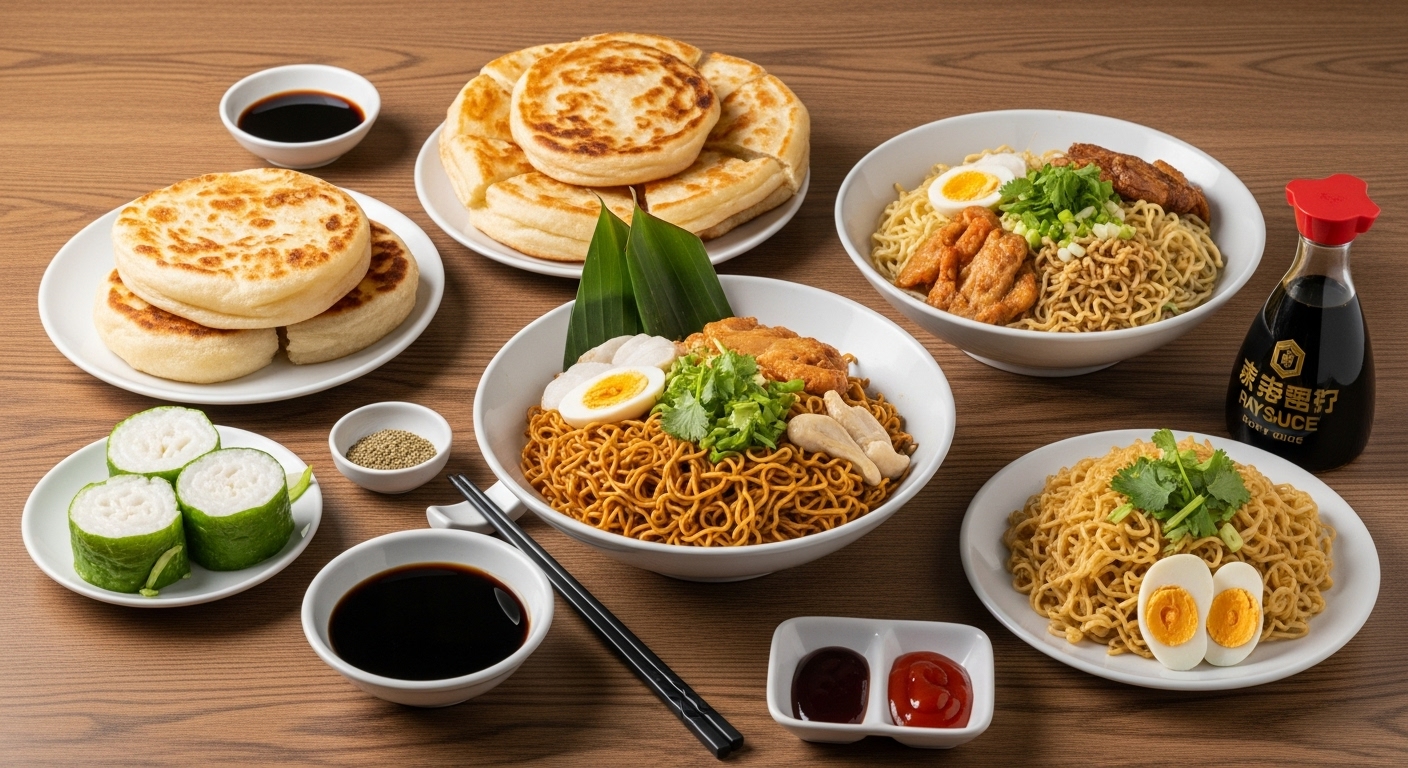
Common Malaysian Culinary Examples: Mee (wheat noodles), all types of roti, naan, and other breads from Mamak stalls, many types of kuih, and soy sauce.
Hidden Sources & Cross-Contamination: Wheat flour is often used as a thickening agent in soups, gravies, and sauces. It can also be found as a filler in some processed meats like sausages and burgers. The shared cooking water for noodles is a major source of cross-contamination.
8. Tree Nuts
Why It’s a Major Allergen: Tree nuts are often used in desserts, specialty drinks, and as garnishes. It’s important to note that peanuts are legumes, and a peanut allergy does not automatically mean an allergy to tree nuts (and vice versa).
Common Malaysian Culinary Examples: Badam (almonds) in badam milk and some biscuits, cashew nuts in stir-fries and korma curries, and walnuts in baked goods.
Hidden Sources & Cross-Contamination: Tree nuts can be found as a garnish on certain kuih and desserts. Cross-contamination can occur in factories that process multiple types of nuts or in restaurants that use them in their kitchens.
How to Stay Safe with Common Food Allergies in Malaysia
Living with a food allergy in a culinary paradise like Malaysia requires a proactive and informed approach. Knowledge is your best defense. Here are the essential strategies to manage your risk and dine with confidence.
1. Become a Label Detective
For any pre-packaged food, scrutinize the ingredient list. By law, the 8 common food allergens must be declared. Look for them, often in bold or highlighted text. Don’t ignore precautionary statements like “May contain traces of…” as they indicate a real risk of cross-contamination, even if the allergen isn’t a direct ingredient.
2. Communicate Clearly and Specifically When Eating Out
Vague statements can lead to misunderstandings. Be direct and specific with restaurant staff or hawkers.
Don’t just say: “I have allergy.”
Do say: “Saya ada alahan [udang/kacang/susu]. Makanan ini ada masukkan [belacan/kuah kacang/minyak sapi]?” (I have a [shrimp/peanut/milk] allergy. Does this dish contain [belacan/peanut sauce/ghee]?)
Learn key phrases: “Tanpa kacang” (without peanuts), “Tidak boleh ada susu” (cannot have milk), “Ada belacan?” (Is there belacan?).
3. Choose Establishments with Care
Opt for eateries where you can easily communicate with the staff and where the food preparation is relatively transparent. Places with clear allergen policies or simpler menus can be safer than bustling hawker centres with shared woks and utensils, though vigilance is always required.
4. Be Prepared for an Emergency
Always carry your prescribed antihistamines or epinephrine auto-injector if you have one. Ensure your family, friends, and colleagues know about your allergy, how to recognize a reaction (anaphylaxis), and how to use your emergency medication. In an emergency, call 999.
Managing food allergies is a continuous process of learning and advocacy. For a complete understanding of labeling laws, managing risks for businesses, and in-depth strategies, we highly recommend referring to our comprehensive resource, The Ultimate Guide to Food Allergens in Malaysia.
📌For Food Business Owners:
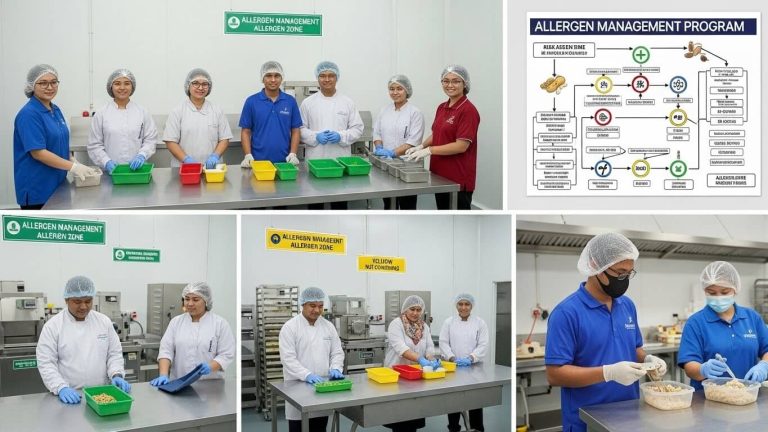
This information is also the foundation of customer safety in your establishment. Proper Food Allergen Awareness Training is not just recommended; it’s essential for compliance and protecting your customers. Equip your team with the knowledge to answer questions accurately and prevent cross-contamination in the kitchen.
For a comprehensive understanding, including labeling laws and management strategies, read our Ultimate Guide to Food Allergens in Malaysia.