Why a Robust FSMS is Non-Negotiable in Malaysia
In the modern food industry, a robust Food Safety Management System (FSMS) is not merely a badge of honour—it is the bedrock of survival and growth. For food manufacturers, Quality Assurance (QA), and Quality Control (QC) professionals in Malaysia, understanding and implementing the correct FSMS is critical for legal compliance, market access, and building unshakeable consumer trust.
Operating under the purview of the Food Act 1983 (Act 281) and the Food Hygiene Regulations 2009, Malaysian food businesses must navigate a complex landscape of local mandates and international expectations. Failure to comply can result in severe penalties, product recalls, and irreversible brand damage.
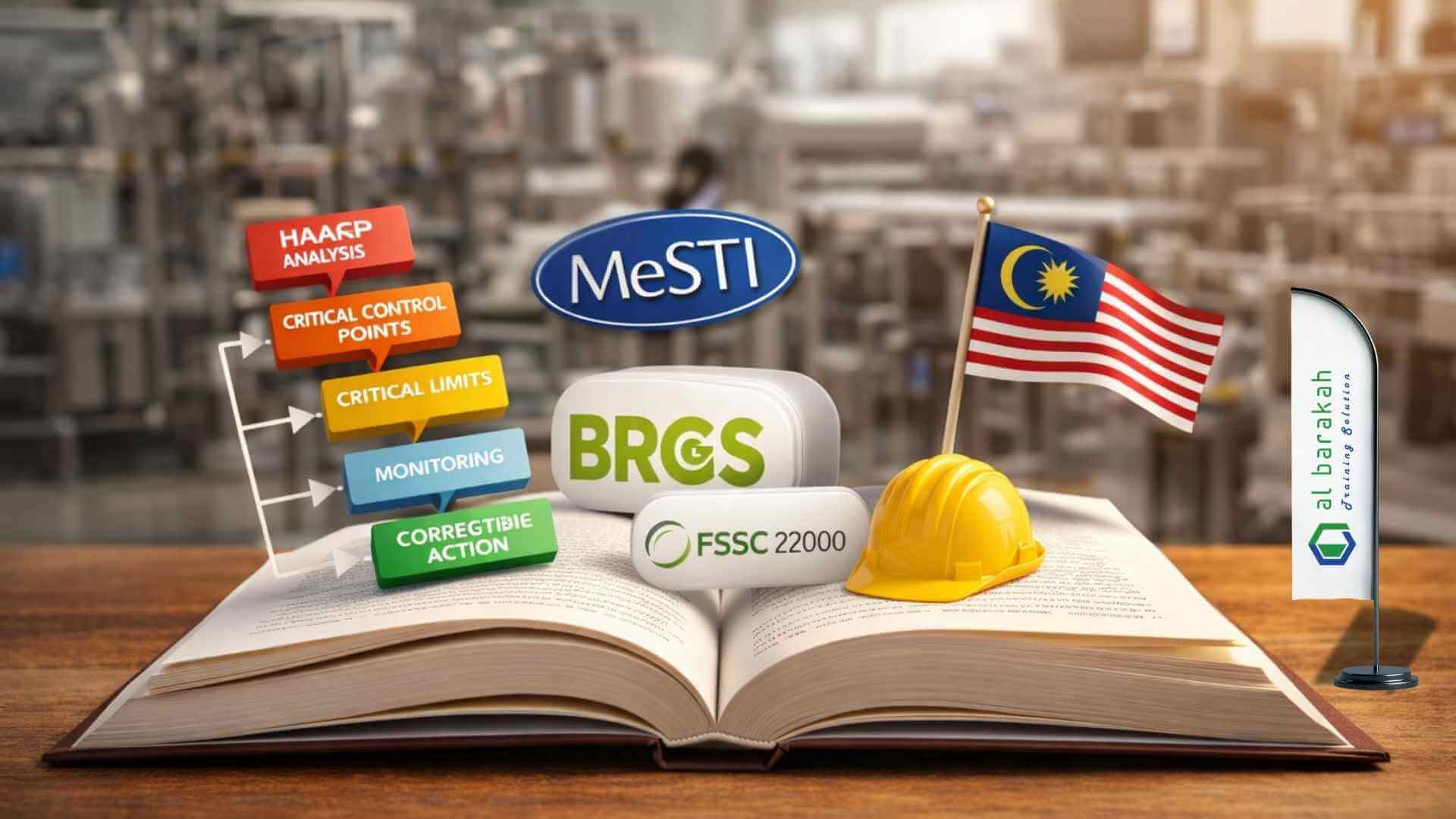
This guide serves as your comprehensive bible for Food Safety Management Systems in the Malaysian context. We will demystify the core principles, dissect the mandatory local schemes like MeSTI, and compare the world’s leading international certifications like BRCGS and FSSC 22000 to help you chart the right path for your business.
The Foundation: Core Principles of Food Safety
Before diving into specific certifications, one must understand the foundational elements upon which every credible FSMS is built.
1. Prerequisite Programs (PRPs)
These are the basic environmental and operational conditions necessary for the production of safe food. Think of them as the hygiene and operational foundation. In Malaysia, these are largely defined by the Food Hygiene Regulations 2009. Key PRPs include:
-
GMP (Good Manufacturing Practice): Covers the premises, equipment, personnel hygiene, and sanitary facilities.
-
GHP (Good Hygiene Practice): Focuses specifically on personal hygiene, pest control, waste management, and cleaning & sanitation procedures.
2. The 7 Principles of HACCP
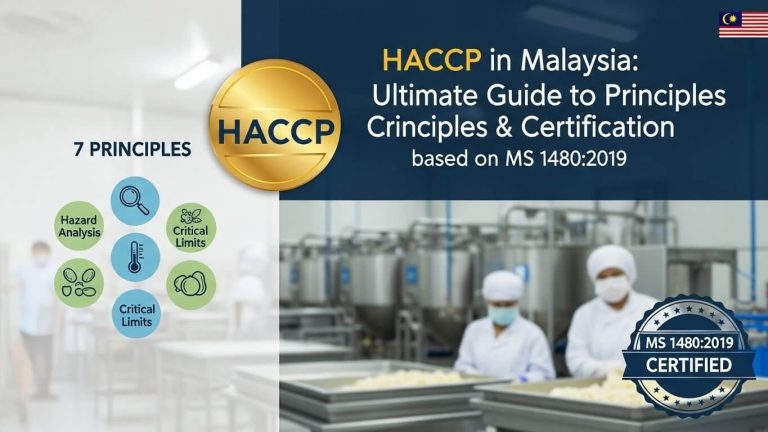
Hazard Analysis Critical Control Point (HACCP) is the scientific backbone of any modern FSMS. It is a systematic, preventive approach to food safety that addresses physical, chemical, and biological hazards. The seven principles are:
-
Conduct a Hazard Analysis.
-
Determine the Critical Control Points (CCPs).
-
Establish Critical Limits for each CCP.
-
Establish Monitoring Procedures for CCPs.
-
Establish Corrective Actions.
-
Establish Verification Procedures.
-
Establish Record-Keeping and Documentation.
Any effective FSMS, local or international, will be built upon a solid foundation of PRPs and the HACCP principles.
The Malaysian Regulatory Landscape & Local Certification
For any business manufacturing food within Malaysia’s borders, compliance with local regulations is the first and most critical step.
MeSTI Certificate: The Mandatory Foundation for Market Access
The Makanan Selamat Tanggungjawab Industri (MeSTI) scheme is a certification program enforced by the Ministry of Health (KKM) Malaysia. It is designed to assist and certify local food manufacturers in implementing Good Manufacturing Practices (GMP) and HACCP.
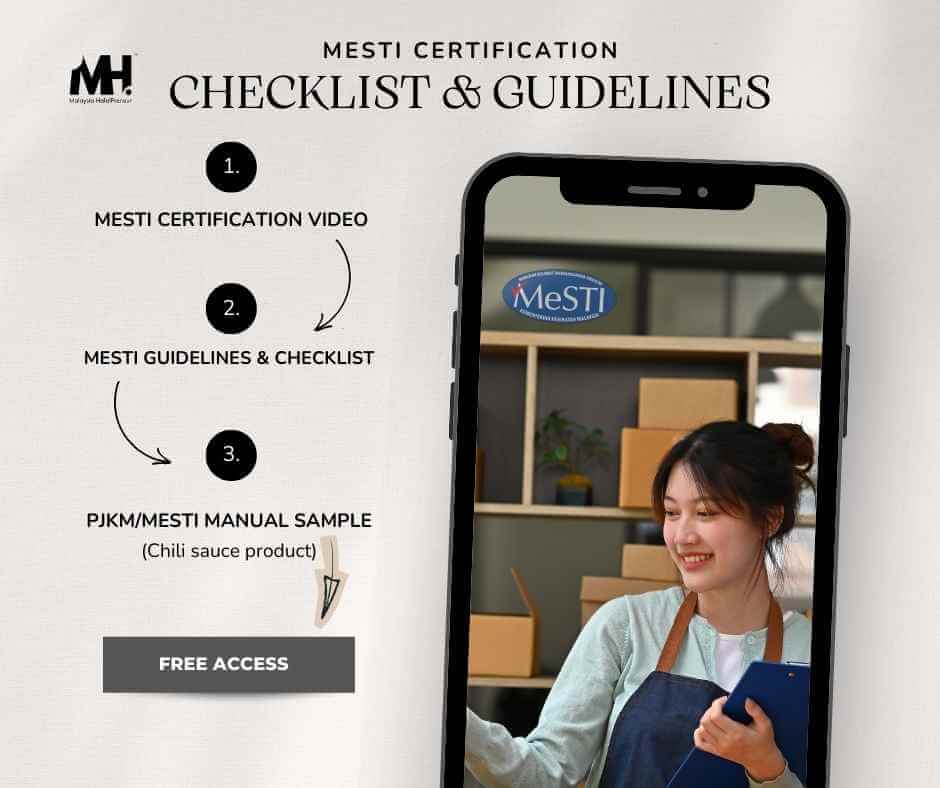
Why MeSTI is Essential:
-
Legal Requirement: It is mandated for all food manufacturers in Malaysia.
-
Market Access: Possessing MeSTI certification is often a prerequisite for supplying to major local retailers, hypermarkets, and food service chains.
-
Consumer Confidence: It signals to Malaysian consumers that your products meet the national safety standards.
For a detailed, step-by-step walkthrough of this certification, including application procedures and audit preparation, read our dedicated guide:
👉 [The Complete Guide to MeSTI Certification in Malaysia]
The Apex: International Food Safety Certifications (The “Gold Standards”)
Once you have secured your domestic market with MeSTI, the next logical step for growth is export. This is where internationally recognized, Generally Recognized as Safe (GFSI)-benchmarked certifications become indispensable. They provide a universal language of food safety that global buyers and retailers trust.
Here are the dominant international standards relevant to Malaysian food manufacturers:
1. ISO 22000: The International Benchmark
ISO 22000 is a globally recognized standard that specifies the requirements for a food safety management system. It integrates the principles of HACCP and is applicable to any organization in the food chain, regardless of size or complexity. It is an excellent starting point for companies aiming for international recognition.
2. FSSC 22000: The GFSI-Benchmarked Powerhouse
The Foundation for Food Safety Certification (FSSC) 22000 is a GFSI-benchmarked scheme based on ISO 22000 and sector-specific PRPs (like ISO/TS 22002-1 for food manufacturing). Its GFSI recognition makes it highly respected and often demanded by major global brands and retailers. It is known for its rigorous management system requirements.
3. BRCGS: The Retailer’s Choice
The Brand Reputation Compliance Global Standard (BRCGS) is another leading GFSI-benchmarked standard. Originating from the UK, it is particularly dominant in the United Kingdom and Europe. It places a strong emphasis on product safety, quality, and operational control, and is frequently a mandatory requirement for suppliers to major European retailers.
4. IFS Food: For the European Market
The International Featured Standards (IFS) Food is a GFSI-benchmarked standard widely recognized in Germany, France, and other parts of continental Europe. Like BRCGS, it is heavily focused on food safety and quality processes for retailers and wholesalers.
5. SQF Program: The North American Favorite
The Safe Quality Food (SQF) Program is a rigorous GFSI-benchmarked standard that is widely recognized across the Americas and the Asia-Pacific region. It is unique for its focus on quality management in addition to food safety, offering different levels of certification.
| Certification | Key Focus | GFSI Benchmarked? | Primary Geographical Strength |
| ISO 22000 | General FSMS framework, HACCP integration | No | Global (Entry-level international) |
| FSSC 22000 | Management systems, ISO 22000 + sector PRPs | Yes | Global (Widely accepted) |
| BRCGS | Operational control, product safety, retailer focus | Yes | UK, Europe, Global |
| IFS Food | Food safety & quality for retailers/wholesalers | Yes | Germany, France, Europe |
| SQF | Food safety & quality management | Yes | North America, Asia-Pacific |
How to Choose the Right Certification for Your Business
Selecting the correct certification path can seem daunting. Use this simple decision guide to navigate your options:
Step 1: Establish Your Foundation.
❓ Question: Do you manufacture food in Malaysia?
✅ Action: You must implement and obtain MeSTI Certification. This is non-negotiable for legal operation. Do consider Halal Certification as this have strong demand in local and global market.
Step 2: Define Your Business Goals.
❓ Question: Do you intend to export your products?
👉 If NO (Domestic Only): Maintaining your MeSTI certification and continuously improving your GMP/HACCP systems is often sufficient. Consider ISO 22000 and Halal as a mark of excellence.
👉 If YES (Export-Oriented): Proceed to Step 3.
Step 3: Identify Your Target Market & Buyer Requirements.
❓ Question: What do your buyers or target market demand?
UK & European Retailers: BRCGS or IFS are the most common requirements.
Global Supply Chains & Multinationals: FSSC 22000 is a safe, widely accepted bet.
North American Buyers: SQF is an excellent choice.
For a General International Benchmark: ISO 22000 provides a solid foundation, but you may eventually need to upgrade to a GFSI-benchmarked scheme like FSSC 22000 to satisfy specific customer demands.
The Path to Certification: A Step-by-Step Overview
Achieving certification is a project. Here is a high-level roadmap that applies to most schemes:
Gap Analysis:
A formal assessment to compare your current practices against the requirements of your target standard.
Documentation & System Development:
Creating or updating all necessary policies, procedures, and work instructions (e.g., Food Safety Manual, HACCP plans, PRP programs).
Implementation & Training:
Putting the documented system into practice and training all relevant staff on new procedures.
Internal Audit:
Conducting an internal audit to verify the system is functioning effectively and to identify areas for improvement before the external audit.
Certification Audit:
A multi-stage audit conducted by an accredited third-party certification body.
Continuous Improvement & Surveillance:
Following certification, regular surveillance audits are conducted to ensure the system remains effective and compliant.
Frequently Asked Questions (FAQ)
Q1: Is MeSTI certification enough for export?
No. MeSTI is a mandatory national scheme for the Malaysian market but for it is accepted only in few neighboring countries like Brunei, Thailand and vietnam. For export, you will need an internationally recognized certification, preferably one that is GFSI-benchmarked like FSSC 22000 or BRCGS.
Q2: Which FSMS certification is best for food packaging manufacturers in Malaysia?
FSSC 22000 includes a specific scope and prerequisite program for food packaging manufacturing (ISO/TS 22002-4), making it an excellent choice. ISO 22000 is also applicable and widely accepted.
Q3: How long does it typically take to get BRCGS certified?
The timeline varies depending on the size and complexity of your operation and your current level of readiness. From the start of implementation to certification, it typically takes 6 to 12 months.
Q4: Can I hold both MeSTI and an international certification?
Absolutely. In fact, this is a common and strategic approach. MeSTI ensures compliance with local Malaysian law, while an international certification like FSSC 22000 or BRCGS opens the doors to global markets.
Conclusion & Next Steps
Navigating the world of Food Safety Management Systems in Malaysia is a journey from foundational legal compliance to global competitiveness. Whether you are starting with MeSTI or aiming for the “gold standards” of BRCGS or FSSC 22000, a structured and well-implemented FSMS is your most valuable asset for protecting consumers and growing your business.
Ready to achieve your food safety goals?
Navigating these certifications requires expert guidance. From gap analysis to audit preparation, having the right partner makes all the difference.
Contact us for a free consultation on implementing the perfect Food Safety Management System for your Malaysian food business.