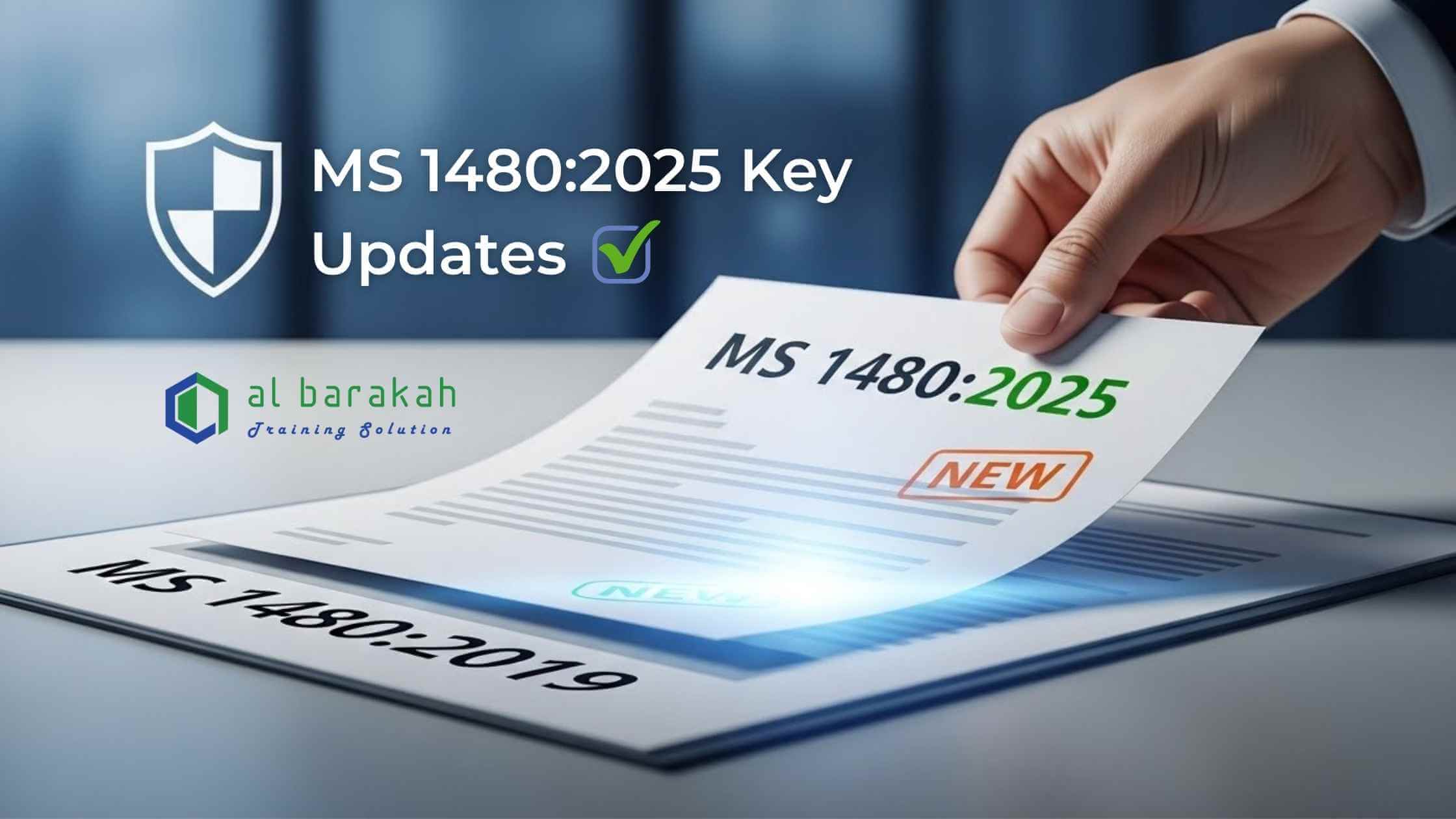
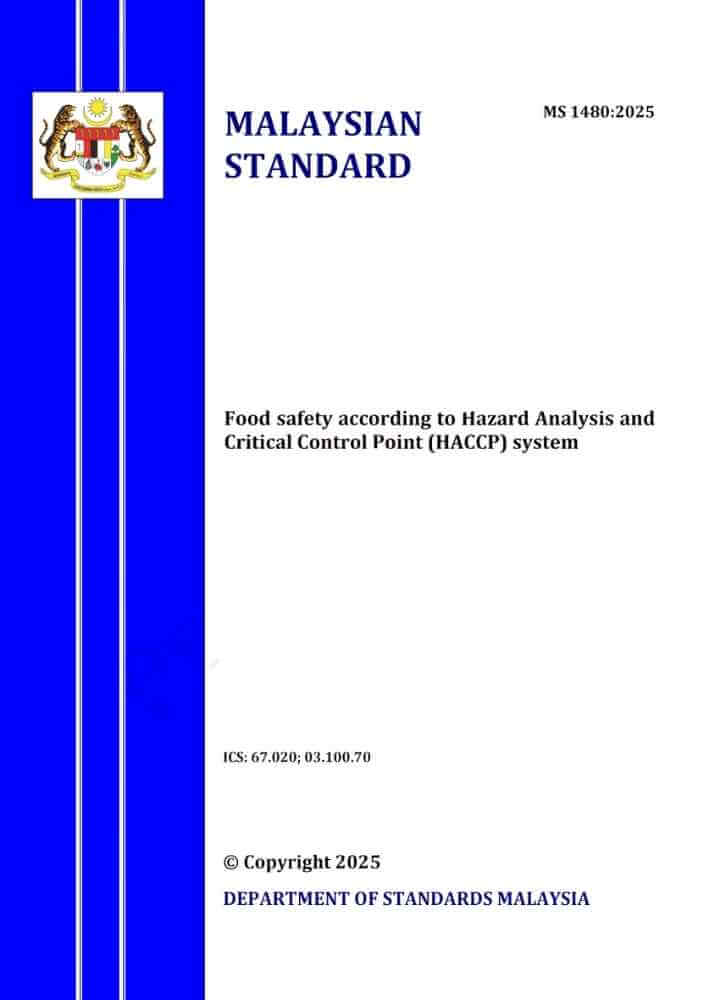
Attention, Malaysian food manufacturers, processors, and exporters. The cornerstone of your food safety system is being updated. MS 1480:2019, the standard for Hazard Analysis and Critical Control Point (HACCP) systems, is undergoing a significant revision, with MS 1480:2025 update slated to come into effect in January 2026.
For businesses holding or seeking HACCP certification from SIRIM, MOH, or other bodies, this is not a minor editorial update. It introduces substantive changes that will require a review and potential overhaul of your HACCP documentation and justification processes. Proactive understanding and preparation are essential to ensure a smooth transition and maintain uninterrupted certification.
This article provides a clear, expert breakdown of the confirmed key changes and outlines the actionable steps your business must take.
Why is MS 1480 Being Revised?
Standards evolve to reflect global best practices, address implementation gaps, and enhance the robustness of food safety management. The revision to MS 1480:2025 aims to:
-
Improve clarity and logical flow of requirements, reducing misinterpretation.
-
Strengthen the risk-based foundation of HACCP decisions, moving beyond template-filling.
-
Address specific weaknesses identified in past audits, particularly concerning raw material hazards.
-
Align with contemporary best practices in hazard analysis and control justification.
Confirmed Key Technical Changes in MS 1480:2025
1.Clause Reorganization for Improved Logic & Readability
- The Change: The standard’s clauses have been repositioned to create a more intuitive and logical flow, enhancing understanding and implementation.
- Industry Impact: Teams familiar with the 2019 clause numbering will need to re-acquaint themselves. This improves long-term usability but requires initial re-training.
2. Updated Terms & Definitions (Clause 3)
-
The Change: Clause 3 features new and amended terms to provide clearer interpretation and align with evolving global food safety language.
-
Industry Impact: Consistent understanding is critical. Your team’s foundational knowledge must be updated to ensure everyone is using the correct, updated terminology.
3. Major Revision of the Hazard Analysis Worksheet (Annex A)
-
The Change: The worksheet for raw materials and packaging materials in Annex A has been significantly reworked. It now demands a more structured and detailed analysis.
-
Industry Impact: This is a direct call for more diligence. Your existing hazard analysis worksheets will likely be non-compliant and must be re-done using the new format.
4. Stronger Emphasis on Raw & Packaging Material Hazards
-
The Change: There is a much stronger, explicit focus on conducting a rigorous hazard analysis for raw and packaging materials. Assumptions are no longer acceptable; hazards must be identified and justified with greater rigor.
-
Industry Impact: Supplier questionnaires and certificates of analysis (CoA) alone may be insufficient. You may need to deepen your supplier approval process and technical assessments.
5. Removal of the Raw Material Decision Tree
-
The Change: The previous decision tree for raw materials (Figure 2a in the MS 1480:2019 version) has been removed entirely.
-
Industry Impact: This forces HACCP teams to apply fundamental risk assessment principles rather than relying on a simplistic flowchart. This requires higher competency and better justification for decisions.
6. Risk-Based CCP Justification
- The Change: Decisions regarding Critical Control Points (CCPs) must now be more clearly risk-based and thoroughly justified. The standard demands documented rationale explaining why a step is or is not a CCP based on the severity and likelihood of the hazard.
- Industry Impact: “Because the old decision tree said so” is no longer valid. Your HACCP plan must include clear, scientific, or evidence-based justifications for each CCP determination. This demands more detailed work from your food safety team.
What This Means for Your Business: A 4-Point Action Plan
1. Documentation Overhaul is Non-Negotiable
Your existing HACCP plans, especially the Hazard Analysis Worksheets and CCP justifications, will likely not align with the new structure and requirements. A page-by-page review and update are mandatory. This is not a simple edit; it’s a substantive revision.
2. Targeted Training for Your Food Safety Team is Critical
Your HACCP team and internal auditors must be trained on the specifics of MS 1480:2025. They need to understand the new terminology, the revised hazard analysis approach, and the expectation for robust CCP justification. Our HACCP Implementation and Internal Auditor Training will be updated to cover these critical changes.
3. Conduct a Formal Gap Analysis Immediately
Do not guess where you stand. Once the final standard is published, conduct a systematic Gap Analysis comparing your current system to every new requirement in MS 1480:2025. Our HACCP Consultancy team specializes in this diagnostic service to provide you with a clear, prioritized action plan.
4. Understand: Compliance is Not Automatic
A HACCP system certified to MS 1480:2019 is not automatically compliant with the 2025 version. An active, managed transition is required. Certification bodies will audit against MS 1480:2025 starting in 2026. Proactive transition is necessary for uninterrupted certification and effective food safety assurance.
Your Transition Timeline to MS 1480:2025
- Q3-Q4 2025: Gap Analysis & Training. Conduct a formal gap analysis. Enroll your core team in updated training courses focused on the 2025 changes.
-
Q1-Q2 2026: System Update & Internal Audit. Revise all HACCP documentation. Conduct a full internal audit against the new standard.
-
January 2026 Onwards: Audit & Certification. Be ready for your next surveillance or recertification audit against MS 1480:2025.
Need Expert Guidance on the Transition?
Transitioning standards is complex, and errors can jeopardize your certification. Industry are already start dissecting the changes in MS 1480:2025. We are ready to guide you with:
-
Transition-Specific Gap Analysis & Project Management.
-
Updated Training Courses on MS 1480:2025’s new requirements.
-
Expert Support in revising your Hazard Analysis, CCP justifications, and full HACCP documentation suite.
Don’t risk your certification. Start your transition planning with an expert.
The update to MS 1480:2025 represents a meaningful shift towards greater rigor and accountability in HACCP systems. By focusing on detailed hazard analysis, robust CCP justification, and clear documentation, the standard elevates food safety assurance in Malaysia. View this as an opportunity to strengthen your system fundamentally, not just a compliance exercise.