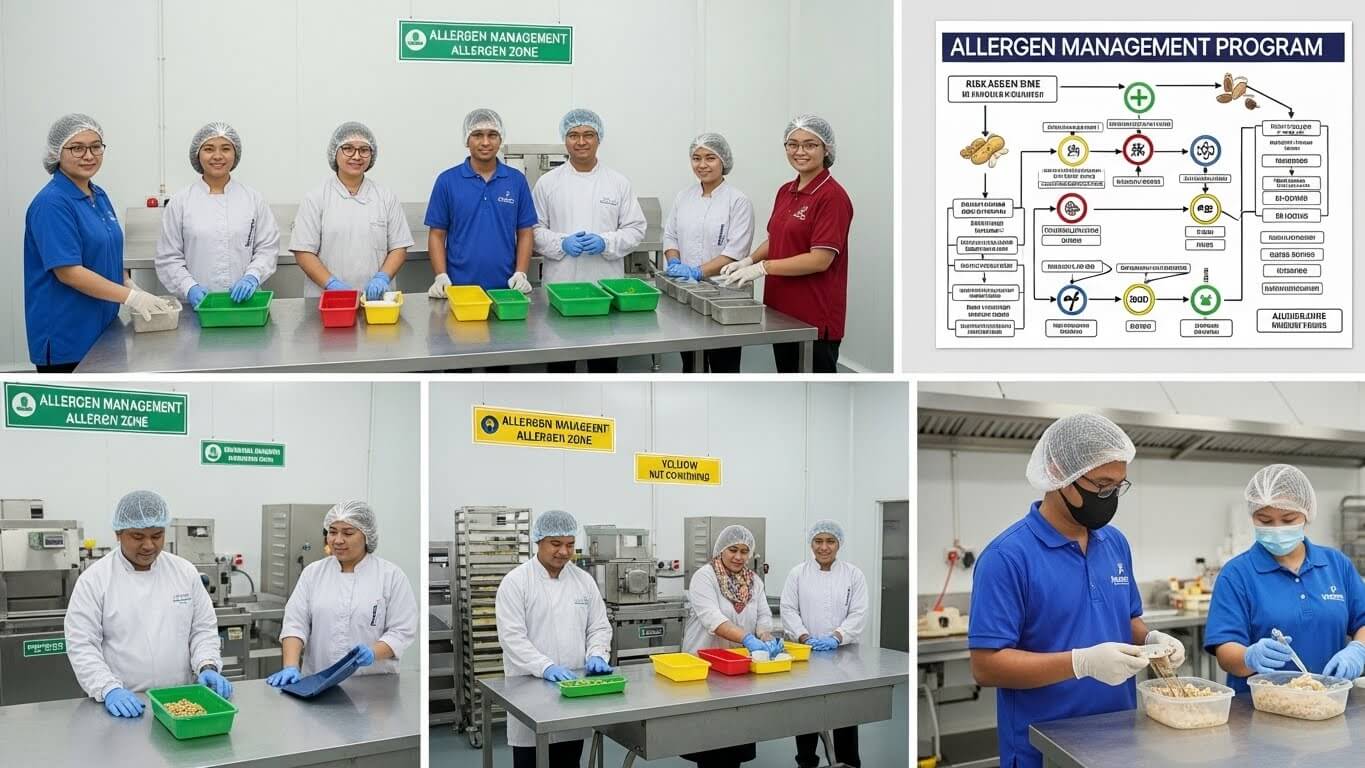
What is an Allergen Management Program? A Complete Guide for Malaysian Food Businesses
For food business owners and managers in Malaysia, managing allergens often feels like a game of chance. You might carefully avoid adding peanuts to a dish, but did your supplier guarantee the spice mix was free from cross-contact?
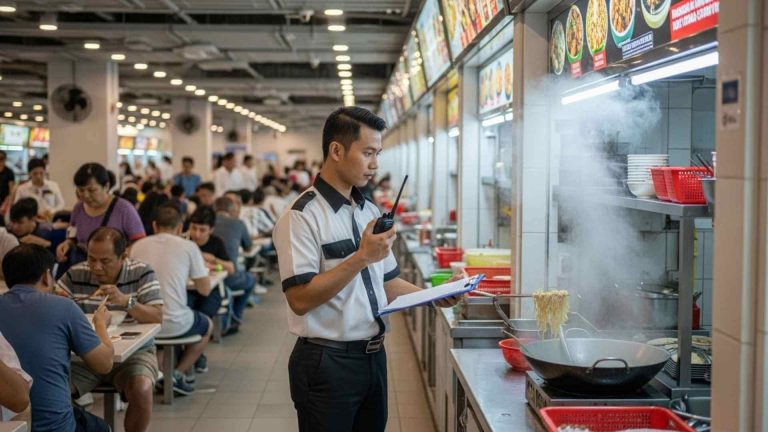
Your server might assure a customer about a dish, but does your kitchen have a dedicated fryer for allergen-free orders? This reactive, piecemeal approach is where hidden dangers—and massive liabilities—lie.
An Allergen Management Program (AMP) is the definitive solution. It is not a single document or a quick training session; it is a structured, ongoing system—essentially your master allergen control plan—integrated into your daily operations. Think of it as your personalized, proactive defense plan designed to identify, control, and communicate allergen risks at every touchpoint—from supplier to plate.
In a market governed by the Malaysian Food Regulations 1985 and a public increasingly aware of food allergies, a robust AMP is no longer optional; it is the cornerstone of a credible, safe, and compliant modern food business.
Why is an Allergen Management Program Non-Negotiable in Malaysia?
Implementing an AMP moves you from vulnerability to control. The benefits are tangible and critical:
-
Legal Compliance & Liability Shield: The law mandates allergen declaration. An AMP provides documented proof of due diligence, which is your strongest defence in the event of an incident, potentially shielding you from severe fines and lawsuits.
-
Systematic Customer Protection: It transforms safety from a hope into a guarantee. By controlling risks at their source, you dramatically reduce the chance of a life-threatening allergic reaction on your premises.
-
Brand Reputation & Competitive Edge: In the age of social media, being known as an establishment that takes allergies seriously is powerful marketing. It builds deep trust and loyalty, attracting a wider customer base.
-
Operational Confidence & Audit Readiness: Whether it’s an audit from the Ministry of Health, a HACCP certification body, or a corporate client, a documented AMP demonstrates professionalism and systematic control, making compliance audits straightforward.
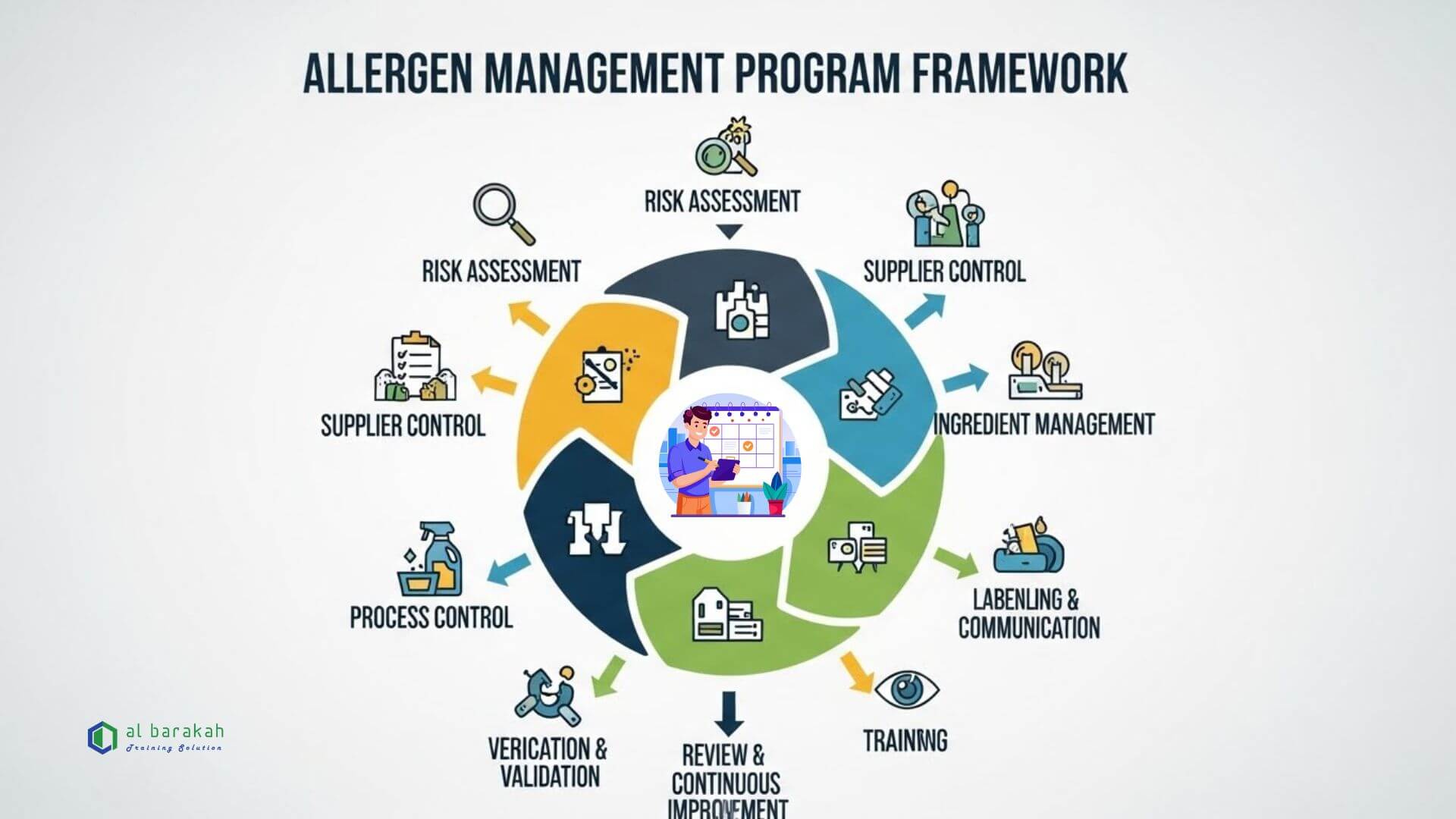
The 4 Core Pillars of an Effective Allergen Management Program
An effective AMP stands on four interdependent pillars. Weakness in one compromises the entire structure.
Pillar 1: Risk Assessment & Ingredient Management
This is the foundation. You cannot manage what you do not know.
- Action: The first step in how to implement allergen management is to create a master list of all ingredients used in your facility, down to spices and seasoning packets. This forms the basis of your allergen risk assessment.
-
Identify Hidden Allergens: Using your master list, flag every item that contains or may contain any of the 8 major allergens (as per our guide on common food allergens in Malaysia). Pay special attention to local culprits like belacan (shrimp paste), kicap (soy sauce), and kuah kacang (peanut sauce).
-
Supplier Verification: This is critical. You must obtain and review allergen declarations from every supplier. A verbal assurance is not enough—you need written documentation that forms part of your AMP records.
Pillar 2: Process & Cross-Contact Control
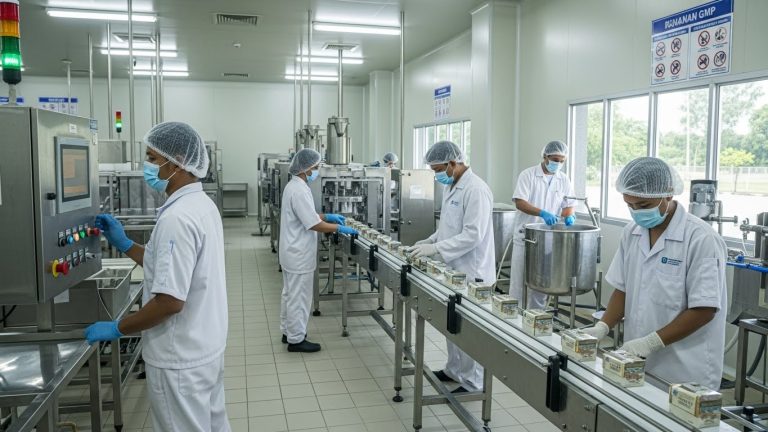
This is where theory meets practice in your kitchen or production floor. It’s about creating physical barriers to risk.
-
Storage: Segregate allergen-containing ingredients physically or clearly label them in storage areas (cold room, dry store).
-
Scheduling: Where possible, produce allergen-free items first in a production run, followed by thorough cleaning before allergen-containing products are made.
-
Dedicated Equipment: Use colour-coded utensils, cutting boards, and equipment for handling key allergens. A dedicated fryer for non-seafood items is a classic and essential control in a Malaysian kitchen.
-
Robust Cleaning SOPs: Establish and validate cleaning procedures for shared equipment and surfaces to prove they effectively remove allergen residues.
Pillar 3: Accurate Labeling & Communication
Clear information is your safety net. This applies internally and externally.
-
Internal Labels: All containers of pre-prepared foods, sauces, and intermediate products must be clearly labeled with their full ingredient list, including allergens.
-
Menu & Package Labeling: For consumers, information must be accurate and accessible. This aligns with the labeling requirements discussed in our Ultimate Guide to Food Allergens in Malaysia.
-
Staff Communication: Implement clear protocols for how allergen information is passed from the point of order (e.g., a server) to the kitchen and back.
Pillar 4: Training & Continuous Verification
A perfect system fails without competent people and regular checks.
-
Comprehensive Training: Every staff member, from procurement to service, needs role-specific training on the AMP. This goes beyond basic awareness to practical execution of the controls you’ve put in place. This is the focus of our detailed Allergen Awareness Training course or Allergen Management Program (AMP) Training.
-
Internal Audits & Verification: Schedule regular checks to ensure procedures (Pillars 1-3) are being followed correctly. This includes reviewing records, observing practices, and even conducting occasional allergen swab tests on equipment.
-
Documentation & Record-Keeping: If it’s not written down, it didn’t happen. Maintain records of your ingredient lists, supplier documents, training sessions, cleaning logs, and audit results. This is your evidence of an active, functioning AMP.
- A robust allergen control plan must address storage, preparation, and cooking separately.
How an AMP Integrates with Your Food Safety Management System
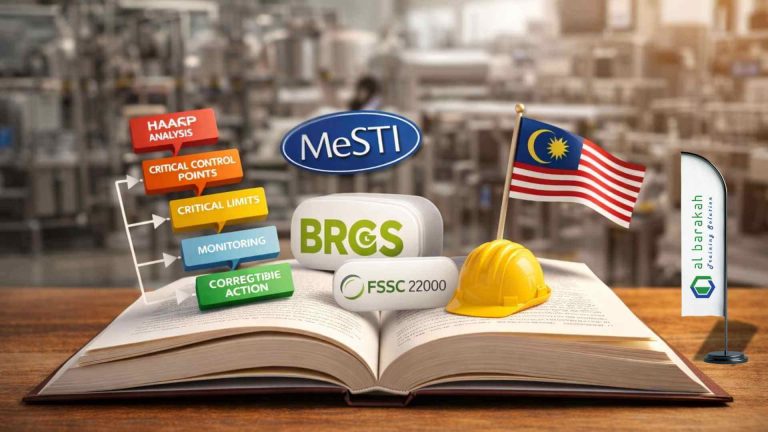
An AMP is not a standalone system. It is a critical control module within your broader Food Safety Management System (FSMS), such as HACCP, ISO 22000, or FSSC 22000.
- Within HACCP: Allergens are a significant chemical hazard. Your AMP directly addresses allergen management in HACCP through the principles of Hazard Analysis, Establishing Critical Control Points (CCPs) like dedicated fryers or storage areas, and Establishing Monitoring Procedures. For a deeper understanding of this framework, see our guide on HACCP in Malaysia.
-
Within ISO 22000/FSSC 22000: The AMP fulfills requirements for hazard analysis and control, prerequisite programs (PRPs), and operational prerequisite programs (OPRPs). It provides the documented evidence needed for certification audits.
Common Pitfalls to Avoid When Implementing Your AMP
-
Relying Solely on “May Contain” Labels: Using this as a blanket statement instead of conducting a genuine risk assessment and implementing controls is negligent and offers little legal protection.
-
One-Time Training: Training is not an event; it’s a process. New hires, new products, and procedural changes all require refresher training.
-
Poor Supplier Management: Your AMP is only as strong as your weakest supplier’s controls. Failing to vet them is a fundamental flaw.
-
Lack of Senior Management Commitment: If leadership doesn’t prioritize and resource the AMP, it will fail. Safety must be a core value, not just a poster on the wall.
- Ignoring the Full Scope of Allergen Compliance in Malaysia: Treating allergen control as just a kitchen issue, rather than a company-wide allergen compliance malaysia requirement that spans procurement, production, and service, leaves critical gaps in your defence.
Conclusion: From Knowledge to Action
Developing and implementing a robust Allergen Management Program is the most responsible step a Malaysian food business can take. This guide has outlined the what and the why, providing the framework for a system that protects lives and livelihoods.
However, a framework is just the beginning. The true challenge—and the definitive answer to how to implement allergen management effectively—lies in the practical execution. Translating these principles into a working allergen control plan requires specialized knowledge and structured guidance.
This is where theory meets practice. For businesses ready to move from planning to implementation, professional Allergen Management Training is the critical catalyst. It equips your team with the hands-on skills, templates, and confidence to not just have a program on paper, but to live it in your kitchen every day.
Ready to build your definitive defence? Explore our targeted Food Allergen Training course or Allergen management 1-Day training, designed to turn the principles of an Allergen Management Program into your operational reality.
The Top 3 Most Frequently Ask Question on AMP:
Q1: Is an Allergen Management Program the same as an Allergen Control Plan?
A: Essentially, yes. The term Allergen Management Program (AMP) often refers to the broader, documented system that includes policies, procedures, and training. The Allergen Control Plan typically refers to the specific, actionable procedures within that program (like cleaning schedules and segregation protocols). Both are part of achieving full allergen compliance in Malaysia.
Q2: How do I start the Allergen Risk Assessment process?
A: Begin with your complete ingredient list from all suppliers. Identify every item that contains or may contain the major allergens. Then, map these allergens through every step of your process—from receiving to serving—to identify where cross-contact could occur. This map is the foundation of your allergen risk assessment.
Q3: Why is Allergen Management in HACCP so important?
A: HACCP is about controlling significant hazards. Allergens are a leading chemical hazard. Proper allergen management in HACCP means formally identifying allergens in your hazard analysis, establishing CCPs or OPRPs to control them, and monitoring those controls. Without it, your HACCP plan is incomplete.