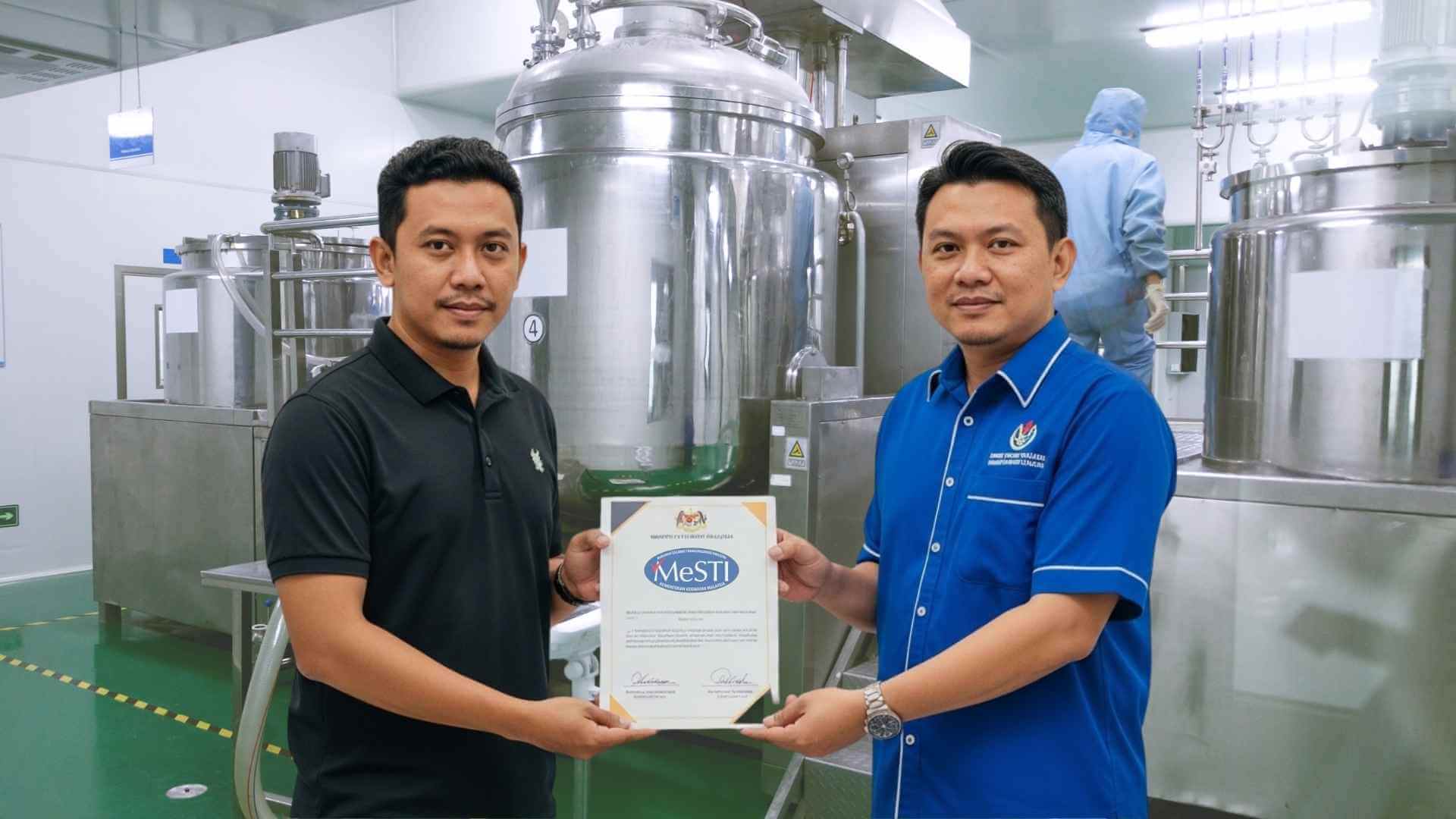
For any food manufacturer operating in Malaysia, achieving MeSTI Certification is not just a recommendation—it’s a legal requirement for market access. The Makanan Selamat Tanggungjawab Industri (MeSTI) scheme, enforced by the Ministry of Health Malaysia (MOH), is a cornerstone of the nation’s food safety system.
This comprehensive guide breaks down everything your business needs to know: from understanding the MeSTI standards and step-by-step application process to preparing for the audit and maintaining compliance. Whether you’re a local SME or an international brand, this guide will help you navigate the certification successfully.
What is MeSTI Certification?
MeSTI Certification (Makanan Selamat Tanggungjawab Industri) is the Malaysian Ministry of Health’s mandatory food safety assurance scheme stated in Food Hygiene Regulations 2009. Its core purpose is to ensure that all food manufacturers implement and adhere to foundational Good Manufacturing Practices (GMP) and Program Jaminan Keselamatan Makanan (PJKM).
Think of it as the government’s baseline seal of approval for food production hygiene and safety. It is a regulatory requirement, not a voluntary standard. For most prepackaged food products, a valid MeSTI certificate is a prerequisite for obtaining the Minister’s Approval Letter (MAL), which permits your product to be marketed and sold in Malaysia.
It is similar to Good Hygiene Practice (GHP) Certification offered in other countries that covers the basic principles of safe food handling and manufacturing.
Who Needs MeSTI Certification?
The scope of who needs MeSTI is broad, covering virtually all formal food and beverage operations. If your business falls into any of the following categories, certification is mandatory:
-
Food and Beverage Manufacturers: Companies that process, produce, or manufacture any type of prepackaged food.
-
Repackaging and Relabelling Facilities: Operations that repackage bulk food into smaller units for retail.
-
Food Processing Plants: This includes businesses involved in cutting, mixing, cooking, or preserving food.
The primary exemption is for micro-enterprises selling directly to consumers (e.g., at a local wet market) without any form of packaging or labeling. However, if you supply to retailers, distributors, or supermarkets, MeSTI Certification is non-negotiable for legal compliance.
Key Benefits of Being MeSTI Certified
Beyond fulfilling a legal obligation, obtaining your MeSTI certificate delivers significant competitive and operational advantages:
Legal Compliance & Market Access:
- This is the primary benefit. Certification allows you to legally sell your products in supermarkets, hypermarkets, convenience stores, and online platforms across Malaysia. It is also a foundational document for export purposes.
Enhanced Consumer Trust:
- The MeSTI logo on your product packaging is a recognized symbol of safety and quality. It gives retailers and end-consumers confidence in your brand’s commitment to hygiene standards.
Improved Operational Efficiency:
- Implementing the required GHP and PJKM streamlines your production processes, reduces product waste, minimizes errors, and fosters a culture of safety among staff.
Stronger Foundation for Other Certifications:
- A robust MeSTI system creates the perfect groundwork for pursuing more advanced certifications like Halal Malaysia, HACCP (Hazard Analysis Critical Control Point), or ISO 22000, often at a lower cost and with less difficulty.
The MeSTI Application Process: A 5-Step Breakdown
Understanding the MeSTI application process demystifies what can seem like a daunting task. Here is a clear, step-by-step breakdown:
Step 1: Application Submission
The journey begins online via the Ministry of Health’s Food Safety Information System (FOSIM) portal. You must register an account and submit the required documents, which typically include your company registration details, factory layout plan, list of products, and your drafted Program Jaminan Keselamatan Makanan (PJKM) Manual manuals.
Step 2: Document Review
MOH officers will review your submitted documentation for completeness and initial compliance. They may request clarifications or amendments. Do not proceed until your documentation is approved.
Step 3: The Physical Audit
This is the most critical stage. Qualified MeSTI auditors from the MOH will schedule a visit to your premises. They will conduct a thorough, on-site inspection to verify that your actual practices match your documented procedures. This includes checking facility hygiene, worker practices, equipment condition, storage, and pest control measures.
Step 4: Evaluation & Decision
Following the audit, the officers evaluate your compliance against the MeSTI standards. You will receive an audit report detailing any non-conformities (NCs). You must address all major NCs within a given timeframe to proceed.
Step 5: Certification Issuance & Monitoring
Once all requirements are satisfied, the MOH will issue your official MeSTI certificate, valid for Three (3) years. Your facility will be subject to annual surveillance audits to ensure ongoing compliance. Failure in a surveillance audit can lead to certificate suspension or revocation.
MeSTI Checklist: How to Prepare for the MeSTI Audit
Thorough preparation is the key to a first-pass success. Here is your essential checklist:
Premises & Structure:
- Walls, floors, ceilings, and drains must be clean, intact, and easy to clean. Lighting and ventilation must be adequate.
Pest Control:
- There must be no signs of infestation. Provide records of a contract with a licensed pest control service.
Worker Hygiene:
- Hand-washing stations with soap and sanitizer must be accessible. Provide records of staff medical screenings and food handler training.
Documentation:
- Your MeSTI Manual, GMP, and training records must be complete, up-to-date, and readily available.
Equipment & Calibration:
- All measuring devices (thermometers, scales) must have valid calibration certificates.
Traceability:
- Implement a system to trace raw materials from supplier to finished product.
Pro Tip: Common Audit Failures and How to Avoid Them
| Failure: | Solution: |
| Incomplete or “borrowed” MeSTI / PJKM manuals not specific to your facility. | Develop your documents from scratch, tailored to your actual processes. |
| Poor pest control evidence (e.g., no service contract, bait stations not mapped). | Engage a licensed provider and maintain detailed service reports and site maps. |
| Lack of documented staff training. | Conduct regular GHP/SSOP training and keep signed attendance and assessment records. |
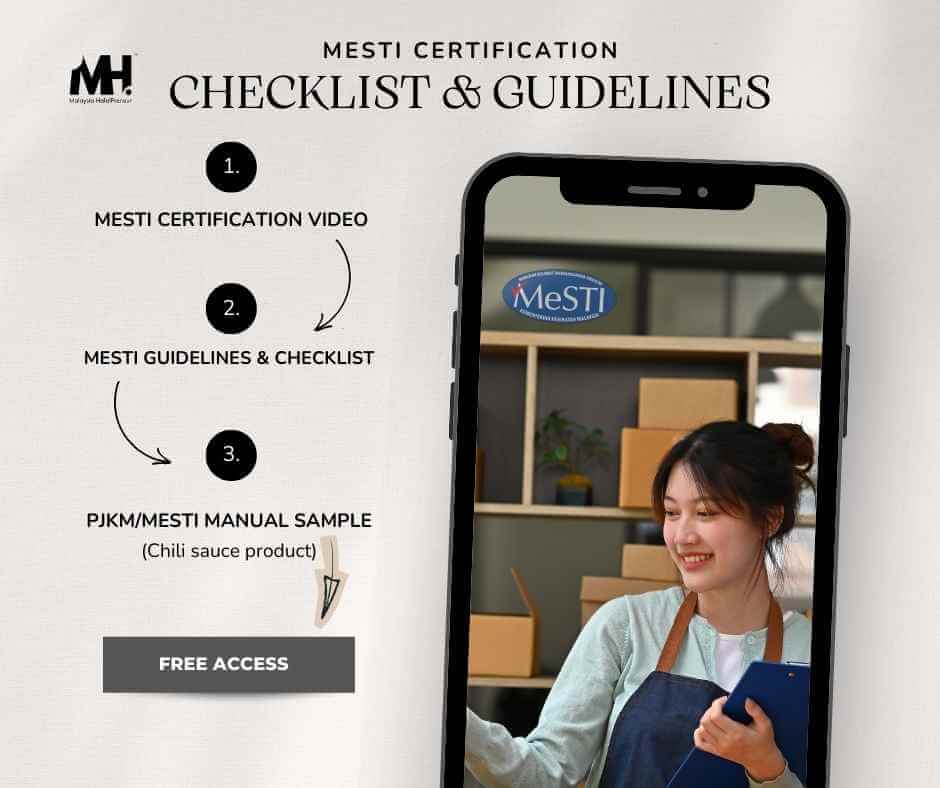
Preparing for a MeSTI audit can feel overwhelming, especially when you’re unsure what the Ministry of Health inspectors are looking for. A comprehensive MeSTI checklist is your most essential tool for ensuring no critical requirement is missed—from verifying proper hand washing station installation to confirming all pest control documentation is in order.
To simplify your compliance journey, we have developed an exhaustive, step-by-step MeSTI Certification Preparation Checklist based directly on the Peraturan-Peraturan Kebersihan Makanan (PPKM) 2009 and BKKM MeSTI Official Certification Guidelines requirements. [Access MeSTI checklist here] to systematically track every document, facility upgrade, and procedural element needed to pass your audit with confidence.
MeSTI Certification Costs & Validity
The cost of MeSTI certification is not a fixed figure. It varies based on your company’s size, the complexity of your processes, and the number of products. Costs generally involve:
Consultant Fee (Optional):
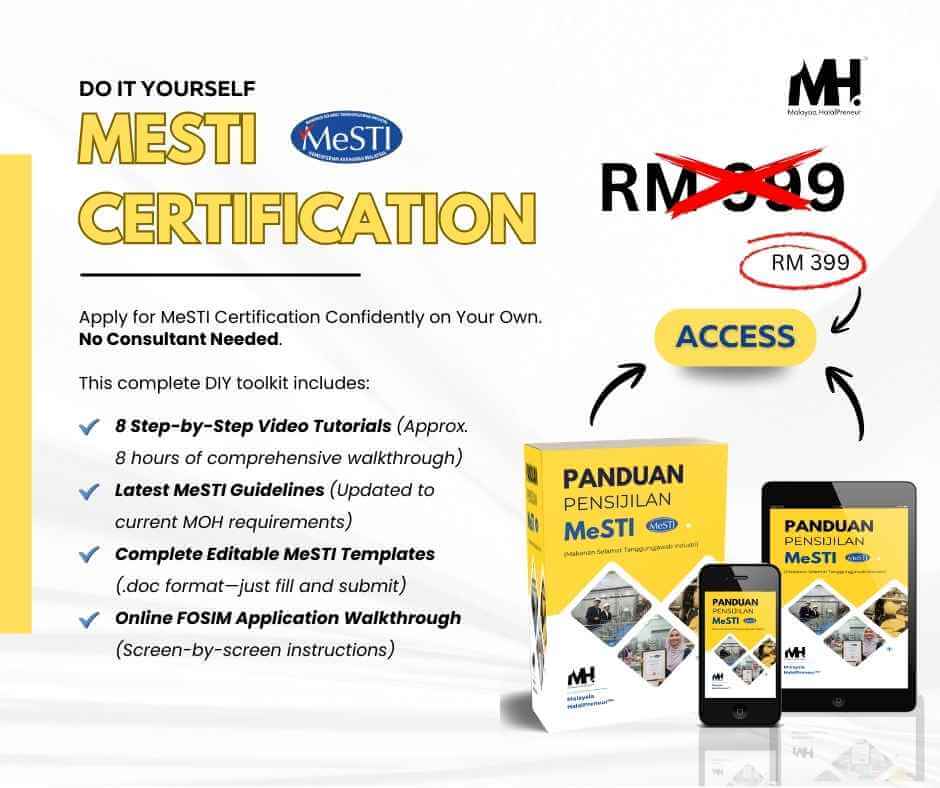
The fee paid to 3rd party services offering MeSTI Consultancy services ranging from RM3,000 ~ RM10,000. They will help in developing PJKM/MeSTI Manual which is the hardest part in any certification and submission of MeSTI Application through FOSIM website.
However this has become irrelevant since there is much resources on the internet to do your own PJKM Manual and is ranging from free to paid resources but very affordable.
Facility Renovation Cost:
This is often the most significant investment. Depending on your current premises, you may need to budget for structural modifications to meet MOH requirements. Common renovations include:
-
Partitioning to separate processing areas from non-processing zones.
-
Redoing factory layout to ensure smooth production flow and prevent cross-contamination.
-
Installing hand washing stations at strategic entry points with touchless taps, soap dispensers, and hand dryers.
-
Upgrading flooring, wall finishes, or drainage systems to meet hygienic standards.
Certificate Fee: MeSTI Certificate is Free!
Your MeSTI certificate is valid for 3 years.
MeSTI vs. Other Certifications (HALAL, HACCP, GMP)
It’s crucial to understand how MeSTI relates to other common food industry certifications. They are often complementary, not interchangeable.
| Certification | Issuing Body | Primary Focus | Legal Requirement? |
|---|---|---|---|
| MeSTI | Ministry of Health (MOH) | Food Safety & Hygiene (GHP, SSOP) | YES for manufacturers |
| Halal Malaysia | JAKIM or State Religious Dept. | Religious Compliance (ingredients, processing) | Voluntary. For Muslim market access |
| HACCP | MOH & Various Accredited C.B. | Food Safety Risk Management (hazard analysis) | Voluntary. Often required by exporters |
| GMP | MOH & Various Accredited C.B. | Manufacturing facility and good hygiene practice | Voluntary. Pre-Requisite (PRP) for HACCP Certification |
💡Key Takeaway: MeSTI Certification is the mandatory, government-enforced foundation for food safety stated in Food Hygiene Regulations 2009. Halal Certification addresses religious permissibility and voluntary based. Many businesses pursue both to access the widest market. HACCP is a more advanced, risk-based system that builds upon the GMP principles enforced by MeSTI.
Conclusion and Next Steps
Navigating the MeSTI certification process requires meticulous preparation and a deep understanding of MOH’s food safety requirements. While the journey is detailed, the outcome—legal market access, consumer trust, and improved operations—is critical for any serious food business in Malaysia.
Ready to ensure a smooth and successful MeSTI audit? Generic advice only goes so far. Your facility needs specific, actionable guidance.
Our platform connects you with certified food safety and Halal compliance trainers who are experts in preparing businesses for the MeSTI audit. An associate trainer can provide:
-
A Gap Analysis against MeSTI standards.
-
Staff Training tailored to your MeSTI Manual and GHP. A food handling training is sufficient fo all staff.
-
Documentation Review and correction.
Don’t leave compliance to chance. Contact us today to find a qualified trainer who can guide your team to certification success.