Veterinary Health Mark (VHM) Requirements Training

Overview

Navigating the Veterinary Health Mark (VHM) requirements training in Malaysia is a critical challenge for any business in the animal health industry. This mandatory certification, governed by the Department of Veterinary Services (DVS), is the definitive gateway for veterinary product registration and market access. Without a clear, practical understanding of the process, companies face risks of application delays, VHM audit failures, or non-compliance.

Ensuring the health, safety, and quality of veterinary products is a critical and non-negotiable requirement for market access. The Veterinary Health Mark (VHM) is the official certification standard in Malaysia that signifies a product’s compliance with stringent regulatory requirements for animal health.

This comprehensive training is designed to move your team beyond basic awareness, providing the practical, actionable knowledge needed to navigate the VHM application process, implement robust quality systems, and build a sustainable culture of compliance within your organization.
Veterinary Health Mark VHM Requirments Training

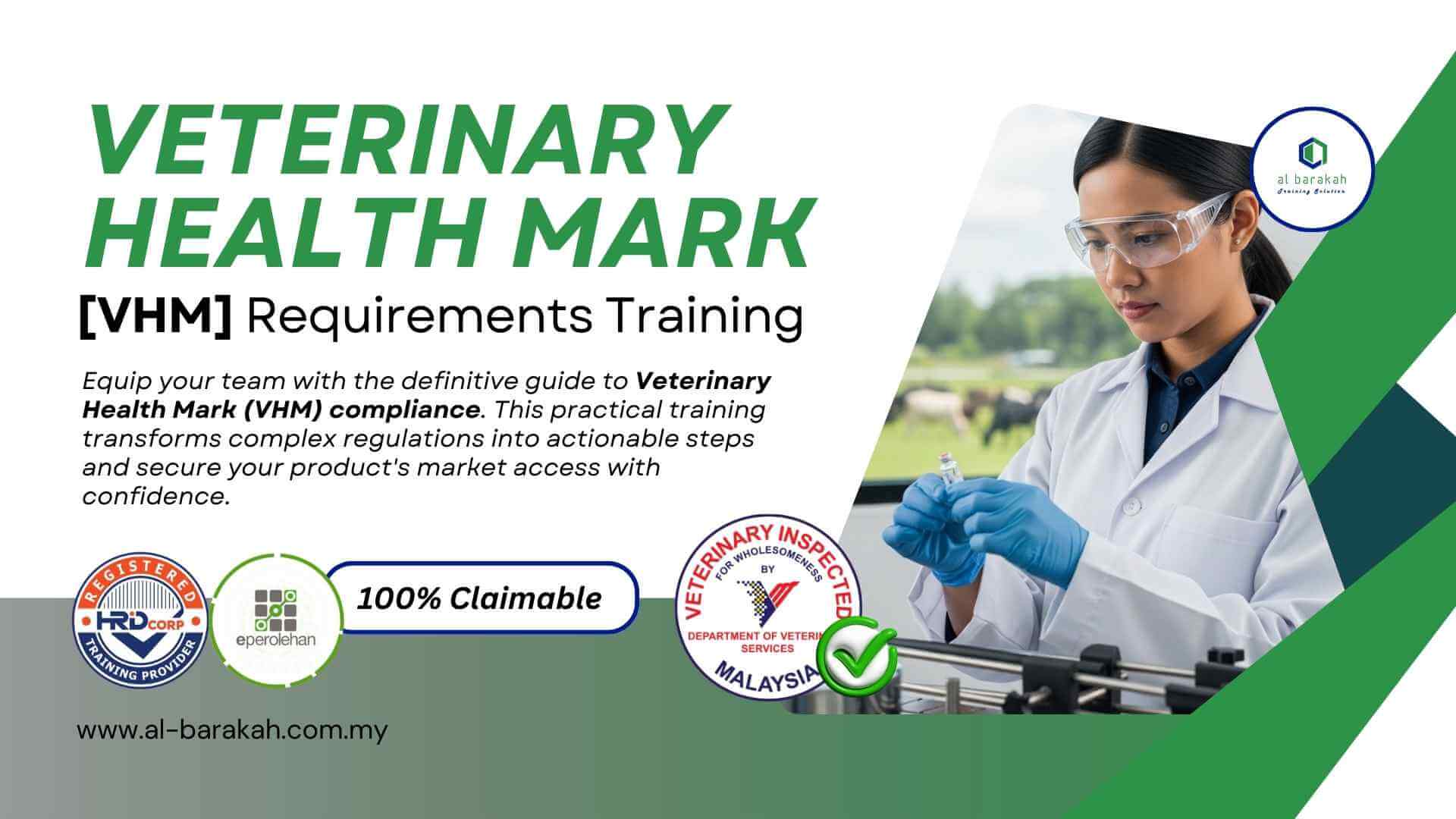
This is where targeted VHM training becomes a strategic investment. Our Veterinary Health Mark (VHM) Requirements Training is designed to move your team beyond theoretical knowledge. We provide the practical, actionable roadmap needed to navigate the VHM certification process confidently, implement robust quality systems aligned with Good Manufacturing Practice (GMP) for veterinary products, and build a sustainable culture of compliance.

Overview of Veterinary Health Mark (VHM)

The Veterinary Health Mark (VHM) is a mandatory product registration and quality certification scheme administered by the Department of Veterinary Services (DVS) Malaysia. It applies to all veterinary drugs, biologics, feed additives, and premises involved in their manufacture, import, and distribution.

The VHM framework is built upon the principles of Good Manufacturing Practice (GMP), quality control, and product traceability, ensuring that every product in the market is safe, effective, and of consistent quality.

Obtaining and maintaining the VHM is not merely an administrative task; it is a strategic business imperative. It is the legal gateway for products to enter and remain in the Malaysian market. This training provides an extensive exploration of the Animal Ordinance 1953, the Control of Drugs and Cosmetics Regulations 1984, and all subsequent guidelines and circulars that form the VHM’s legal backbone.

We will demystify the complex regulatory landscape, translating legal text into clear, operational requirements for your team.

The Importance of This Training

Investing in precise VHM training protects your business from severe risks:

Avoid Costly Non-Compliance:

  • Prevent regulatory actions such as product recalls, import holds, fines, or even suspension of your establishment license.

Ensure Uninterrupted Market Access:

  • A deep, practical understanding of VHM requirements is the key to a successful application and smooth renewal processes, keeping your products on the shelf.

Build Brand Trust & Reputation:

  • The VHM is a mark of quality recognized by veterinarians, farmers, and pet owners. Demonstrable compliance strengthens your brand’s credibility in a competitive market.

Drive Operational Excellence:

  • The VHM framework aligns with world-class quality management systems. Implementing its requirements systematically can lead to improved efficiency, reduced errors, and higher overall product standards.

Objective of This Course

This course is designed to bridge the gap between regulatory knowledge and practical implementation. By the end of this program, participants will be equipped not just to understand the VHM requirements, but to apply them confidently in their daily roles.

The goal is to transform compliance from a perceived hurdle into a managed, value-adding process within your organization, directly contributing to product quality and business continuity.

Key Topics Covered

  • The Legal & Regulatory Framework of VHM

  • Roles of the Department of Veterinary Services (DVS) and the National Pharmaceutical Regulatory Agency (NPRA)

  • Decoding the VHM Application Dossier: A Step-by-Step Guide

  • Documentation Mastery: Protocols, Batch Records, and Standard Operating Procedures (SOPs)

  • Facility & Equipment Requirements aligned with GMP principles

  • Quality Control Laboratory Management and Specification Setting

  • Stability Studies & Shelf-Life Determination

  • Managing the VHM Audit: Preparation, Conduct, and Response to Findings

  • Post-Market Responsibilities: Vigilance, Variations, and Renewals

Practical Benefits for Daily Work

Participants will gain immediately applicable skills to enhance their daily work:

Quality Assurance/Control Staff:

  • Will learn to design test protocols and documentation that meet VHM scrutiny.

Regulatory Affairs Officers:

  • Will master the end-to-end application process, avoiding common pitfalls that cause delays.

Production & Operations Personnel:

  • Will understand how daily GMP practices directly impact VHM compliance.

Supply Chain & Warehouse Teams:

  • Will implement compliant procedures for storage, handling, and distribution.

Managers & Executives:

  • Will be able to make informed decisions, allocate resources effectively for compliance, and lead audit readiness.

This course provides essential QA QC training for veterinary professionals, empowering regulatory affairs officers with the skills for flawless audit preparation and dossier management.

Training Methodology

Following Al-Barakah’s evidence-based framework, this is a transformative learning experience designed for retention and application. The course employs:

  • Expert-Led Instruction: Learn from a seasoned professional and subject matter expert with decades of direct experience in veterinary regulatory affairs and GMP.

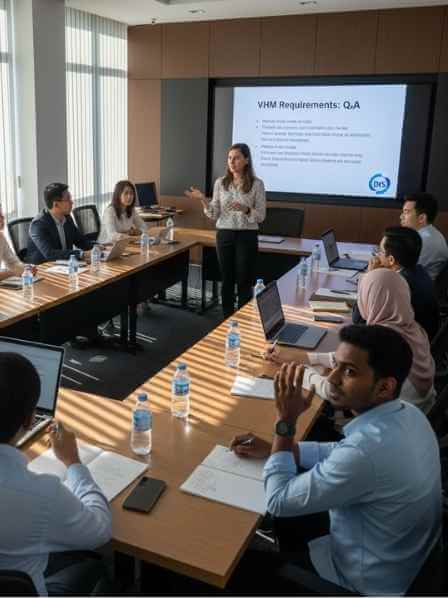
  • Interactive Workshops: Move beyond theory with hands-on exercises, including document review sessions and simulated audit scenarios.

  • Case Studies & Real-World Examples: Analyze real compliance challenges and successful strategies from the industry.

  • Actionable Toolkit: Receive practical templates, checklist, and reference guides for immediate use.

Next Steps: A Strategic Approach to Compliance

A one-size-fits-all course may not address your organization’s specific competency gaps. Before you enroll, let’s ensure this is the right strategic fit.

We recommend to begin with a complimentary Basic Training Needs Analysis (TNA), as is Al-Barakah’s standard practice. This will help us precisely identify your team’s current knowledge level and specific challenges with the VHM process, ensuring the training delivers measurable results for your business.

As an HRDCorp registered training provider, this course is also claimable, making it a cost-effective solution for building essential regulatory affairs competency within your team.

For pricing, scheduling, and in-house training inquiries, contact us today.

Click Here to Inquire Now or email us at sa***@************om.my to enroll in our next public session or schedule customized in-house training for your team.

Level

Beginner - Intermediate

Duration

1 Day

Languange

B. Malaysia & English

Training Mode

In-House

Training Module Content

Module 1: Foundations of VHM & the Regulatory Ecosystem

  • Introduction to the Veterinary Health Mark (VHM): Purpose, Scope, and Legal Authority

  • Key Legislation: Animal Ordinance 1953 and Control of Drugs & Cosmetics Regulations 1984

  • Understanding the roles of DVS, NPRA, and other relevant authorities

Module 2: The VHM Application Process Decoded

  • Types of Applications: New, Variation, Renewal

  • Preparing a Complete and Compliant Application Dossier

  • Common Deficiencies and How to Avoid Them

  • Timeline and Effective Communication with Regulators

Module 3: Building a VHM-Compliant Quality System

  • Documentation Requirements: SOPs, Specifications, Master Formula, Batch Records

  • GMP for Premises, Equipment, and Personnel

  • Quality Control: Laboratory Management, Testing Protocols, and Outsourcing

  • Stability Testing Requirements and Data Interpretation

Module 4: Audit Preparedness & Post-Market Compliance

  • Internal Audit Programs for Continuous Readiness

  • Managing Regulatory Inspections: From Opening Meeting to Close-Out

  • Effectively Responding to and Addressing Audit Findings

  • Post-Market Surveillance, Adverse Event Reporting, and Handling Variations

Learning outcome

Upon completion, participants will be able to:

  1. Interpret the key legal and technical requirements of the VHM scheme.

  2. Prepare and review a VHM application dossier to a high standard of completeness.

  3. Develop and critique essential quality system documents (SOPs, protocols, records).

  4. Implement core GMP principles relevant to veterinary product manufacturing/handling.

  5. Participate effectively in internal and regulatory audits with confidence.

Want to train your entire team?

Get a customized in-house training quote today! Contact us or click below.

Who is this training for?

This course is essential for professionals involved in ensuring product compliance and quality within the animal health industry:

  • Regulatory Affairs Executives & Officers

  • Quality Assurance & Quality Control Managers/Executives

  • Production, Operations, and Warehouse Supervisors

  • Technical and R&D Personnel

  • Company License Holders and Senior Management responsible for compliance

Target Industry

This training is critical for all sectors involved in the veterinary health product lifecycle:

  • Manufacturers of Veterinary Pharmaceuticals, Vaccines, and Feed Additives

  • Importers, Distributors, and Wholesalers of Veterinary Medicines

  • Animal Feed Mills incorporating medicated feed additives

  • Contract Research Organizations (CROs) and Testing Laboratories serving the animal health industry

This program is critical training for regulatory affairs and quality teams across the animal health industry, including manufacturers of veterinary pharmaceuticals and feed additive importers.

Participants requirements:

Pen & Notes.

Recognized training provider

Trusted By

Since 2009, we have work with more than 3,000 brands including…

Al Barakah Training Solution HRDCorp Training Provider
DVS VHM requirements training

Clients' Review

“This training made complex DVS regulations clear and practical. The step-by-step guidance on documentation and facility requirements gave me the confidence to contribute meaningfully to our application process right away. A very structured and helpful session.”

Puan Aisyah Rashid | Junior QA Officer, Segar Poultry Processing

“An excellent deep dive into the technical and compliance nuances of the VHM scheme. As an experienced QA manager, I found the detailed focus on risk assessment, audit protocols, and label compliance particularly valuable for strengthening our existing systems.”

Mr. Robert Tan | Senior Quality Assurance Manager, Prime Meat Packers Sdn Bhd

TRAINER PROFILE

Every trainer in our network is meticulously vetted against a stringent set of criteria, ensuring you learn from professionals who have not only taught the standards but have implemented, audited, and lived them in the Malaysian food industry.

Our Core Selection Criteria for Food Safety Trainers:

Minimum 10-15 Years of Hands-On Industry Experience: Each trainer is a seasoned professional with a substantial career in food manufacturing, quality assurance, or technical management within Malaysia. They bring stories from the factory floor, not just the textbook.

Dual Credentials – Certified Practitioner & Certified Trainer: They hold active professional certifications (e.g., Certified HACCP Auditor,  FSSC Professional) and are skilled in adult training methodologies (e.g., Certified Train-The-Trainer). They know the subject and how to teach it effectively.

Audit & Certification Body Experience: Many of our lead trainers have direct experience working with or as auditors for SIRIM, the Ministry of Health (MOH), and other certification bodies. They provide insider perspectives on what auditors truly look for.

Specialization in Key Areas: Our network includes dedicated specialists, ensuring the trainer perfectly matches the course:

  • GMP/HACCP Specialists: Often former QA/Production Managers from major local food plants.

  • FSSC 22000/ISO 22000 Experts: Typically Lead Auditors with extensive experience in global supply chain audits.

  • Allergen Management Specialists: Professionals with backgrounds in product development, labelling compliance, and plant sanitation protocols.

Proven Training Track Record: We evaluate trainer performance through rigorous participant feedback and post-training assessments, ensuring consistent delivery of practical, high-impact sessions.

What This Means for Your Team:

  • Practical, Not Just Theoretical: You’ll receive actionable knowledge grounded in the realities of Malaysian food production, packaging, and legislation.

  • Answers to Your Specific Challenges: Our trainers can relate to your operational hurdles because they’ve solved similar problems firsthand.

  • Networking & Ongoing Support: Trainers often provide valuable context and can become a point of professional reference.

Our Commitment: When you enroll in an Al Barakah Training Solution course, you are guaranteed a trainer who is a practitioner-first, equipped to bridge the gap between international standards and your daily operational success.

TRAINING POLICY

Disclaimer

Course dates displayed in the ABTS-TMS™ are provisional, pending final confirmation based on trainer availability. Final dates will be confirmed once coordination with the trainer is complete. You are also welcome to contact our team directly, and we will gladly assist in aligning with the trainer’s schedule.

Cancellation & Rescheduling Policy

We reserve the right to cancel or reschedule any course due to unforeseen circumstances; in such an event, participants will receive a full refund. Please note that the training venue may be subject to change based on final enrollment and classroom availability. All courses require a minimum of five (5) confirmed participants to proceed as scheduled.

Frequently Ask Question (FAQ's)

No results found.