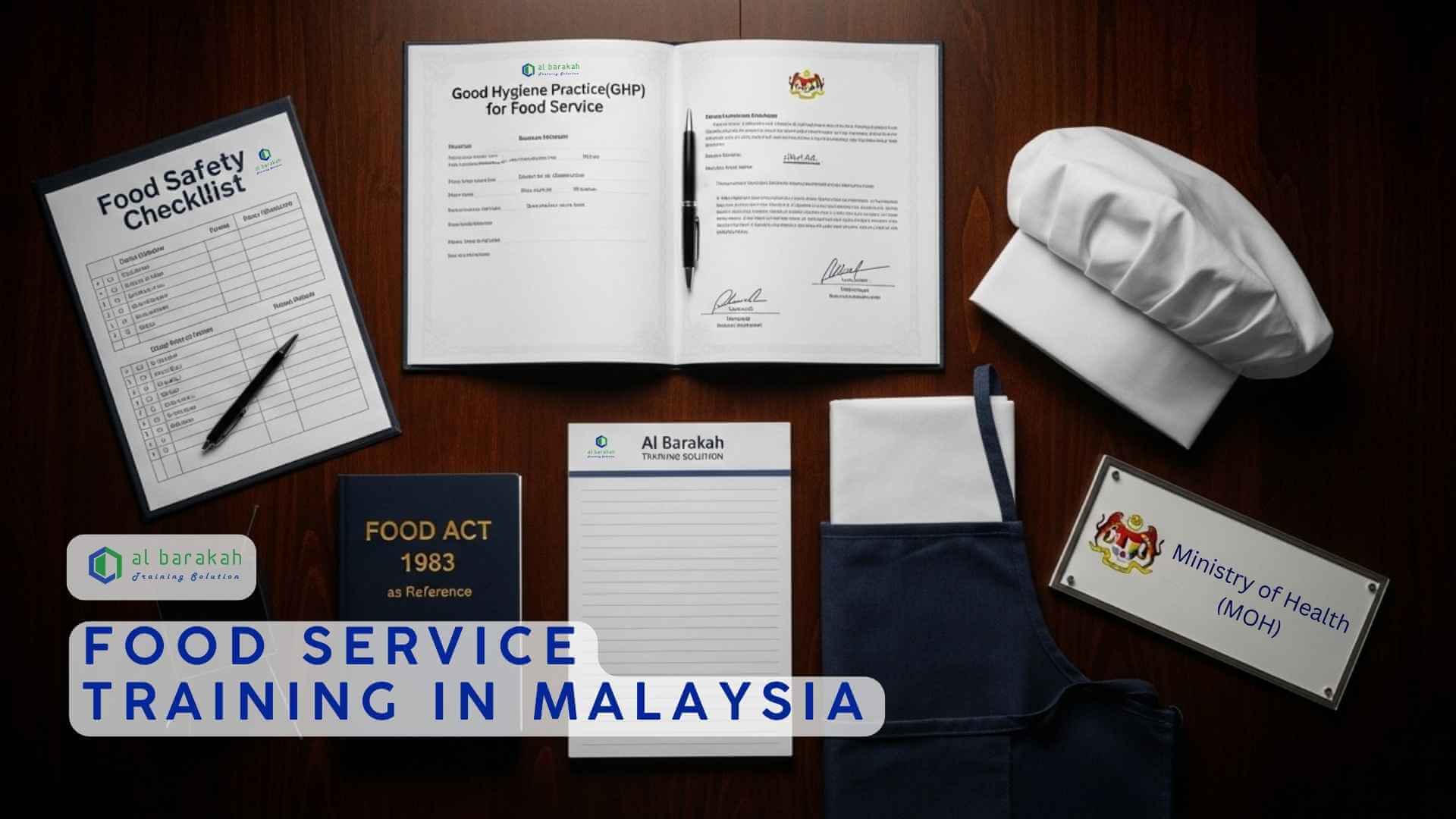
Navigating Malaysia’s Food Safety Landscape
Operating a food service business in Malaysia—whether it’s a hospital cafeteria, a factory canteen, a school kitchen, or a five-star hotel restaurant—means navigating one of Southeast Asia’s most comprehensive regulatory environments. The consequences of non-compliance are severe: crippling fines under the Food Act 1983, permanent business closure, and in the worst cases, criminal liability for food poisoning outbreaks.
Yet, many operators and managers remain overwhelmed by a critical question: “What training does my team actually need?“
Is a basic food handler’s certificate enough? What about Halal compliance? Who on your staff needs HACCP training? This confusion isn’t just a administrative headache—it’s a significant business risk.
This guide serves as your definitive, updated reference for essential food service training in Malaysia. We’ll move beyond basic checklists to provide a strategic framework that protects your business, your customers, and your reputation. Whether you’re a seasoned operator or forming an internal safety committee for the first time, this is your blueprint for building a competent, compliant, and confident team.
Why Proper Training is Your #1 Business Investment (Beyond Compliance)
Viewing training as merely a “compliance cost” is a dangerous oversight. In reality, it is your most powerful investment in operational resilience, brand protection, and financial stability.
-
Financial Risk Mitigation: A single prosecution under the Food Act 1983 can result in fines of up to RM10,000 and imprisonment. The business disruption from a temporary closure order often costs ten times more than the fine itself. Training is your insurance policy.
-
Reputational Armor: In the age of social media, news of a food safety violation spreads instantaneously. Rebuilding lost consumer trust is a long, expensive process—if it’s even possible. A well-trained team is your first and strongest line of defense against incidents that damage your brand.
-
Operational Excellence: Proper training reduces food waste (through better stock rotation and storage), improves efficiency (through standardized procedures), and boosts staff morale. Employees who feel competent and valued perform better and stay longer.
-
Market Access & Competitive Advantage: For sectors like healthcare, education, and corporate catering, demonstrating a rigorously trained team is often a prerequisite for tender bids and contract renewals. It becomes a unique selling proposition: “We don’t just meet standards; we exemplify them.”
The 5 Pillars of Essential Food Service Knowledge
True competency in Malaysia’s food industry requires mastery of five interconnected domains. Think of these as the foundational pillars upon which every safe and successful operation is built.
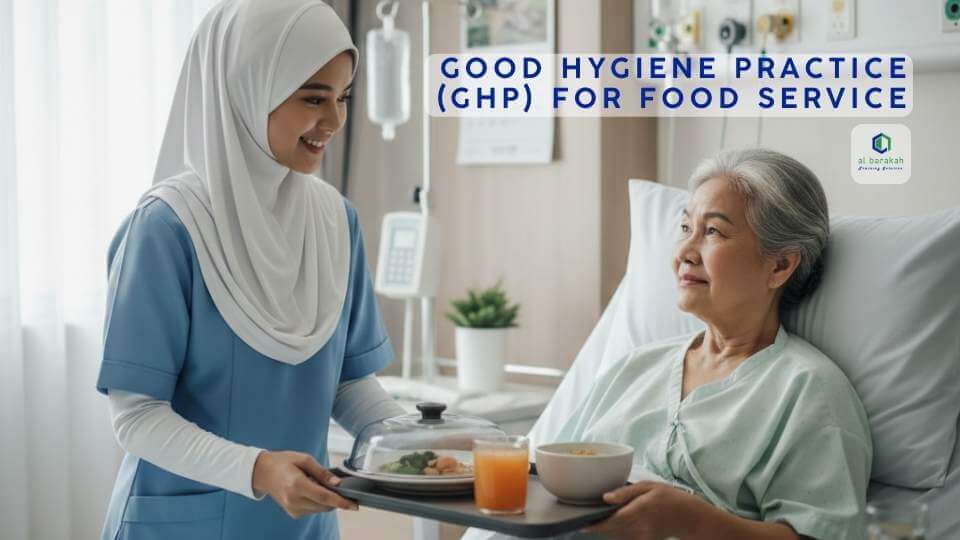
Pillar 1: Food Safety & Hygiene Management
This is the non-negotiable foundation. Training here covers the “what” and “how” of daily safety.
-
Core Components: Personal hygiene (proper handwashing, illness reporting), safe food handling from receipt to service, time & temperature control (mastering the “Danger Zone”: 5°C – 60°C), effective cleaning and sanitization protocols, and waste management.
-
Legal Baseline: Mandatory for all food handlers as per Food Hygiene Regulations 2009. Certification is typically valid for 3 years before renewal.
-
Beyond Basics: Advanced modules should cover specific pathogen control (e.g., Salmonella, E. coli), managing high-risk foods (raw seafood, ready-to-eat items), and protocols for vulnerable groups (elderly, children, immunocompromised).
Pillar 2: Halal Principles & Certification Compliance
For the vast majority of Malaysia’s food service sector, Halal is not just a religious matter—it’s a business imperative and a legal requirement for serving Muslim patrons.
-
Core Components: Understanding the JAKIM (Department of Islamic Development Malaysia) Halal certification process, mastering the principles of Halalan Toyyiban (permissible and wholesome), managing Halal integrity across the supply chain (ingredient verification, supplier audits), and implementing strict protocols to prevent cross-contamination with non-Halal items.
-
Critical for: Every establishment, but especially hospitals, schools, government facilities, public catering, and any business seeking a mainstream customer base.
Pillar 3: Allergen Management & Cross-Contamination Control
With rising consumer awareness and increasing allergy prevalence, this pillar has shifted from best practice to critical liability management.
-
Core Components: Identifying the major food allergens (e.g., peanuts, shellfish, dairy, gluten), implementing “segregation protocols” in storage, preparation, and service, training staff in accurate ingredient communication, and establishing emergency response procedures for allergic reactions.
-
Why it’s Essential: Failure can lead to fatal consequences (anaphylaxis) and subsequent criminal negligence lawsuits. It is a core component of customer safety and duty of care.
Pillar 4: Good Hygiene Practices (GHP) & HACCP Fundamentals
This is the systematic, preventive approach to food safety that moves your operation from reactive to proactive.
-
GHP: The “prerequisites”—the basic conditions and activities necessary to maintain a hygienic environment. This includes premises design, pest control, water supply, maintenance, and supplier quality assurance.
-
HACCP (Hazard Analysis Critical Control Point): A science-based, systematic method for identifying, evaluating, and controlling significant food safety hazards. Teams learn to conduct a hazard analysis, determine Critical Control Points (CCPs), set critical limits, and establish monitoring procedures.
-
Target Audience: Mandatory for premise license holders and supervisory staff. It is especially critical for large-scale catering, central kitchens, and manufacturers.
Pillar 5: Effective Auditing & Vendor Management
Your responsibility doesn’t end at your kitchen door. If you source from vendors or oversee satellite operations (like a hospital auditing its food suppliers), this competency is vital.
-
Core Components: Developing and using audit checklists, conducting document reviews and on-site inspections, interviewing staff, identifying non-conformities, and implementing corrective action follow-ups.
-
The Competency Gap: This is where many internal safety committees fail. They have the authority but lack the trained eye to spot systemic risks beyond obvious cleanliness. Effective training transforms committee members from box-tickers into competent risk assessors. (This pillar is explored in depth in our sector-specific guides below).
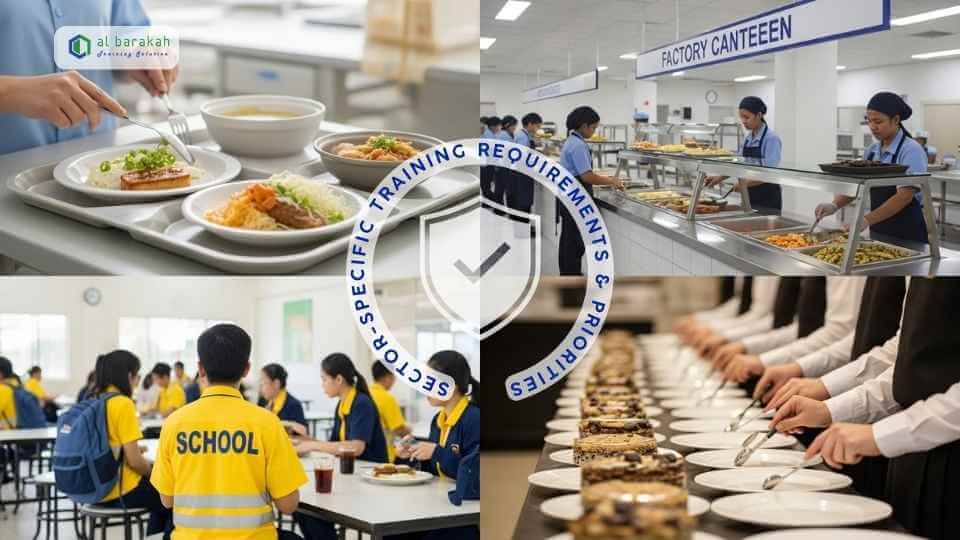
Sector-Specific Training Requirements & Priorities
While the 5 Pillars are universal, their application and priority shift depending on your sector’s unique risks and regulations.
1. For Hospitals & Healthcare Facilities
Highest Risk: Serving immunocompromised patients.
Training Priority: Pillar 1 (Advanced) & Pillar 5 are paramount. Staff must understand pathogen risks specific to vulnerable populations. Furthermore, the internal committee overseeing vendors requires rigorous auditing training. A checklist is not enough when patient lives are at stake.
-
Deep Dive: Read our specialized guide: How to Audit a Food Vendor for Your Hospital: A Step-by-Step Guide for Internal Committees.
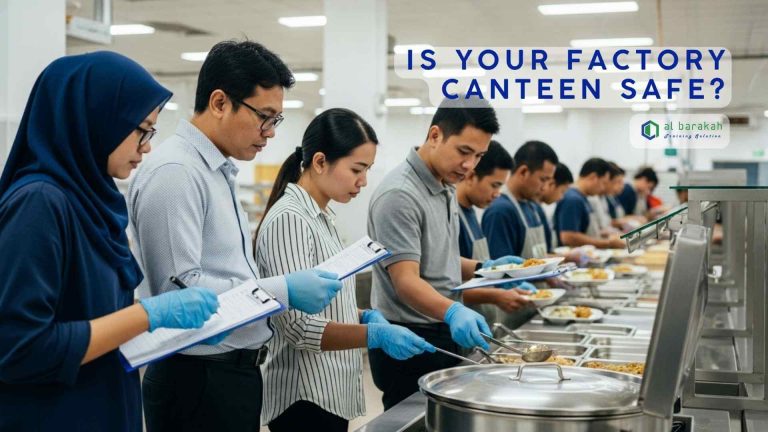
2. For Factories, Large Offices & Institutional Caterers
Highest Risk: Mass food poisoning causing major business disruption.
Training Priority: Pillar 4 (HACCP/GHP) is critical for scaling safety in bulk cooking. Pillar 2 (Halal) is essential for workforce trust. Both the catering operator and the factory’s internal oversight committee need aligned training.
-
Deep Dive: Master the specifics: Factory Canteen Food Safety in Malaysia: A Complete Guide for Operators & Management.
3. For Schools, Universities & Educational Institutions
Highest Risk: Protecting children and young adults; high parental and regulatory scrutiny.
Training Priority: Pillar 3 (Allergen Management) is non-negotiable. Pillar 1 & 2 must be impeccable. Training must also cover age-appropriate meal planning and nutrition basics.
4. For Hotels, Resorts & Convention Centres
Highest Risk: Reputational damage from a single incident affecting high-profile guests or large events.
Training Priority: A balanced mastery of all 5 Pillars. Operations are diverse (fine dining, banquets, room service, poolside bars), requiring adaptable, high-standard training across all departments.
5. For Restaurants, Cafés & Mall Food Courts
Highest Risk: High customer turnover, intense competition, and public visibility of any failure.
Training Priority: Pillar 1 & 2 as the public-facing foundation. Pillar 4 (GHP) to consistently pass surprise inspections from local council health officers.
Choosing the Right Training Provider: 5 Critical Questions to Ask
Not all training programs are created equal. To ensure a genuine return on investment, vet your provider with these questions:
-
Is the curriculum aligned with current Malaysian regulations? Does it explicitly reference the Food Act 1983, Food Hygiene Regulations 2009, and JAKIM/MAIN Halal standards? Generic, international content often misses local legal nuances.
-
Does it offer integrated or siloed training? A program that teaches Halal compliance in isolation from cross-contamination control is flawed. The best training shows how the 5 Pillars interconnect in a real kitchen.
-
What is the trainer’s expertise? Are they certified professionals with actual industry management experience, or purely academic theorists? Real-world stories and problem-solving are invaluable.
-
Is the certification recognized? Will the certificate be accepted by MOH, local councils, and JAKIM as valid proof of competency for audits and licensing?
-
Does it cater to different competency levels? Does it offer distinct value for front-line food handlers, supervisors, and internal auditors/committees? A one-size-fits-all approach fails to address specific role-based responsibilities.
The Al Barakah Advantage: Integrated Competency for the Malaysian Market
Navigating multiple training providers for each Pillar is time-consuming, costly, and creates knowledge gaps. Your team ends up with fragmented certificates but no unified understanding of how food safety works as a complete system.
Our Comprehensive Food Safety Training for Food Service is engineered to solve this exact problem. It is the only program in Malaysia that fully integrates all 5 Essential Pillars into a single, coherent, and competency-focused curriculum.
What Sets Our Program Apart:
✅Legally Robust: Content is meticulously built around the Food Act 1983, Food Hygiene Regulations 2009, GHP and MS1500 Standards, ensuring perfect compliance.
✅Scenario-Based Learning: We use real-world case studies from hospitals, factories, and schools—not just textbook theory. Participants learn to apply knowledge in their specific sector.
✅Dual-Track Value: The program is designed for both:
- Front-line Operators & Staff: To execute daily procedures with competence.
- Internal Safety Committees & Managers: To audit, verify, and manage food safety systems effectively.
✅From Knowledge to Certification: We don’t just educate; we prepare your team to obtain recognized certifications that satisfy regulatory and commercial audit requirements.
Who This Is For:
🎯Food Service Operators in any sector seeking full compliance and reduced risk.
🎯Internal Food Safety Committees in hospitals, factories, and institutions who need to oversee vendors or internal kitchens confidently.
🎯Business Owners & Managers who understand that their team’s competency is their brand’s greatest asset—and largest liability.
Conclusion: Your Path to Unshakeable Compliance & Confidence
In Malaysia’s food service industry, hope is not a strategy.
🛑You cannot hope an inspector misses a critical flaw.
🛑Do not hope a vendor’s mistake doesn’t reach your customer.
🛑And don’t hope your team instinctively knows how to prevent a crisis.
Competency—derived from essential, integrated training—is the only reliable strategy.
Building this competency across your organization transforms your relationship with risk. Fines become preventable. Incidents become avoidable. Audits become opportunities to demonstrate excellence. Your reputation shifts from something you defend to something you confidently promote.
The journey begins with a single, decisive step to unify your team’s knowledge and capabilities.
Ready to consolidate your training and build an unshakeable foundation of food safety competence?
Explore Our Comprehensive Food Safety Training for Food Service
The integrated program that equips your entire team—from kitchen staff to management—with the 5 Pillars of Essential Knowledge for the Malaysian market.
Contact us today for a custom training proposal tailored to your sector, scale, and specific challenges. Let’s move your business from hoping for compliance to guaranteeing it.