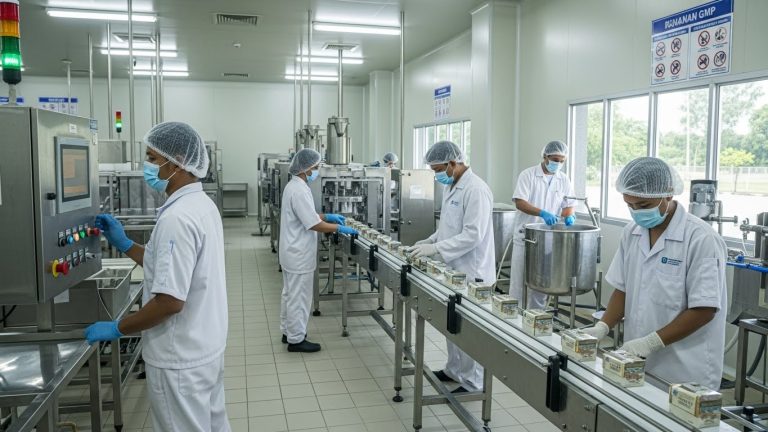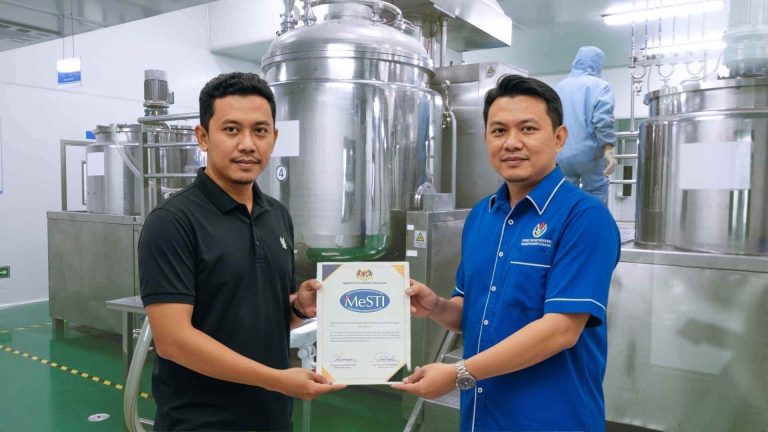
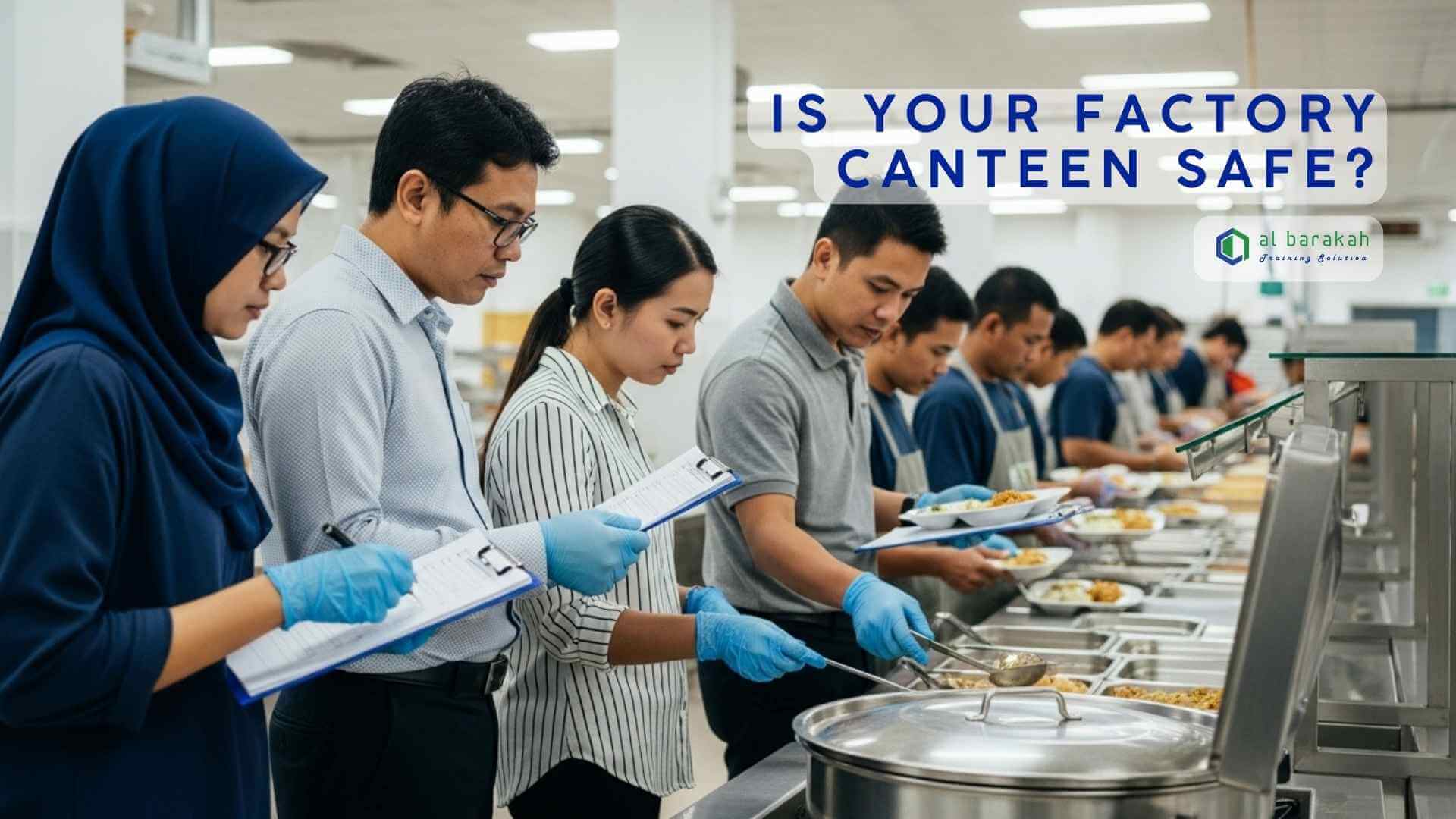
Imagine this: lunch hour at your factory. An hour later, production lines slow, then stop. Workers are falling ill. The cause? Food from your canteen. The result? A halted factory floor, a Ministry of Health Malaysia (MOH) investigation, crippling fines, and destroyed trust.
For factory management and canteen operators, food safety is not just about hygiene—it’s critical operational risk management. This guide provides the complete framework for factory canteen compliance in Malaysia, designed for both the canteen operator running the service and the factory’s internal committee responsible for oversight.
Why Factory Canteen Safety is a Critical Operational Risk
In a factory, the canteen is a vital piece of infrastructure. A failure here has immediate, severe consequences:
Mass Business Disruption: A single foodborne illness outbreak can incapacitate a significant portion of your workforce, shutting down production and missing critical deadlines. The financial loss from downtime dwarfs any training investment.
Legal & Regulatory Firestorm: You are liable under the Food Act 1983 and the Occupational Safety and Health Act 1994 (OSHA). Providing safe food is part of providing a safe workplace. Authorities like the Ministry of Health (MOH) and local council can impose heavy fines and even revoke operating licenses.
Irreparable Reputational Damage: News of “food poisoning at [Factory Name]” spreads fast among workers, potential employees, and the local community, damaging recruitment and community relations for years.
The 3-Pillar Compliance Framework for Every Factory Canteen
To manage this risk, your canteen must stand on three solid pillars:
-
The Legal Pillar: Food Act 1983, Food Hygiene Regulations 2009, and local council by-laws form your non-negotiable baseline. This covers everything from licensing and mandatory food handler training to structural requirements of the kitchen.
-
The Safety Pillar: Good Hygiene Practices (GHP) and Hazard Analysis Critical Control Point (HACCP) principles are your daily operational bible. In a factory canteen, this means mastering safe bulk handling, rapid cooling processes, and strict temperature control for hundreds of meals served in a short window.
-
The Business & Ethical Pillar: For most Malaysian factories, valid JAKIM HALAL certification is essential to respect the workforce and maintain harmony. Coupled with allergen management protocols, this pillar is about trust and duty of care.
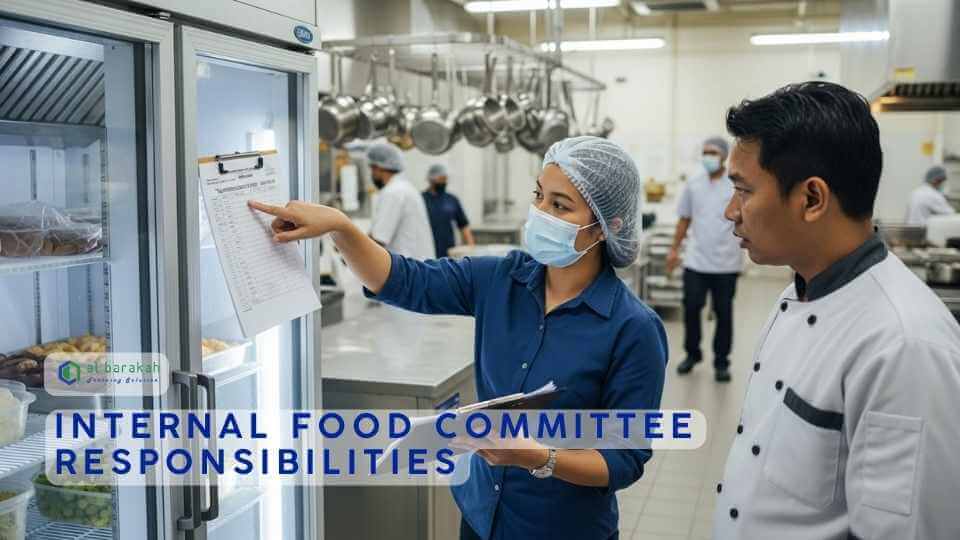
The Internal Food Safety Committee: Your Factory’s First Line of Defense
Every factory should have a designated person or team—often from HR, Safety (JKKP), and management—to monitor the canteen operator. This Internal Food Safety Committee is your primary safeguard.
Their critical question is:
“Do we have the competency to verify our canteen’s safety claims, or are we just ticking boxes?”
An untrained committee can miss subtle but dangerous failures.
Common Critical Failures in Factory Canteen Audits (And How to Spot Them)
Be hyper-vigilant for these high-risk, scale-related failures:
-
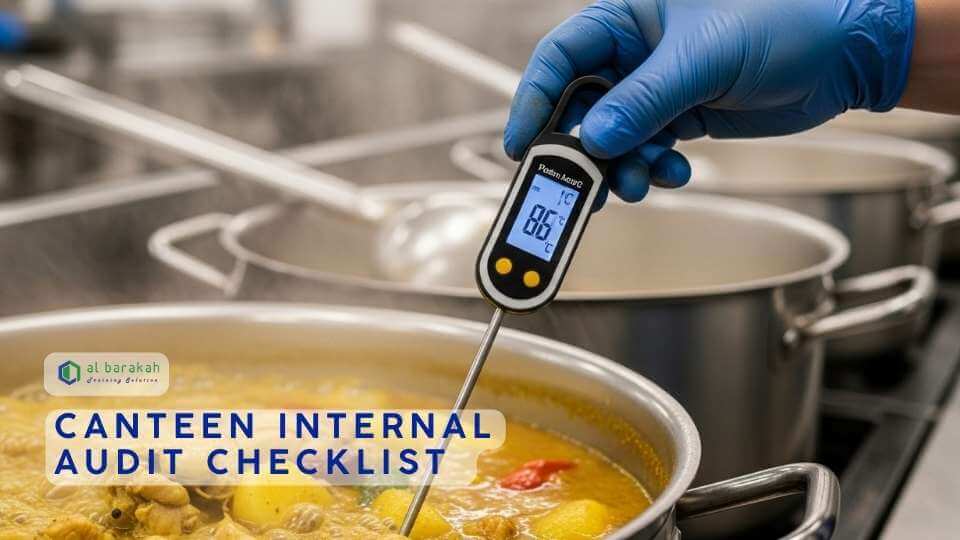
The “Danger Zone” Disaster: Improper bulk thawing of meat at room temperature or slow cooling of large pots of curry—practices that create massive bacterial growth.
-
Hot-Holding Breakdown: Bain-maries or warming cabinets failing to keep food above 60°C throughout the entire 2-hour lunch service.
-
Cross-Contamination on an Assembly Line: Using the same utensils or surfaces for raw and cooked items during high-speed meal assembly.
-
Pest Attractants: Inadequate waste management—overflowing bins, unsealed waste areas—that attract rats and flies directly to the food premise.
-
Documentation Black Hole: Missing food handler training certificates, expired HALAL certification, or no ingredient traceability records from suppliers.
The Operator’s Action Checklist: From Daily GHP to Audit Readiness
Implement this daily to stay compliant:
-
Temperature Logs: Check and record fridge/freezer temperatures twice daily. Check hot-holding temperatures every hour during service.
-
Thawing & Cooling: Thaw in chilled cabinets ONLY. Cool large batches using shallow pans and blast chillers, never at room temperature.
-
Colour-Coding: Implement a strict colour-coded chopping board and knife system (red for raw meat, blue for seafood, green for veg, etc.).
-
Pest Proofing: Weekly inspection for gaps, holes, and signs of infestation. Ensure all external doors close automatically.
-
Documentation File: Keep an updated, physical file containing: Business License, MOH Certificate, HALAL Certificate, Food Handler Training Certificates, and Supplier Invoices.
Beyond the Checklist: Training as Your Operational Insurance
A checklist is a tool. Competency is what uses it effectively. The gap between a minor violation and a catastrophic outbreak is often an untrained eye that didn’t recognize the severity of a risk.
For the Canteen Operator, comprehensive training in GHP and HACCP is your license to operate securely and retain your contract. It transforms your staff from task-doers to risk-aware guardians.
For the Factory’s Internal Committee, training is what transforms you from a well-meaning overseer into a competent auditor. You move from asking, “Is the certificate on the wall?” to assessing, “Is their cooling process scientifically sound?”
For specific guidelines on auditing vendors in healthcare settings, see our guide on Hospital Food Vendor Audits.
Conclusion: Secure Your Factory’s Foundation
Your factory’s output depends on the health of your workers. Their health, during lunch hour, depends on the safety of your canteen.
Bridge the competency gap for both your canteen operator and your internal team. The Comprehensive Food Safety Training for Food Service is designed for the exact challenges of institutional catering. It provides the certification and practical knowledge to:
-
Implement failsafe GHP/HACCP/HALAL systems in a kitchen.
-
Prepare for and pass rigorous audits from authorities or factory management.
-
Confidently assess and manage vendor risks as an internal committee member.
Don’t let your canteen be the weakest link in your production chain. Invest in certified training today and transform your food safety from a compliance cost into a competitive advantage.